Why water is a woman’s problem
From climate change to conflict, water scarcity is putting women and girls at growing risk worldwide
Around 4 billion people experience severe water scarcity for at least one month every year. It’s a problem that affects everyone, but not equally.
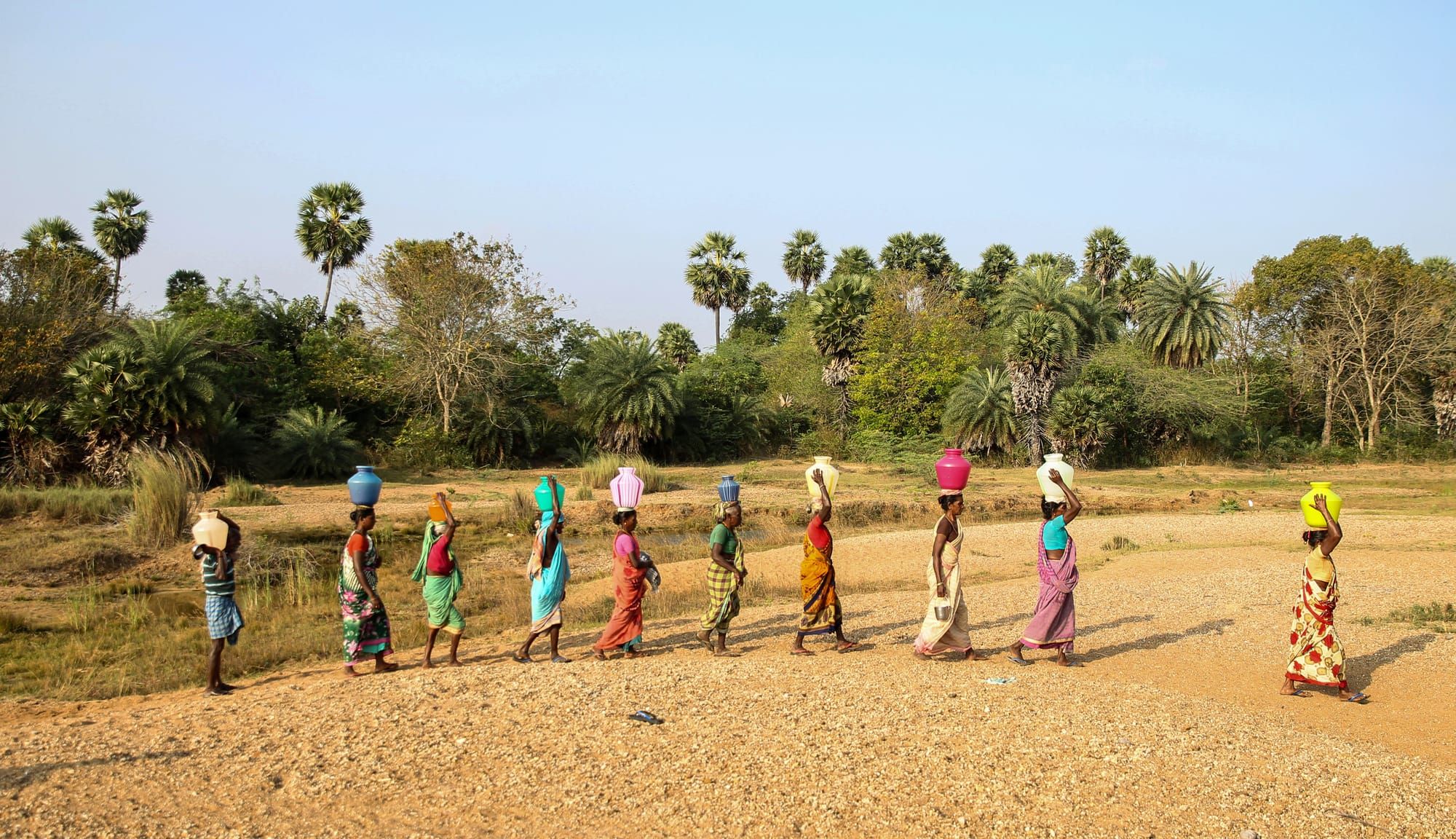
Women and girls disproportionately bear the toll, as traditional gender roles mean they are responsible for providing water in their homes for drinking, cooking and cleaning. They are the fetchers and collectors of our water. This means it is often women and girls who are first to notice and feel the impact of water shortages and polluted water.
Here’s what you need to know about how water scarcity impacts women:
What is water scarcity and what causes it?
Water scarcity is when the demand for freshwater exceeds the available supply within a given area and time period.
A growing, hungry, global population means demand for water is exceeding availability. About 70% of freshwater, mainly coming from groundwater supplies, is used by farmers for agriculture in the Global South.
Climate change is also driving water scarcity. This has led to more frequent and extreme weather, from heatwaves and drought drying up rivers and crops, to flooding caused by hurricanes that damage water infrastructure. About 1.5 billion women and girls live in countries facing high or very high exposure to droughts, while some 3.7 billion women and girls are at risk of flood exposure caused by rising sea levels and hurricanes.
Pollution is another factor. Oil extraction and mining can contaminate soil and water ecosystems. Meanwhile, the recent exponential growth of AI-driven data centers in countries like the US and parts of Latin America is putting pressure on water supplies.
Just how bad is the problem?
The world has now moved beyond a water crisis and entered a state of “global water bankruptcy”, according to the United Nations (UN). In its flagship January report, the UN issued a “wake-up call”, with scientists describing water bankruptcy as a persistent shortage whereby water systems can no longer realistically return to their historical baselines and recover. This means shrinking wetlands, rivers, glaciers and other water resources in some areas are irreversible.
The burden of water scarcity falls disproportionately on women and young people, as well as small-scale farmers, Indigenous communities, and poor urban residents.
“It's the burden that women carry as they look for water. It's the burden that women carry if the children they have are not healthy because they are taking unsafe water or are sick,” said Parvin Ngala, global water, sanitation and hygiene (WASH) director for charity World Vision International.
The Middle East and North Africa is the world’s most water-scarce region and home to 15 out of the 20 most water-scarce countries – including Bahrain, Lebanon, and Qatar. Drought, combined with years of conflict, has exacerbated water scarcity in countries such as Yemen, Sudan and Somalia. Other regions, like parts of South Asia and Africa, are also water-scarce, while climate change is drying up areas of the western US.
Why focus on women and girls?
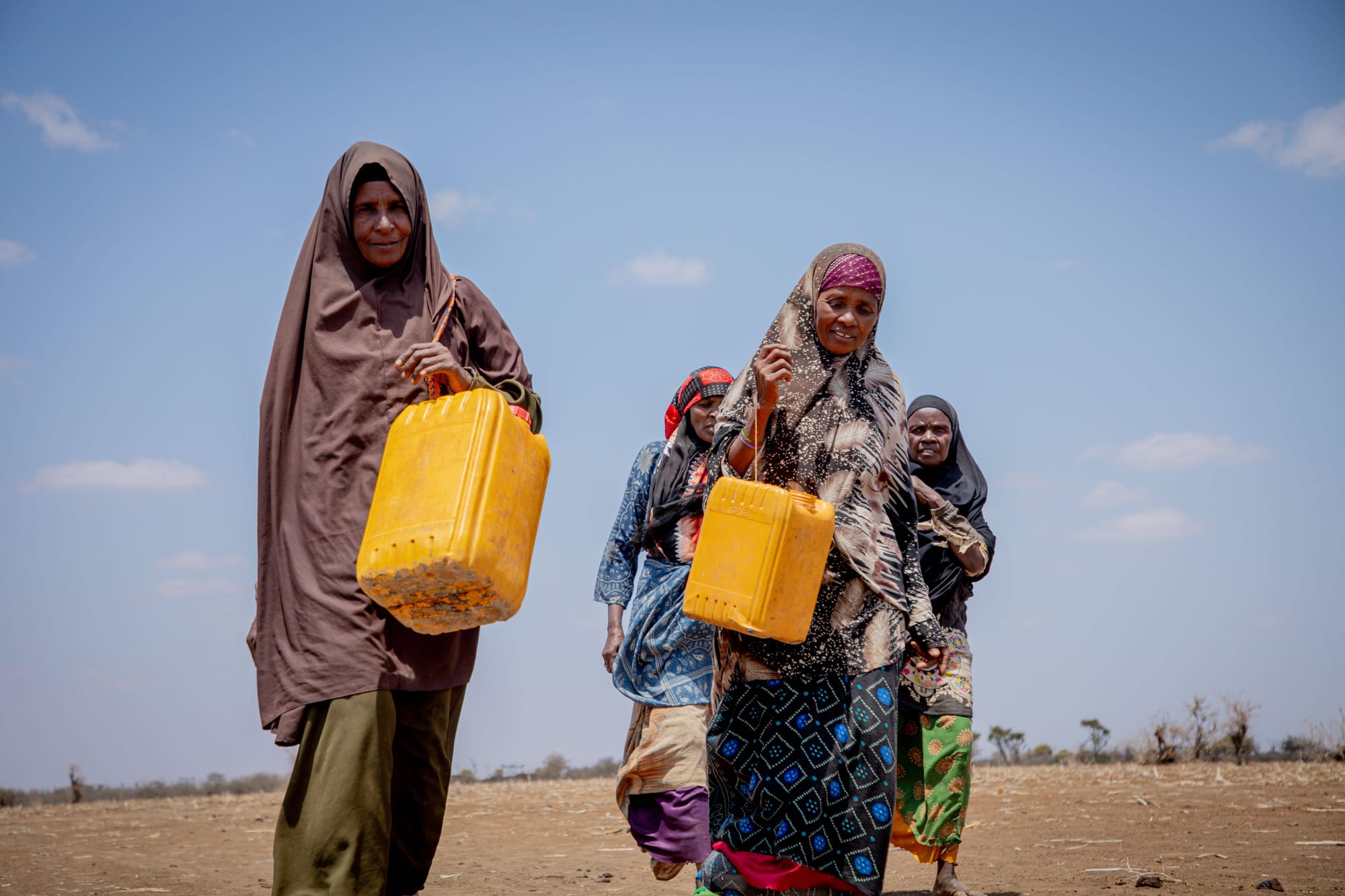
Women and girls spend 250 million hours every day collecting water – over three times more than men and boys. This can mean missed school days for girls and less time for paid work for women.
“It’s important to make the connection between water and women because when women do not have access to water it keeps them poor,” said Sareen Malik, executive secretary of the African Civil Society Network for Water and Sanitation.
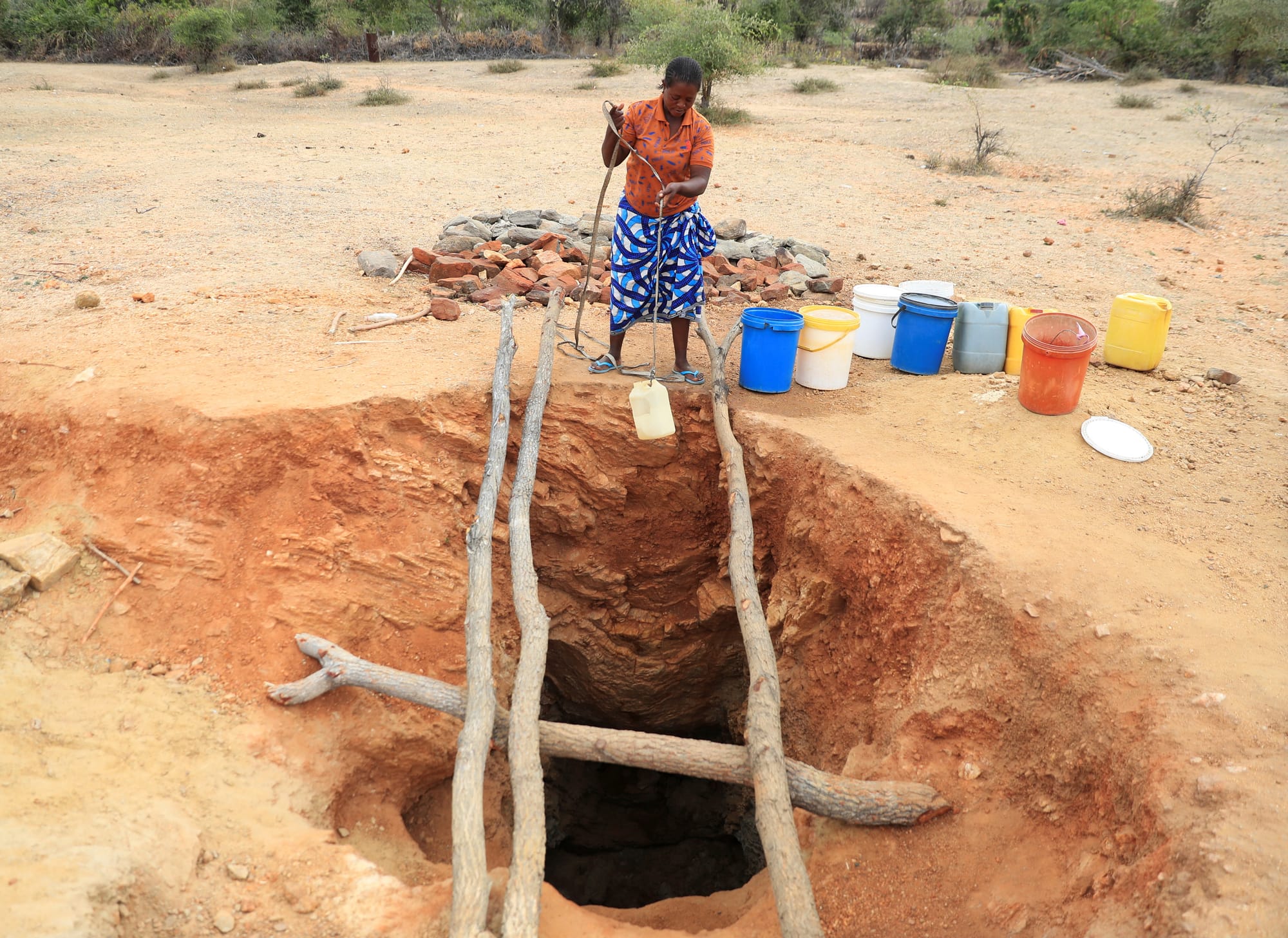
The journey on foot to collect water from wells, boreholes or springs can bring heightened risks of gender-based violence, exposing women and girls to harassment and attacks. Research across 26 sub-Saharan African countries has revealed that increased domestic violence is associated with the amount of time women spend collecting water.
The risk of sexual violence while fetching water increases in countries at war. In July, Anna Mutavati, UN Women regional director for East and Southern Africa, said that in Sudan’s besieged city of El Obeid, women “have been raped, and they've been subjected to other forms of sexual violence, all while trying to access water, one of life's most fundamental necessities in human rights”.
Drought can also raise the vulnerability of teenage girls specifically. The 2022 drought in the Horn of Africa, for example, led to a nearly fourfold increase in child marriage in affected areas of Ethiopia.
Dirty water brings health risks for women and girls, felt during pregnancy, childbirth, breastfeeding and menstruation. Every year, 1 million mothers and babies die because of unclean births linked to dirty water. A lack of toilets and water for menstrual hygiene, most common in rural schools, refugee camps and informal urban settlements, leads to shame, little privacy, and missed days at school
It is women and girls who usually take care of relatives made sick from contaminated water and water-borne diseases such as cholera.
Will the UN Water Conference make any difference?
In December, government officials, civil society groups, the private sector and financial institutions from around the world will meet in Abu Dhabi for the conference – co-hosted by Senegal. The focus of the summit is to translate investment and innovation into practical solutions to speed up progress made on UN Sustainable Development Goal (SDG) 6: to ensure universal access to safe and affordable water and sanitation by 2030.
“Expectations for the 2026 UN Water Conference are high. It will be a critical milestone in advancing global water progress and a pivotal opportunity to accelerate the achievement of Sustainable Development Goal 6,” the UN secretary-general’s special envoy on water, Retno Marsudi, has said.
However, at today’s current pace, it is extremely unlikely SDG 6 will be met on time.
The US will likely seek to undermine progress at the conference. The Trump administration has already withdrawn from global agreements and rolled back on references to gender equality and LGBTQ+ rights in international meetings, as US diplomats did at the UN Commission on the Status of Women in March.
Why are more women needed in water governance?
It has been more than 30 years since a call to action at the 1992 International Conference on Water and the Environment in Ireland for policies to be adopted to promote the role of women in water management.
Yet women remain underrepresented in water governance and leadership roles – from the local community and municipal level to high-level summits.
“It's also [been] proven scientifically that if women are involved in water diplomacy processes, the dialogue is more inclusive, more comprehensive and sustainable,” said Burcu Çalli, a water diplomacy expert with the Turkish Water Institute and member of the Women in Water Diplomacy Network.
Women comprise less than 17% of the global water workforce and about 14% of countries still have no mechanisms to ensure women can participate equally in water management.
“Inclusivity is not something nice to have. It's absolutely part of the bottom line,” said Kathryn Pharr, founder and head of non-profit Community of Women in Water.
How are women driving change?
As the main managers and collectors of water in their homes and communities, women tend to play a central role in campaigning efforts due to their deep connection with water resources.
“Women and young girls are primarily the knowledge holders of local water resources. They know how to distribute, how to source and how to manage [water],” said Seipati Mokhema, a researcher at the International Water Management Institute in South Africa.
From campaigning against dam construction and water pollution caused by oil extraction and mining, women in local and Indigenous communities are often found on the frontlines of environmental disputes.
More women entrepreneurs using technology and innovation to improve the supply of clean water have emerged in recent decades. In Kenya, Beth Koigi co-founded Majik Water, a social enterprise that harvests moisture from the air and turns it into safe drinking water using solar power. In Pakistan, Nida Yousaf Sheikh has helped to develop the country’s first air-to-water generator. Women have also launched non-profits like the Georgie Badiel Foundation that trains women to repair broken water pumps and become water engineers in Burkina Faso.
For more on how these women and others are helping protect water resources, advance environmental justice and lead resistance movements in their communities, read our Fuller Defenders 2026 list of 17 leading women and gender-diverse water defenders.
 Nita Bhalla
Edited by Charlie Brinkhurst-Cuff and Liz Ford
Edited by Charlie Brinkhurst-Cuff and Liz Ford