'I’ve never had to fight for water like this before': the battle for survival in refugee camps
For women who bear the toll of collecting water, in refugee camps this means long queues, dry pumps and cholera risks
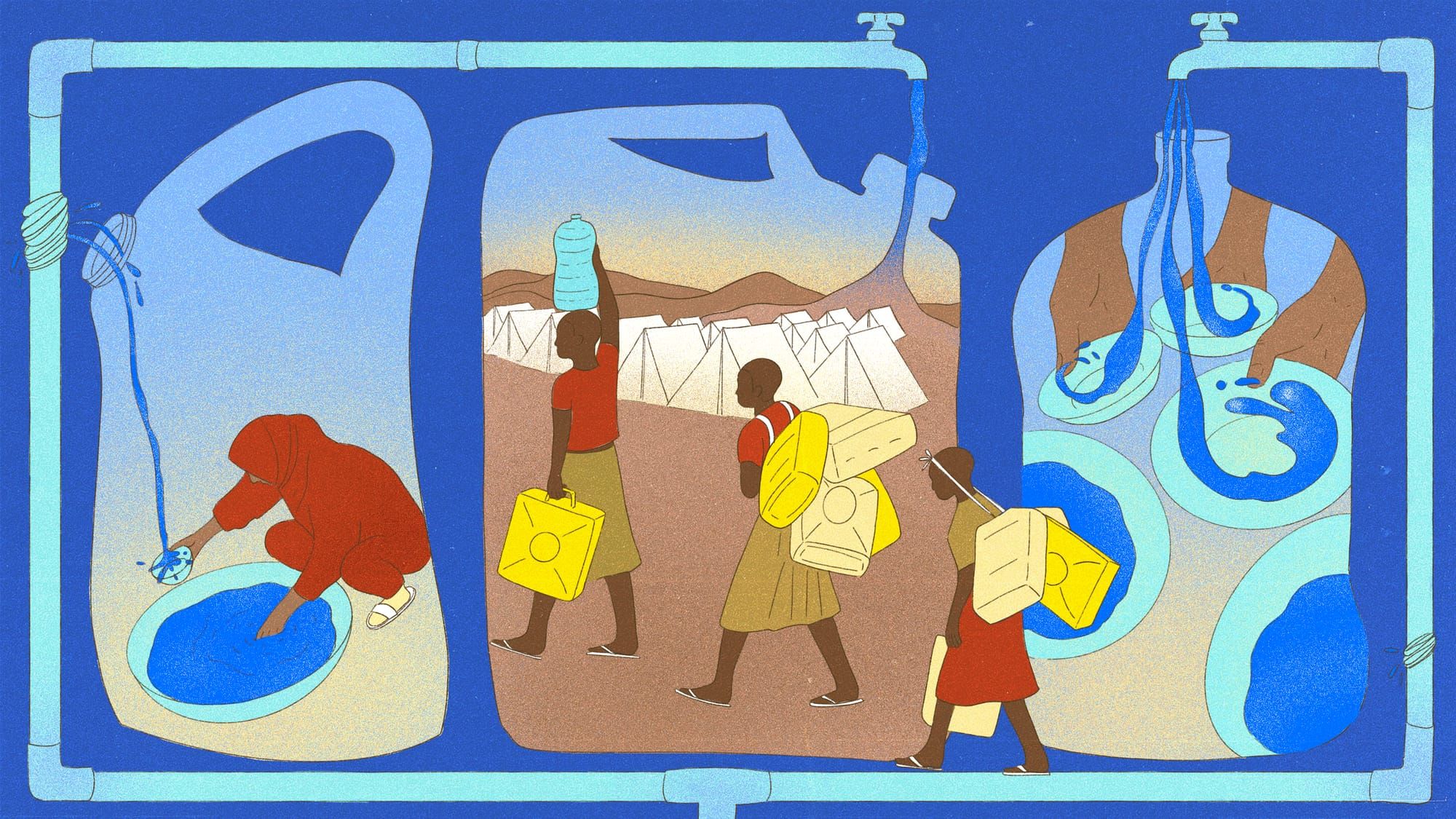
Traditional gender roles mean the burden of fetching water used for drinking, cooking and cleaning largely falls on women and girls.
Fuller spoke to four women in Gaza, Algeria, South Sudan and Nepal, who were forced to flee their homes because of conflict or natural disasters and who now live in displacement camps, about their daily struggle to collect water.
GAZA
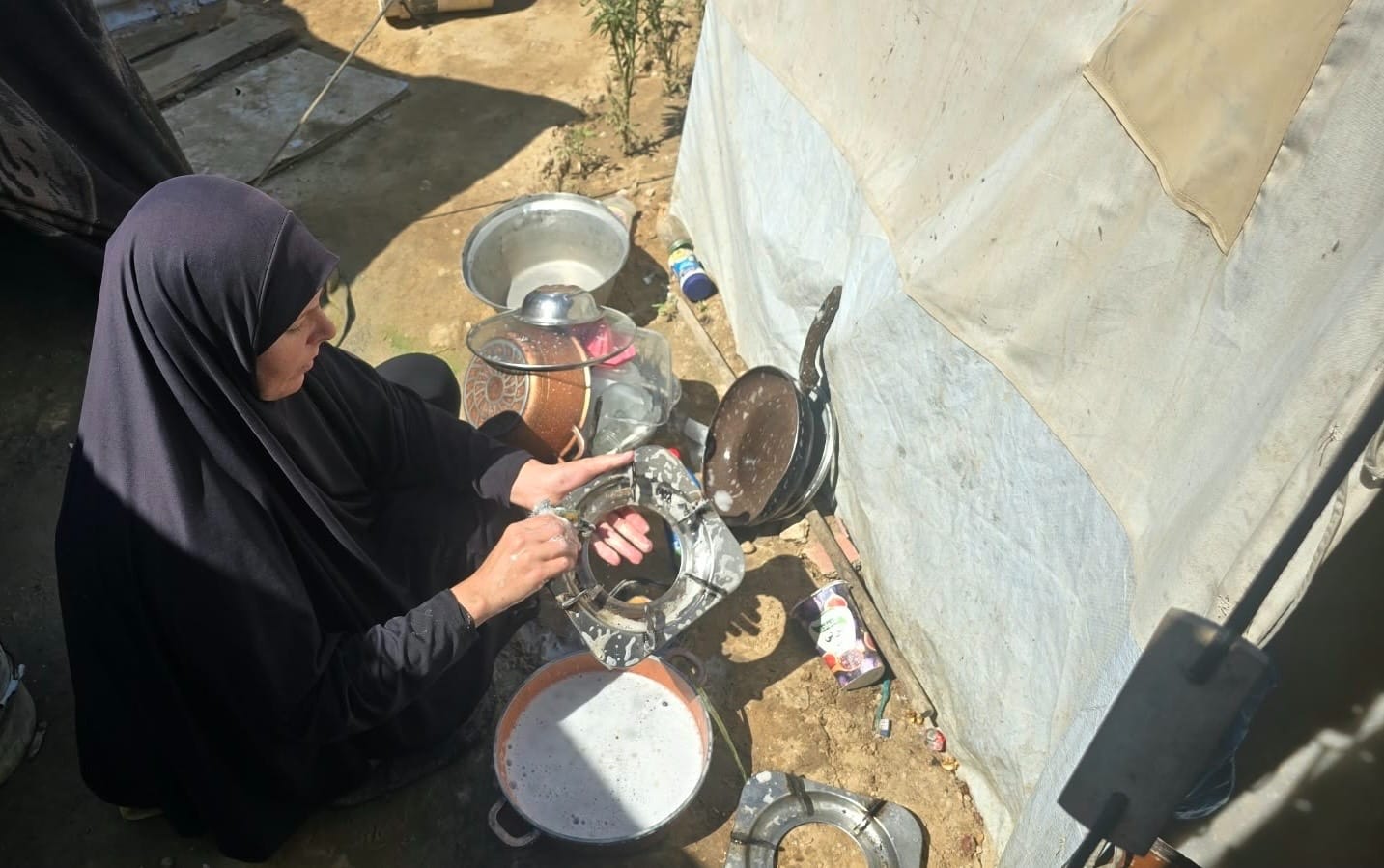
Location: Al-Zawaida, a town hosting informal displacement sites in Deir al Balah, central Gaza
Camp population: About 424,000 people live in 430 displacement sites across Al-Zawaida
Reason for displacement: War and repeated bombing; family home destroyed and partially demolished
Time living in camp: Nearly two years
Context: Following the Hamas-led attack on Israel on 7 October 2023 that killed about 1,200 people, Israel responded with an assault in the Gaza Strip. Three years of Israeli bombardment and ground operations in Gaza have so far killed more than 74,000 people.
Gaza mother Fidaa Abu Ghali, 35, queues three hours a day for water
"I worked as a journalist in the Jabalia refugee camp before the war forced me to flee repeatedly. My son, Kenan, was born five days after the war began. My daughter, Amira, came later, during the famine. I have two children and I couldn’t breastfeed either child.
I have just one small bucket of water in front of me. Dishes are piled up, laundry is piled up, and I still need water. Here in our camp, like all the others, we wait for trucks run by international organizations to bring water. I queue in the street, squeezed in line. Rain or scorching sun, it doesn’t matter - this cannot wait. Getting it means standing up for three hours.
The water truck's horn sounds twice. It’s a sound I recognize right away, and people start shouting, "Water! Water! Fresh water!" and rushing towards it. The truck only comes twice a week to an area home to roughly 2,000 people, so each person carries a water gallon and lines up in what becomes a long queue, typically 50 to 70 people, women and men, though mostly men. It's sometimes organized by the Coastal Municipalities Water Utility (CMWU), the Palestinian utility that coordinates water deliveries with aid groups. There are often problems - arguments, pushing, people cutting the line. Water here is provided for free. There’s also municipal water, but it only reaches homes with electricity to pump it, not my tent.
I borrowed a barrel from my family to store water. It holds around 500 liters, but even filling it isn’t easy because water only reaches us once or twice a week.
It’s scary how people are dying over access to water. In Yarmouk camp, 12km away, a young man was recently killed in a fight over turns in a water queue.
By the time I fill our barrel, half the day is gone. My children need clean clothes daily, but I can only change them every two days, because I don’t have enough water or spare clothing.
Even the water we get is often unsafe. My children, Kenan, three, and Amira, 15 months, suffer recurring infections, rashes, fevers and boils. I cannot treat them properly. I have had to mix formula milk with boiled tank water. Nappies cost $100 a pack and my children have skin sores from going unchanged too long. Medicine is also scarce in Gaza, due to the siege. I suffer from recurring gynaecological infections since my first birth, as I’ve been unable to clean myself properly without water.
I sometimes try boiling water for the children but that’s not easy either - fire fuel is hard to come by. Cooking gas has been scarce or unavailable for extended periods, forcing me, like the majority of displaced families, to rely on open fires fuelled largely by wood. But even wood has become hard to get and increasingly expensive, so I sometimes burn fabric and other scavenged materials instead.
Then I go back to waiting in line, for another three-hour stretch, dividing what little water I get between my children.”
As told to Palestinian journalist, Ansam El-Kattaa, in central Gaza
This interview is published in collaboration with Egab.
ALGERIA
Location: Smara refugee camp, desert of Tindouf Province in southwestern Algeria
Camp population: About 40,000 people
Reason for displacement: The Sahrawi people, fleeing from war, crossed into Algeria from the contested Western Sahara territory following Morocco’s occupation of their lands in 1975
Time living in camp: 36 years
Context: For more than five decades, Algeria has hosted Sahrawi refugees, making it one of the world's longest-standing and overlooked refugee situations. About 174,000 Sahrawi refugees live in five camps in Algeria’s Tindouf Province, an isolated and barren desert environment.
Najla Mohamedlamin, 36, born in a refugee camp, shares her memories of water shortages growing up as a child and now as a mother
“The smell of burning wood, the sound of tea being poured in the cold morning and waking up inside a tent are vivid memories of my childhood. I was born and grew up in Tifariti, one of the six districts inside the Smara camp, where I lived with my mother, my two siblings and my maternal grandparents.
I have vivid memories of weeks when we didn’t have any water. I grew up drinking silty water that tasted like the sea. Showers were so rare that we had to use rocks to remove dead skin.
I will never forget the dark mornings when my mother had to run to the water station. She would organize the containers like beads in a necklace and would drag them to the center where she would wait until the water truck came. Some days, she would wait most of the morning and the truck wouldn’t come.
Our water use was extremely restricted. My grandmother acted as the water police. She had a fear of drought because as a nomad she had lived in them many times. Water was gold and still is.
As a mom, the water crisis has hit me differently. I’m responsible for two little kids and a whole household. When I was a child, I had to help bring water, but I was not the caregiver.
I experienced my worst water crisis in 2022. It was July and the temperature was above 50 degrees celsius. At the time, my son was six months old. Our containers, which could carry 5,000 liters of water, were empty. I had a big pile of dirty baby clothes, and, in my kitchen, there were piles of dirty dishes, which I had to cover with a cloth because they attracted flies. Our toilet started to decompose and the smell was horrible. I remember not being able to shower during that summer.
Water in refugee camps is covered by international funding. It’s only very recently that water has started to arrive at our homes, brought by trucks or through an underground water system. Sometimes we don’t get it for two to three months. So you might get 10,000 liters of water for a family of 12, but you don’t know for how long you have to wait to get more. The one thing that brings me so much worry and discomfort, aside from a loved person getting sick, it’s when we have no water at home. A house without water is like a body without a soul.
I have experienced the combination of no water and heat. It's a horrifying glimpse of a reality that might not be too far away for many more people around the world.
We have never had an easy life, and we have always managed to survive the injustices and find ways to adapt. But water crises are something that no living being should experience. Our struggle was a fight for freedom and liberation. It should never be about water, food, and medication. Those are the most basic human rights a human can have.”
As written by Najla Mohamedlamin at the Smara refugee camp.
SOUTH SUDAN
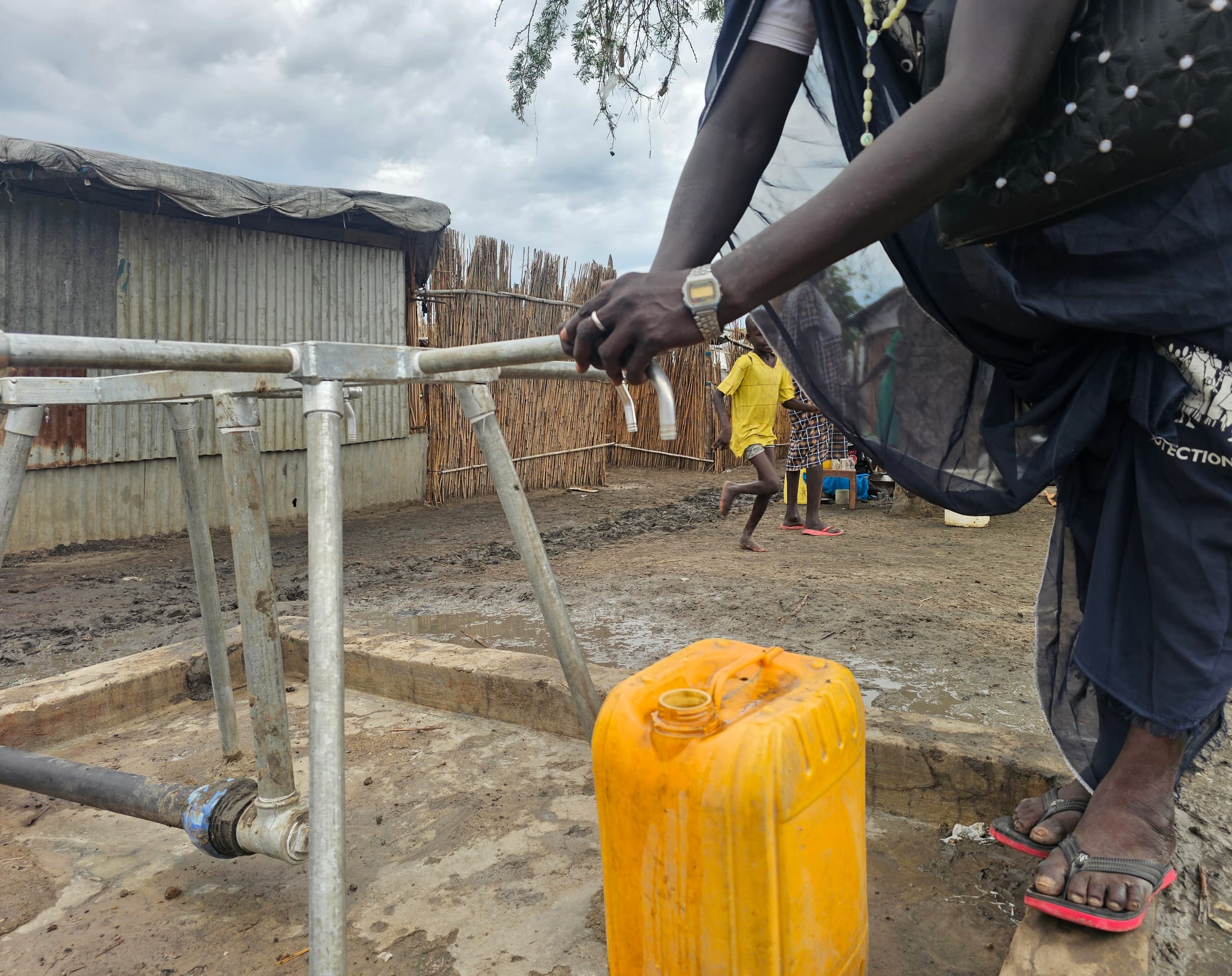
Location: Bentiu, the capital of Unity State in the north of South Sudan
Camp population: 110,730
Reason for displacement: Conflict and political violence. Ethnic and political rivalry has driven South Sudan’s cycles of war since 2013
Time living in camp: 13 years
Context: Overcrowding, poor sanitation and recurrent flooding has raised the risk of cholera at the Bentiu camp, South Sudan's largest displacement site, formed following the 2013 conflict.
Deborah Nyakuy Chan, a child protection officer for non-profit Nonviolent Peaceforce at the Bentiu camp where she lives, faces cholera and flooding
“We live in fear. Cholera has been living with us since last year. Both flooding and water shortages have contributed to the spread of disease. We need to regularly clean our latrines, utensils and hands with clean water and soap to protect ourselves. But that’s difficult to do because of the water shortages.
I’ve been living in the Bentiu camp since 2013. Before being displaced, I was a midwife with the health ministry at Bentiu’s main state hospital, but I lost my job there. I was then forced to seek shelter at the camp because of the conflict.
Many people have also been displaced due to flooding in the region and the camp’s population has increased as a result. I help run a child-friendly space in the camp to protect children from drowning in the flood waters.
Children are at greatest risk of cholera infections because they bathe in the dirty flood waters. Many don't know about cholera prevention measures. We need more mobile health teams to move from block to block in the camp to help raise awareness about how to prevent cholera.
Currently, we’re facing serious water shortages. It’s very difficult to fetch safe water for the family because water is only pumped from the taps for less than an hour a day. Sometimes we sleep without being able to cook food and bathe because of the water shortages.
Funding constraints have seen international aid agencies pull out from water, sanitation and hygiene projects, adding to the shortages. Before each family was entitled to four liters of water filled in a jerry can. Now families can get only two jerry cans from the tanks. Some families miss out and don’t get any water in a day. When this happens, sometimes we’re forced to use dirty flood water.
Cases of sexual assault and harassment against women have been reported at water points. There was one recorded case of rape at a water point in 2024. The government should employ permanent judges to handle sexual assault cases. It's an issue that isn't taken seriously."
As told to Chondok Stephen Magei, a South Sudanese radio station manager and journalist, living in Bentiu camp.
NEPAL
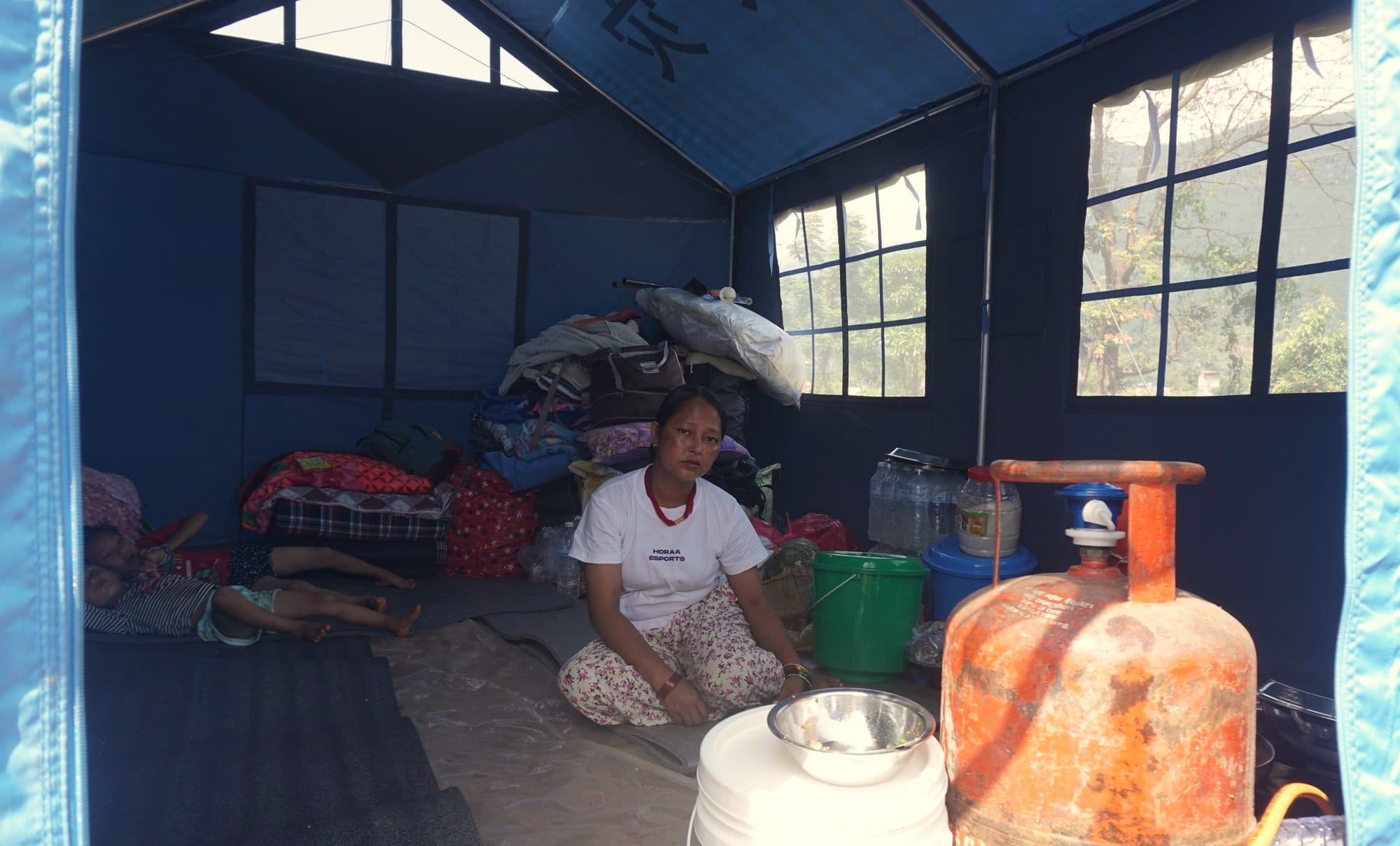
Location: Baada Chautara, Nuwakot District, central Nepal, about 60km northwest of Kathmandu
Camp population: 125 households from Nuwakot and Rasuwa living in tents at the shelter run by the Nuwakot-Bidur local government and Nepalese and international NGOs
Reason for displacement: Flash floods in Nepal on 26 August 2026
Time living in camp: seven weeks
Context: Nepal was hit by devastating floods in August that killed at least 1,455 people. On 5 October the government announced it had ended the search and rescue operation for those still missing. At least 5,285 people remain unaccounted for.
Birmaya Tamang, 24, who lost relatives, her home and business following the deadly flash floods in Nepal.
“My day starts at 5am. While my family is still asleep, I pick up my containers and head out to fetch water. I make five or six trips to the tap every day, walking 40 to 45 minutes to bring back 10 or 12 liters at a time.
Home is now a makeshift shelter here in Nuwakot. It's one small shelter shared between my husband, our three young kids, my in-laws, and me.
I’ve never had to fight for water like this before. Back in my village, we had sources close by, and clean water flowed out of the pipes at home. Now, my day is consumed by hauling containers back and forth until my body is exhausted. Every drop I carry has to stretch across cooking, cleaning, laundry, sanitation and bathing.
My home was in the highlands of Tiru, in Rasuwa. The 2015 earthquake destroyed our house and took members of my family. Thinking it would be safer down in the lowlands, I moved, built a small shelter, and opened an eatery. My husband and I worked and we made an honest living. Then the flood hit. It swept away our home, our neighborhood, our family, and every last rupee we had saved. Now, we're left with nothing and nowhere to go.
I can still picture the moment the flood struck in August. I was waiting for the bus to take my kids to school when villagers screamed at me to run. I grabbed the children and sprinted toward the forest with my husband beside me. The flood swallowed our entire settlement. Nineteen members of my family—including my parents and my sisters—were swept away.
After the flood, we walked for three days to reach the relief shelter. We had to bathe in an open, filthy area. The foul water gave us all rashes.
Inside the tent, the daytime heat is unbearable. I manage to haul enough water to bathe my children once a week. I wait until dark, when the area is quiet, to bathe and wash our clothes at the tap.
Managing my period here is tough. Gathering water becomes a battle because people view us as impure when women are menstruating and ban us from the public tap. There’s no privacy and no way to safely dispose of pads or waste.
Even getting water from the tap is full of friction. Flood victims and local villagers share that single source, and the lines can stretch for an hour and a half. Because the villagers used the tap long before we arrived, they treat it like it belongs solely to them. And I'm honestly afraid to speak up—there is a big difference between standing on your own land and surviving on someone else’s.
When night falls, sleep brings no peace. The sight of my parents and relatives being swept away plays on a loop in my mind. We worshipped the river as a deity but to me it’s become a monster. I used to fall asleep to the gentle murmur of the river, but now, I’m terrified to go near it."
As told to Nepali journalist, Sunita Neupane, in Nuwakot.
 Nita Bhalla
[cr1]Edited by Anastasia Moloney and Liz Ford.
[cr2]Edited by Anastasia Moloney and Liz Ford