‘This water makes us sick’: Women feel the pain of aid cuts in Kenya
In Kaeris Ward, a remote corner of Turkana County in northern Kenya, pregnant women and mothers are forced to dig for contaminated water in dry riverbeds and give birth in health facilities with little or no sanitation, putting their lives and those of their babies at risk
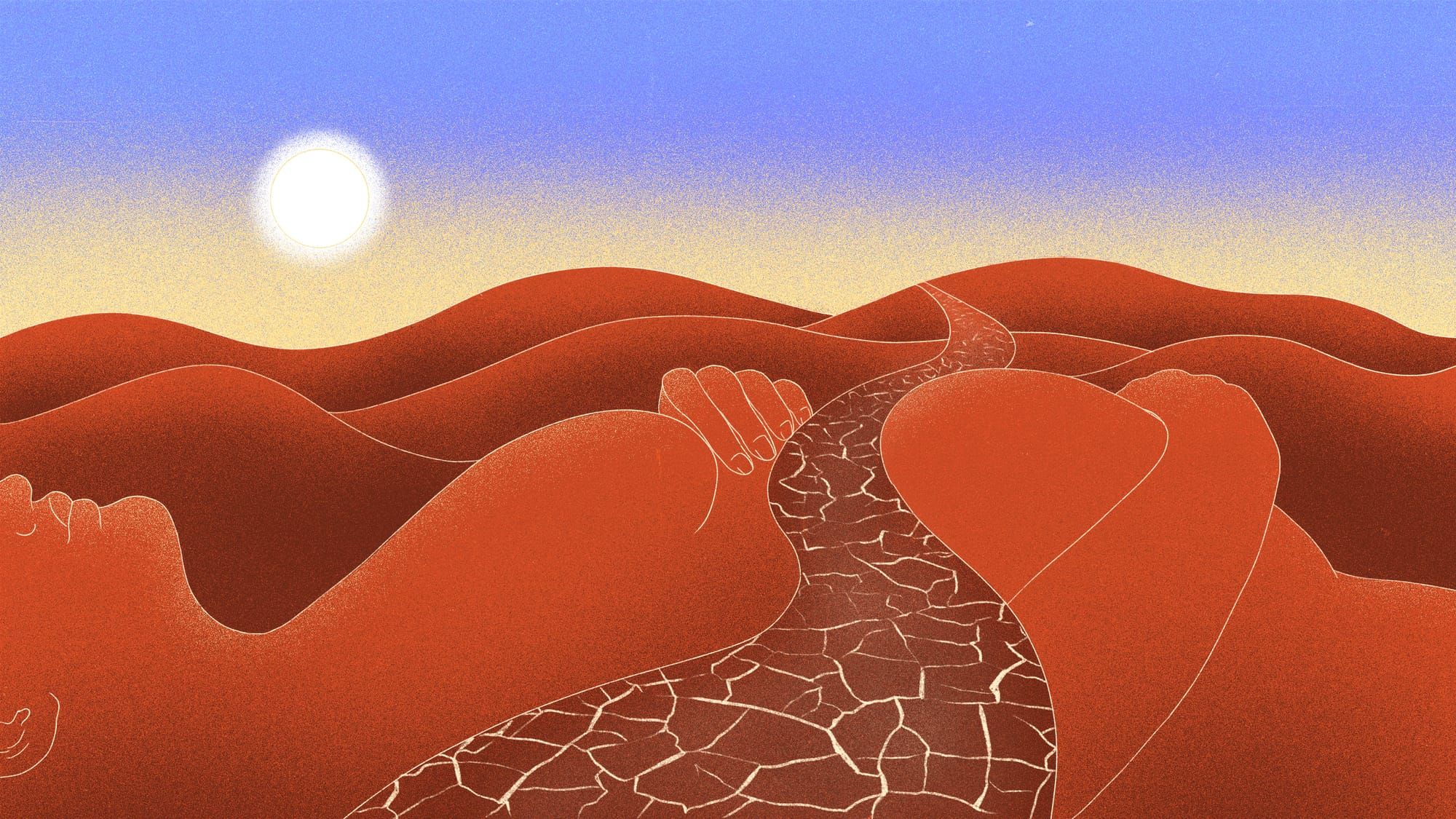
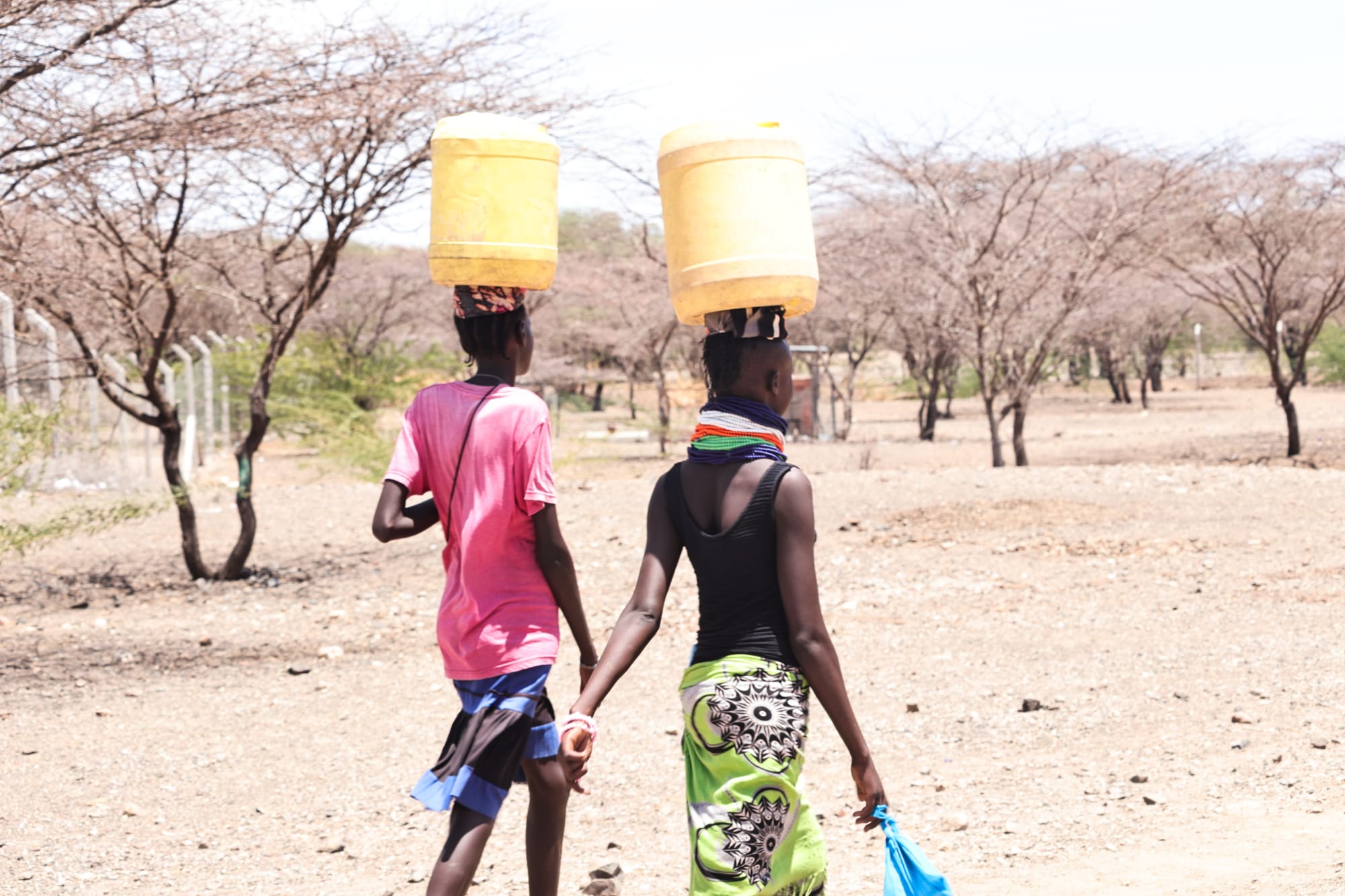
Turkana County, Kenya - Under a sweltering 40C (104F) sun, through thickets and shrubs, Aita Nateleng, 40, makes her daily search for water. Eight months pregnant with her 10th child, Nateleng has to walk 7km (about 4 miles) to the dry, seasonal river, because the tap water she depended on near home in north-east Kenya has dried up.
The funding that once provided water purification tablets, a health worker and nutritious food has stopped.
Where the river once ran through Kaeris Ward, a remote region of Turkana County, there is only sand and stone, and a scattering of holes, each at least a meter deep, carved into the riverbed by hand.
Nateleng lowers herself to the ground beside one of the holes and waits. The hole has water, but it is too deep for one woman alone to draw from - especially a pregnant woman. It takes at least three: someone to descend into the earth, someone to stand at the rim, and someone to receive what finally reaches the top.
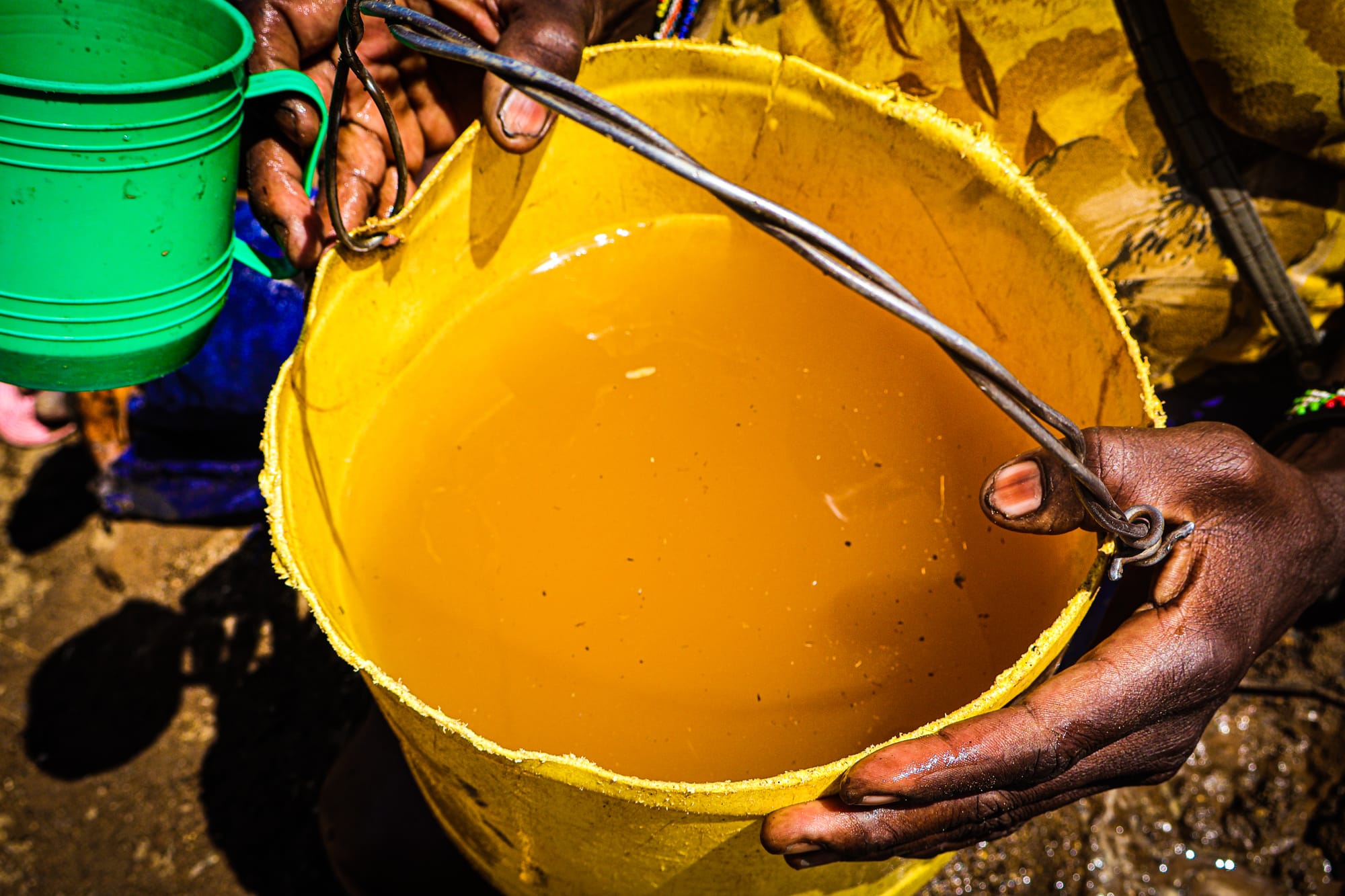
Within minutes, two women arrive. One climbs down into the hole, bracing her bare feet against the damp walls. The other kneels at the edge, positioning herself to collect the worn yellow bucket that will be filled with water the colour of rust-stained tea, thick and opaque, with suspended flecks of sediment. Nateleng sits a little apart, her hands ready, waiting for the bucket to reach her.
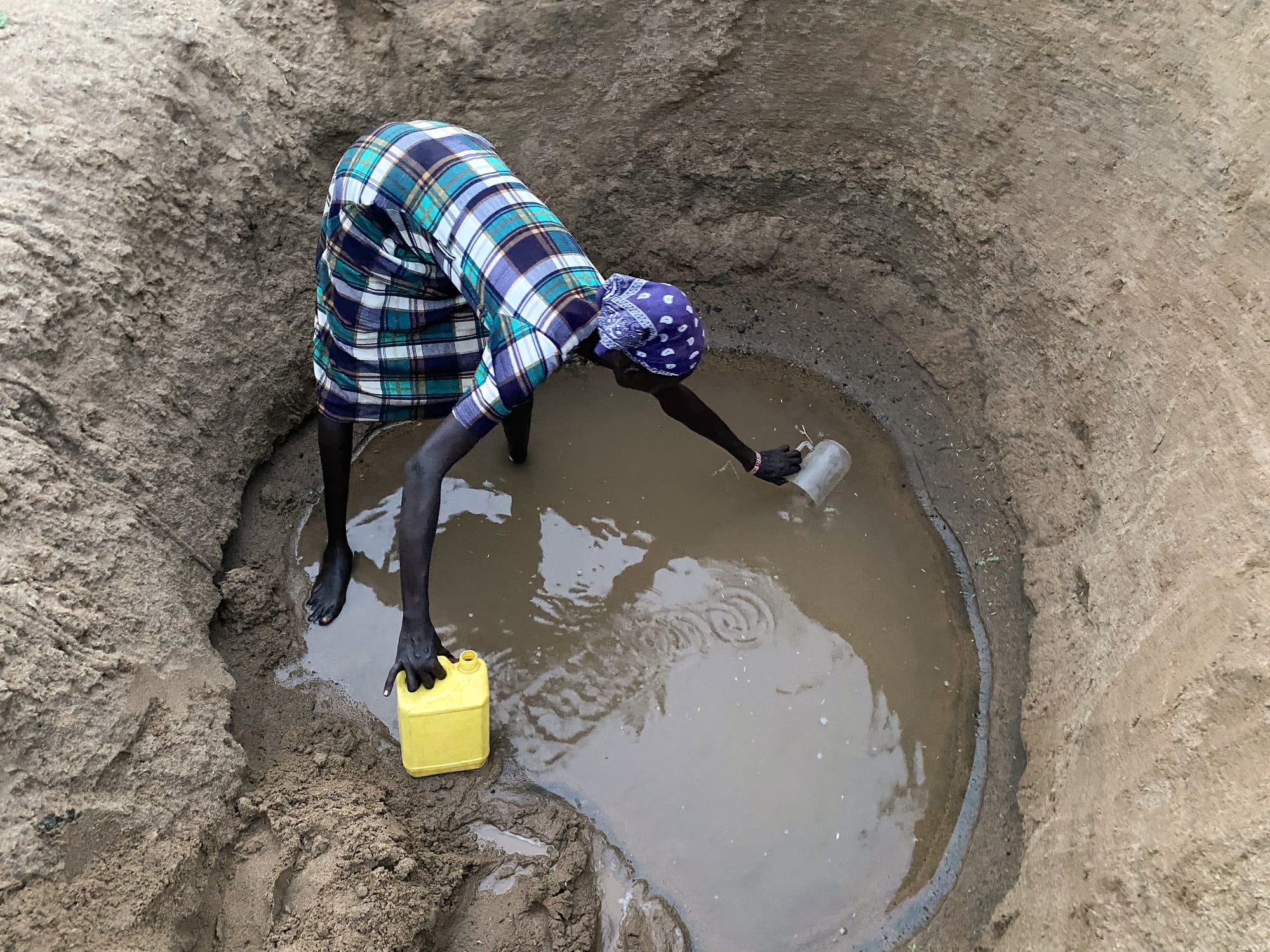
“The water in the village is spoiled,” she says, watching the container rise. “This is the only water most of us use now.”
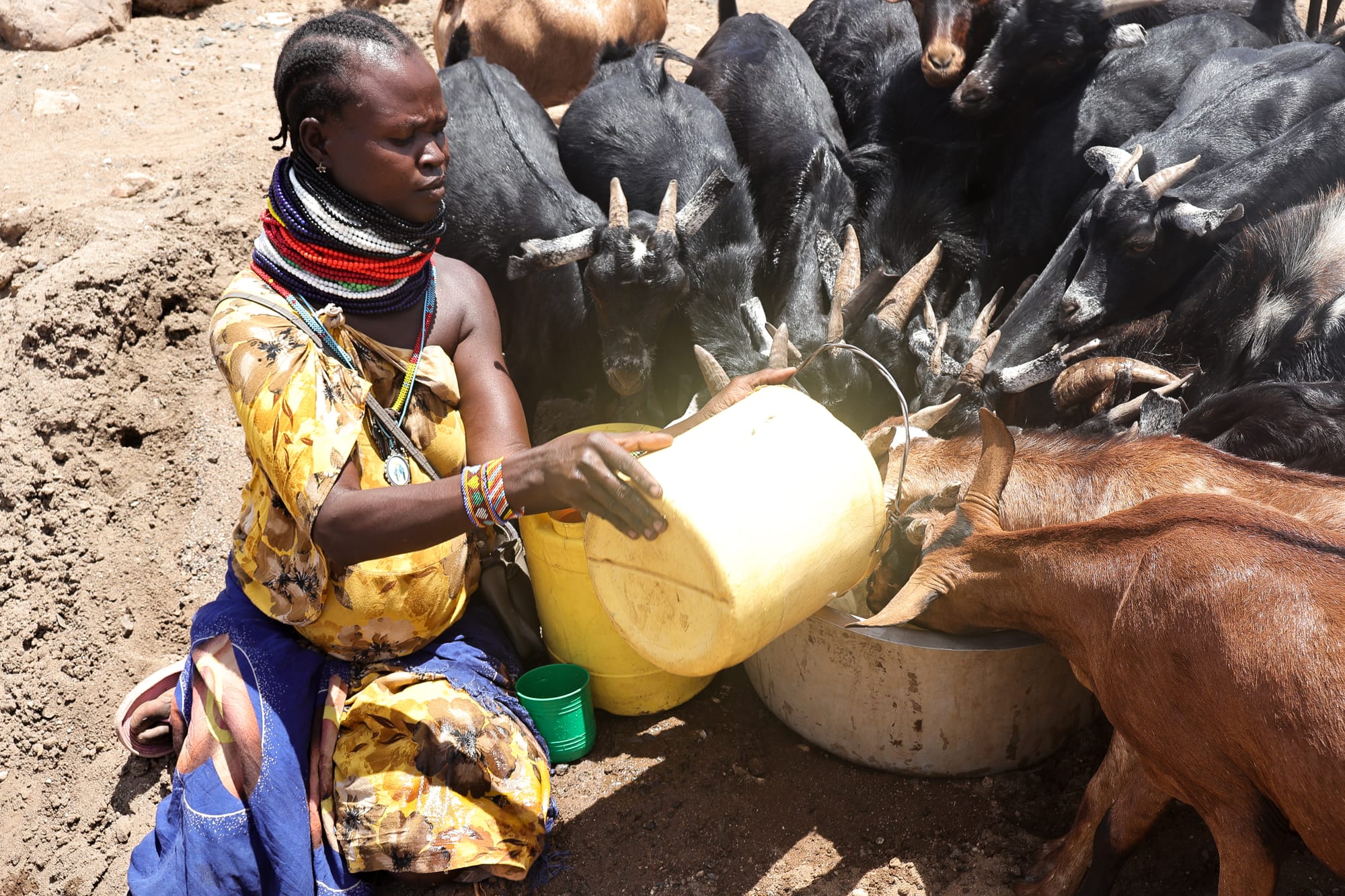
The murky brown water that fills the bucket is also poured into a large pot set a few feet away for the goats that have wandered down with Nateleng. Within minutes, they are jostling at its rim. Nateleng dips a worn green cup into the bucket and begins filling her yellow jerrycan. Between pours, she lifts the cup to her lips and sips the water – unboiled and unfiltered, no different from what the goats beside her are swallowing.
“Before, we used to get a water purifier [tablets] from the hospital,” Nateleng says, wiping her hands on her dress as she fastens the lid of the jerrycan. “Now it has stopped coming. We just drink it like this.”
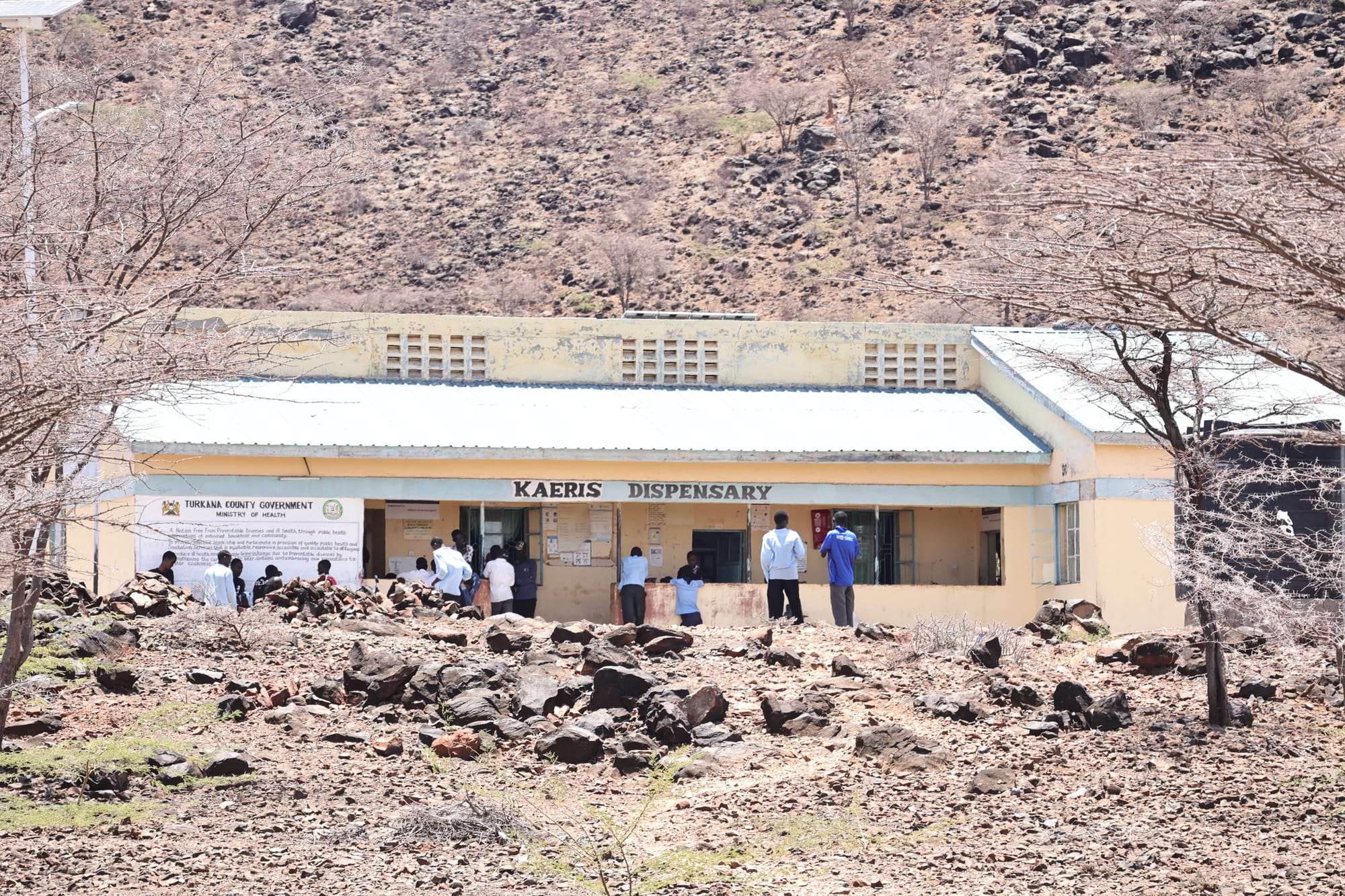
The hospital is Kaeris Dispensary, a small facility that serves roughly 2,500 people a month across 10 villages in Kaeris Ward. It is, by its own staff's account, in a poor state. There is no reliable supply of medicine, no running water and not enough beds for patients who walk in for treatment.
Only 59% of Kenyans have access to safe drinking water. Water scarcity is set to get worse as Kenya is expected to be hard hit by the upcoming El Niño, with increased risk of flooding contaminating drinking water sources and sanitation. Globally, 2.1 billion people still lack access to safe drinking water, including 106 million who rely on untreated surface water, according to UN estimates.
Most of the support the dispensary once received came through programs funded by the US Agency for International Development (USAID), says Caroline Akai, a nutritionist at the hospital. But following sweeping agency cuts, announced last year, something as simple as water purification tablets and nutritional supplements has stopped arriving. Between 2020 and 2025, USAID committed roughly $2.5bn in assistance to Kenya, about $470m a year, with four-fifths going to health programs, according to Physicians for Human Rights research.
Unforgiving long searches for water
The dirty water takes its toll long after it leaves the hole. Nateleng has learned to recognize the signs: the cough that lingers for days, the diarrhea, the cramping low in her stomach that she can’t distinguish from her baby moving. “This water makes us sick,” she says. “Coughing, stomach pain, running stomach, it happens every time.”
At the dispensary, Agnes Aweet, 23, waits with her four-month-old daughter, brought in for a check-up. For two days, mother and baby have been coughing, their stomachs turning with pain, caused by water unfit to drink, she’s been told by the doctor.
Aweet draws her water from the same dry riverbed as Nateleng, 6km from her home, among a cluster of dome-shaped thatched huts. The walk is unforgiving, made harder by having to carry her daughter wrapped around her back the entire way. “I experience back pains, and when I return from searching for water, I am normally weak,” she says.
Before the cuts, community health workers, paid through USAID-funded programs, visited the homes of pregnant women, teaching them about nutrition and the importance of safe water and sanitation. Pregnant women and mothers of children with acute malnutrition received $39 a month, money Nateleng says helped her buy vegetables and fruits and clean water. That, too, is gone now.
"The only water near me is from the school, 2km from my home,” she says. “Sometimes they allow us to fetch [water], sometimes we are restricted since it's for the school,” she adds.
Nateleng fears she will end up giving birth at home instead of at the hospital. “There is no water or medicine at the hospital. Why should I go there?” she says. “If I go to give birth, I have to go with my own water, the same one from the riverbed.”
The decision by the Trump administration in early 2025 to slash USAID’s annual budget of nearly $43.8bn, which accounted for more than 40% of the world's humanitarian aid funding and helped prop up healthcare services globally, has led to the quiet collapse of health systems.
USAID-funded projects mainly in Kenya’s north and coastal regions, along with Somalia, South Sudan, Liberia and the Democratic Republic of the Congo, are among the hardest-hit in Africa.
For many women and girls, the cuts have meant losing access to maternal and reproductive healthcare services, including contraception and rape treatment. In February 2025, the US government cut $377m worth of funding to the UN reproductive and sexual health agency, UNFPA, a move it described as having “devastating impacts on women and girls”.
In Turkana, US aid accounted for about half of its annual partnerships, according to local officials. The gap left by the cuts has, so far, not been addressed by the county government, which is directly responsible for running and resourcing all health facilities. Akai says staff have continuously raised the facility's deteriorating state with the local authorities. Nothing, she says, has been done.
Bring your own water
Nurse Yasmin Jeptum, who oversees maternal health at Kaeris Dispensary, confirms there is no water in the facility. Women coming to give birth are asked to bring their own water or to come with someone able to fetch it from a leaky water tank 2km away.
The hospital once relied on a water pump, shared with the surrounding community, just 1km from its gate, built by an American NGO. But, with no maintenance plan in place, it broke down almost two years ago. Since then, children have stripped parts from it to sell as scrap.
Inside the facility, two 500-litre water tanks sit dry. One lies toppled on its side. The taps have rusted shut, as have the handwashing stations donated by charity Save the Children and USAID implementing partners. “Because of the lack of water, the hospital isn't cleaned as much,” Jeptum says. “We can't clean surfaces every day, or every time it's needed.”
In the maternity ward – a small room with a single bed and a few pieces of donated equipment – two cleaners carry in two 20-litre containers of water, fetched from another tank further away. They pour them into the ward's 50-litre holding tank. This is what will be used to clean newborn babies, the bed and any instruments used that day. Jeptum adds that nurses resort to using IV fluids to clean mothers and babies and keep surfaces clean when the water runs out.
When Aweet gave birth in this room four months ago, her husband had to fetch water. “He looked for water at night and brought it, because there was not a single drop in the hospital," she says. “Without him, I don't know how I would have given birth that day.”
The dispensary used to deliver 40 to 50 babies a month. Now it manages 15 at most. “Because of all the challenges, lack of water, medicine, malnutrition support, and no pads, most of the women have gone back to giving birth at home,” Jeptum says, a shift she believes is driving up maternal and newborn complications. “We are receiving cases of placenta retention and infections because of this,” she says.
According to the World Health Organization, globally more than a quarter of a million women die each year during or after childbirth, often from preventable conditions.
The International Federation of Gynecology and Obstetrics says exposure to dirty or stagnant water during pregnancy can contribute to malaria, typhoid, and other infections capable of causing miscarriage or fetal death. An estimated 8% of maternal deaths globally, and up to 15% in low- and middle-income countries, are linked directly to unhygienic conditions during labor, birth and postnatal care.
Kenya continues to grapple with a high maternal mortality ratio – 355 deaths for every 100,000 live births, alongside a neonatal mortality rate of 21 per 1,000 births and a stillbirth rate of 15 per 1,000, according to the health ministry. The figures are all above national and global targets, despite progress in getting more women to give birth in health facilities with skilled staff, government figures show.
Funding cuts fallout
Turkana, where Nateleng and Aweet live, is Kenya's second-largest county, spanning roughly 77,000 sq km, yet it is one of the country’s most sparsely resourced. Across most of Turkana, the pattern is similar: a borehole that no longer pumps, a tank that sits dry, a community health promoter who no longer visits households.
Turkana has been hit particularly hard by USAID cuts. An eight-year $100m program, which began in 2019, implemented by a Mercy Corps-led consortium to address acute malnutrition alongside water and health system support for nearly 600,000 people across Turkana and Samburu county, ended last year, two years early. By 2024, it had reached 209,420 people across 22 wards in Turkana, Kaeris among them.
A separate four-year initiative, worth nearly $30m, implemented by Amref Health Africa in Kenya, which began in March 2021 to strengthen health and social services in the county, trained more than 2,300 community health volunteers. There is no more funding to continue the work because of aid cuts.
During a visit to the county by US chargé d'affaires Marc Dillard in April last year, Turkana governor Jeremiah Lomorukai called for the restoration of USAID-funded programs, including water and sanitation projects. He told US officials that the cuts had severely affected the area.
Michael Eupe, Turkana government county partnership director, acknowledges the gap left behind by USAID cuts. “About 50% of the programs, especially health and water-related, were funded by USAID. This really was felt beyond measure,” the local government official says. He adds that the county had to reorganise its budget to absorb the shock rather than let services collapse.
However, Eupe, who has not visited Kaeris, disputes the findings from staff and patients at the dispensary. “All health centres have been connected with water,” he says. Eupe had said he would send updated data on the facility's current state, but at the time of publication, these had not been received.
In May, Kenya launched its Every Woman Every Newborn Everywhere (EWENE) Acceleration Plan, backed by an initial KES 1.03bn (about $7.9m) to cut the maternal death rate to 140 per 100,000 live births by 2028, and reduce deaths in healthcare centres by 15%.
Edward Serem, a technical director at Kenya’s Ministry of Health, who is involved in the acceleration plan, says he is concerned by what is happening at the government-run Kaeris Dispensary. “Running a facility without water is fundamentally unacceptable.”
The Kenyan government, he says, has identified 25 counties, including Turkana, that require significant levels of investment to improve maternal health infrastructure. Officials have ongoing cross-ministerial meetings to address water, referrals, roads and staffing as part of the acceleration plan, he adds.
Back in Kaeris, Nataleng balances the full jerrycan on her head and starts the long walk home, the same 7km she will walk again tomorrow, and the day after. Somewhere behind her, the hole she drew from is already filling back in with the same brown water, waiting for the next woman.
[cr1]Edited by Liz Ford and Anastasia Moloney.
[cr2]Edited by Liz Ford and Anastasia Moloney.