Women’s financial inclusion: What the data does – and doesn’t – reveal
For our Cost of Living edition, editor Carlotta Dotto breaks down where we looked for data and what we learned about unpaid care work, childcare, pensions and statistical blind spots
Data can be a powerful tool for understanding economic inequality. It helps reveal where women earn less, spend more time on unpaid work, or face barriers to financial independence. It also allows us to compare inequalities across different countries by using a common set of measures.
But data is only as good as what gets counted. Numbers aren't inherently objective or neutral. They reflect historical biases in what is measured, how it is measured and what is left out altogether.
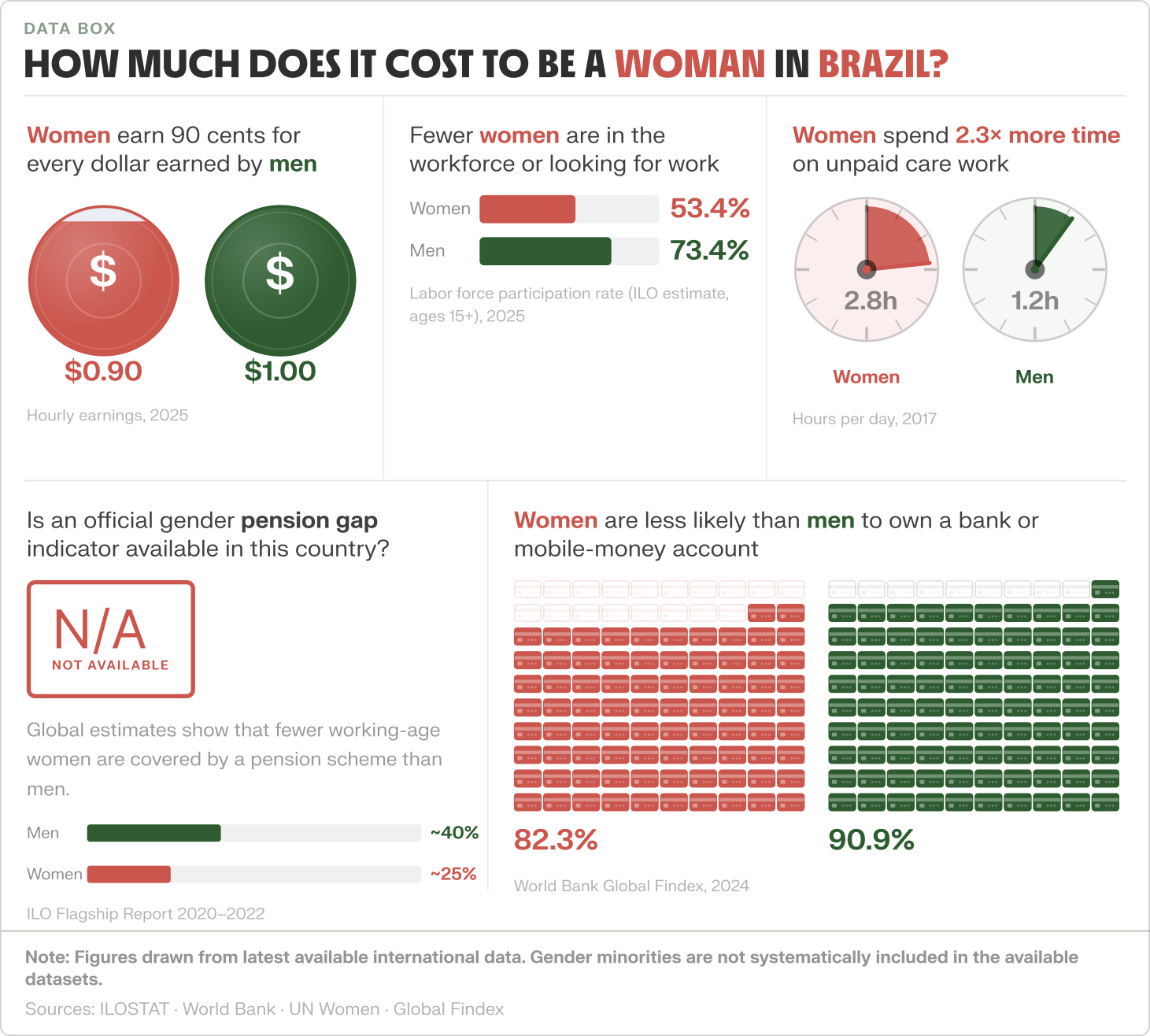
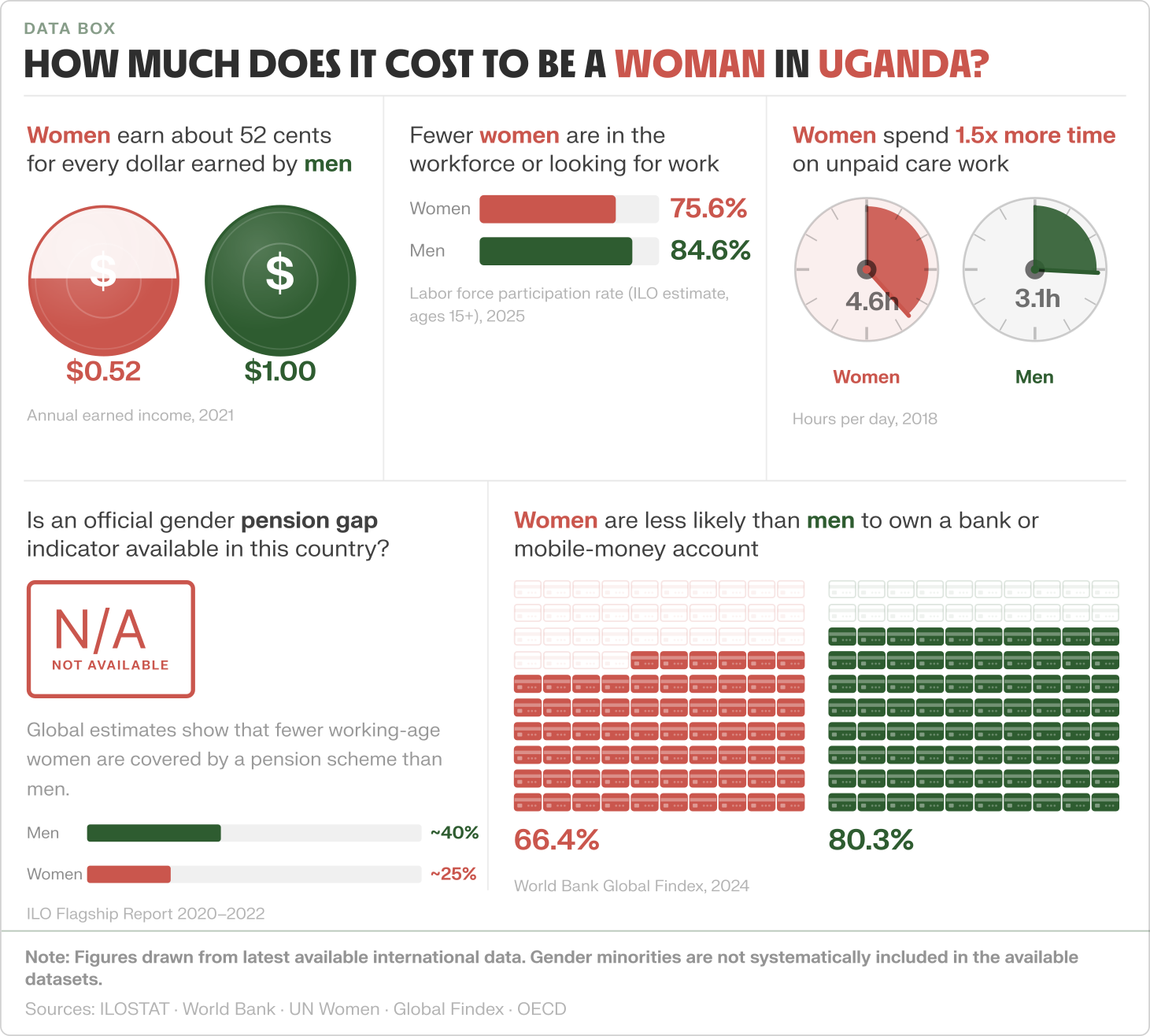
For the Cost of Living edition, I was tasked with building a consistent set of data boxes across the seven countries featured in our reporting, using comparable indicators of women and gender minorities’ economic participation and financial inclusion. What I found tells a story – just as much as what I didn’t find.
What we looked for
We started with a few simple questions. For example: how much do women earn compared to men? How likely are they to be in the formal labor market, as opposed to working in the informal sector? How much unpaid care do they do? Do they have access to basic financial services such as a bank account, as well as social protection?
To draw meaningful cross-country comparisons, we needed indicators that were sex-disaggregated, updated regularly and measured using consistent methodologies. We searched for datasets from international organizations such as the International Labour Organization (ILO), the World Bank and UN Women, rather than country-specific surveys or administrative records that depended on national welfare design.
What we found
The 2025 International Finance Corporation’s Closing the Gap report analyzed nearly two decades of gendered data from 20 public and private datasets covering 129 countries.
It found that while the volume of gender-disaggregated data has grown significantly, it still only partially accounts for women's economic lives. Comparable indicators tend to focus on activities that are formal, documented and visible to institutions, while experiences that happen outside these systems – such as unpaid care, informal work or barriers to accessing formal employment – remain harder to measure.
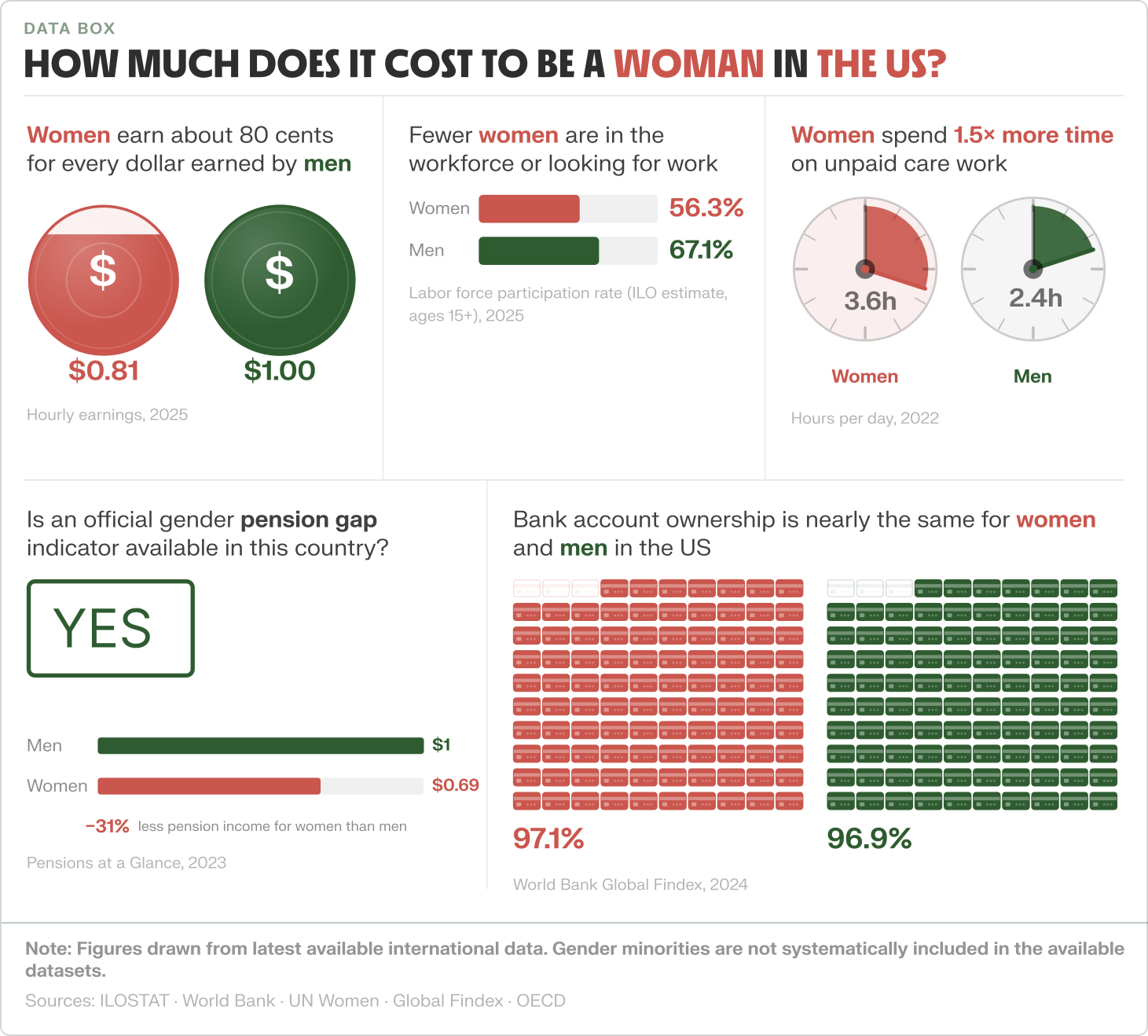
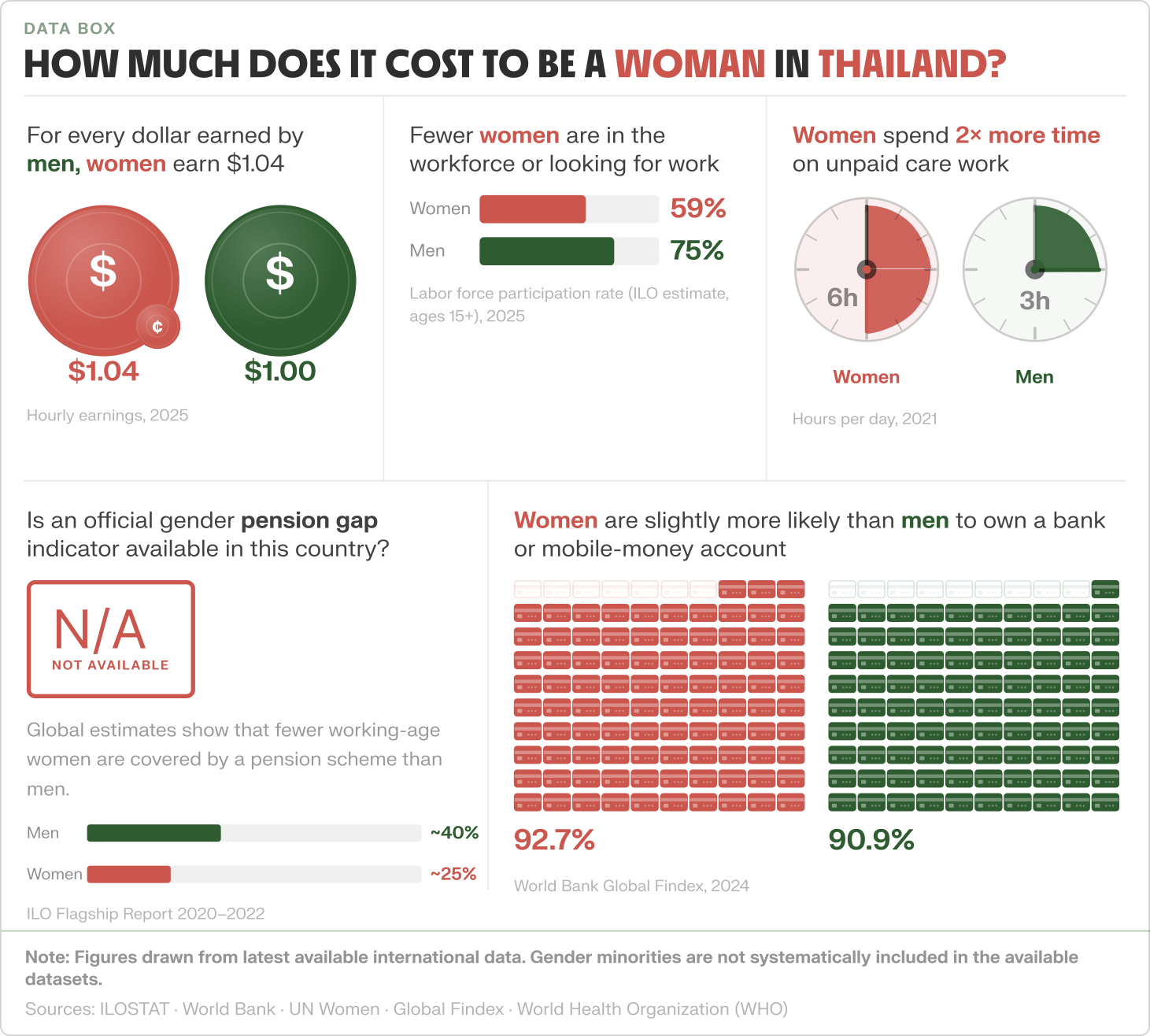
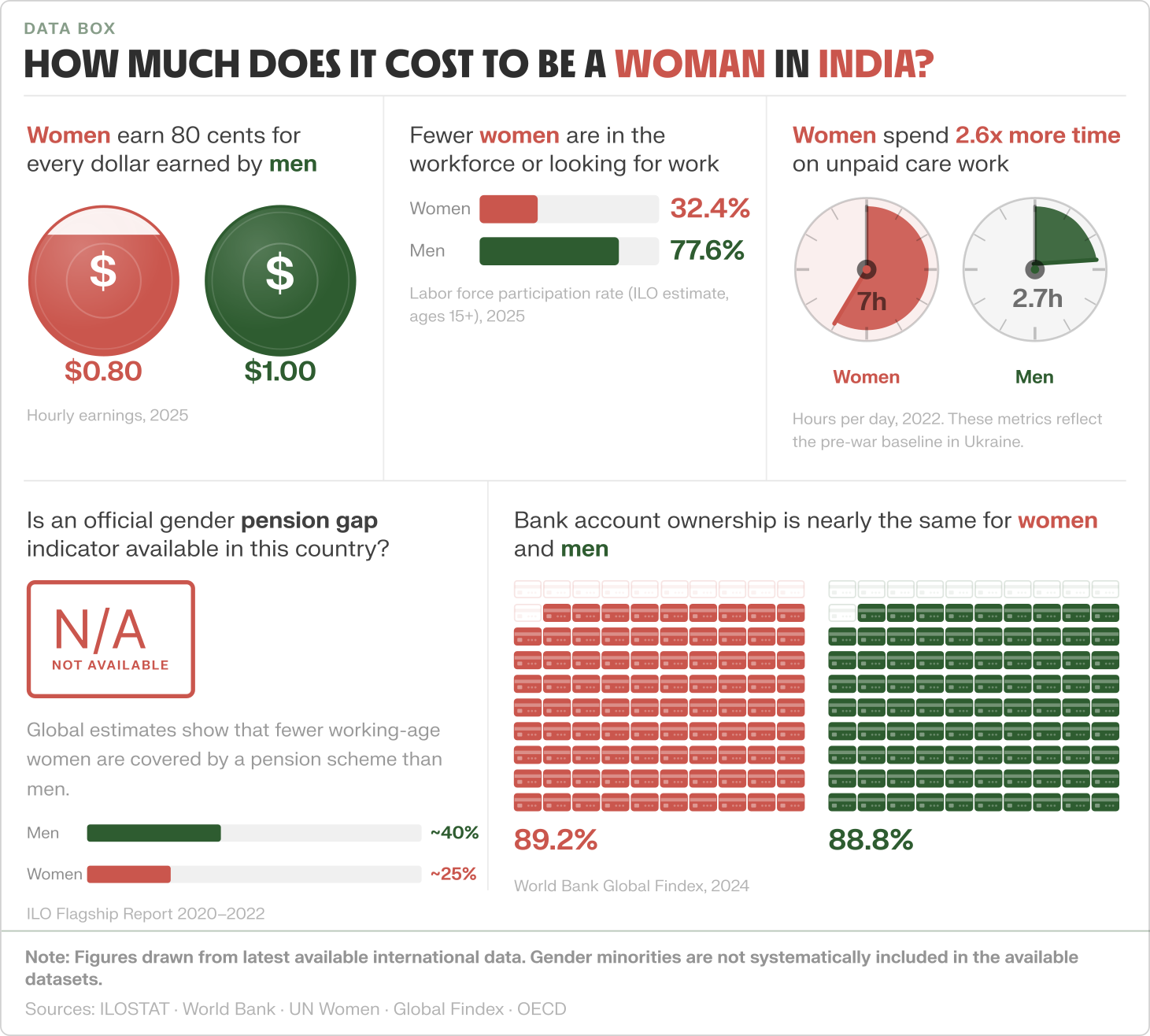
We used the ILO’s estimates for the gender pay gap, one of the most widely available indicators of economic inequality. But even this measure has its limitations: it shows the difference in average earnings between women and men, but cannot help explain why those gaps exist. It becomes then important to do additional research in order to draw meaning from the data.
So on the pay gap, for example, women earn less because they are more likely to take career breaks for childcare, while also spending more time on unpaid work such as housework and care. Then there are also factors such as discrimination that compound the inequity
To paint a picture of women’s labor force participation, we used World Bank labor market indicators derived from the ILO Modelled Estimates (ILOEST) database. This shows whether women are working or looking for work, but says little about the quality, security or conditions of those jobs. Two countries in our research may have similar participation rates while offering women very different economic opportunities.
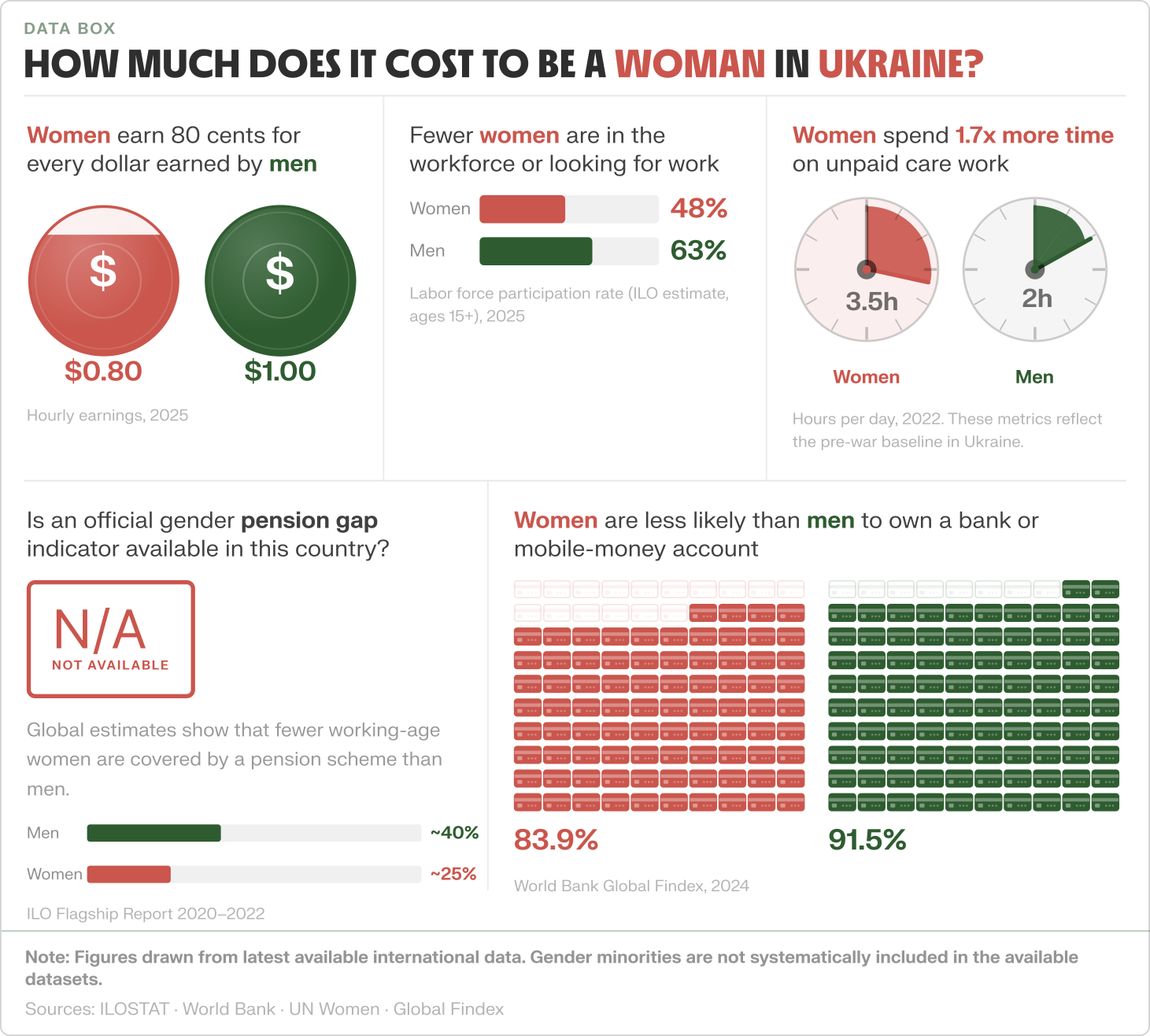
As expected, the consistency of data varies significantly between countries. OECD members such as Denmark and the United States tend to have more regularly updated labor-market statistics, while other countries often rely on less up-to-date, survey-based estimates. Ukraine’s latest available figures for most of the indicators dated back to pre-war, while Uganda’s comparable gender pay gap data was from 2021.
What the data doesn't show
Perhaps the biggest finding was what was missing altogether.
Some of the most important aspects of women’s economic lives happen outside formal labor markets. Unpaid care and domestic work – one of the main reasons women spend less time in paid employment – is measured through surveys that are collected irregularly and using different methodologies.
Other indicators, such as childcare costs, the motherhood penalty and gender pension gaps, are measured differently across countries or are not available at all.
At the same time, gender minorities remain a major blind spot. Official labor-market statistics rarely extend beyond the male/female binary, and data on the economic participation of transgender and non-binary people is limited and often anecdotal.
That absence matters. It means some of the very people facing some of the greatest economic barriers – as detailed by both the financial services industry and academic research – remain largely invisible in official statistics. Data gaps have real-life consequences; as the adage goes: you cannot manage what you can’t measure.
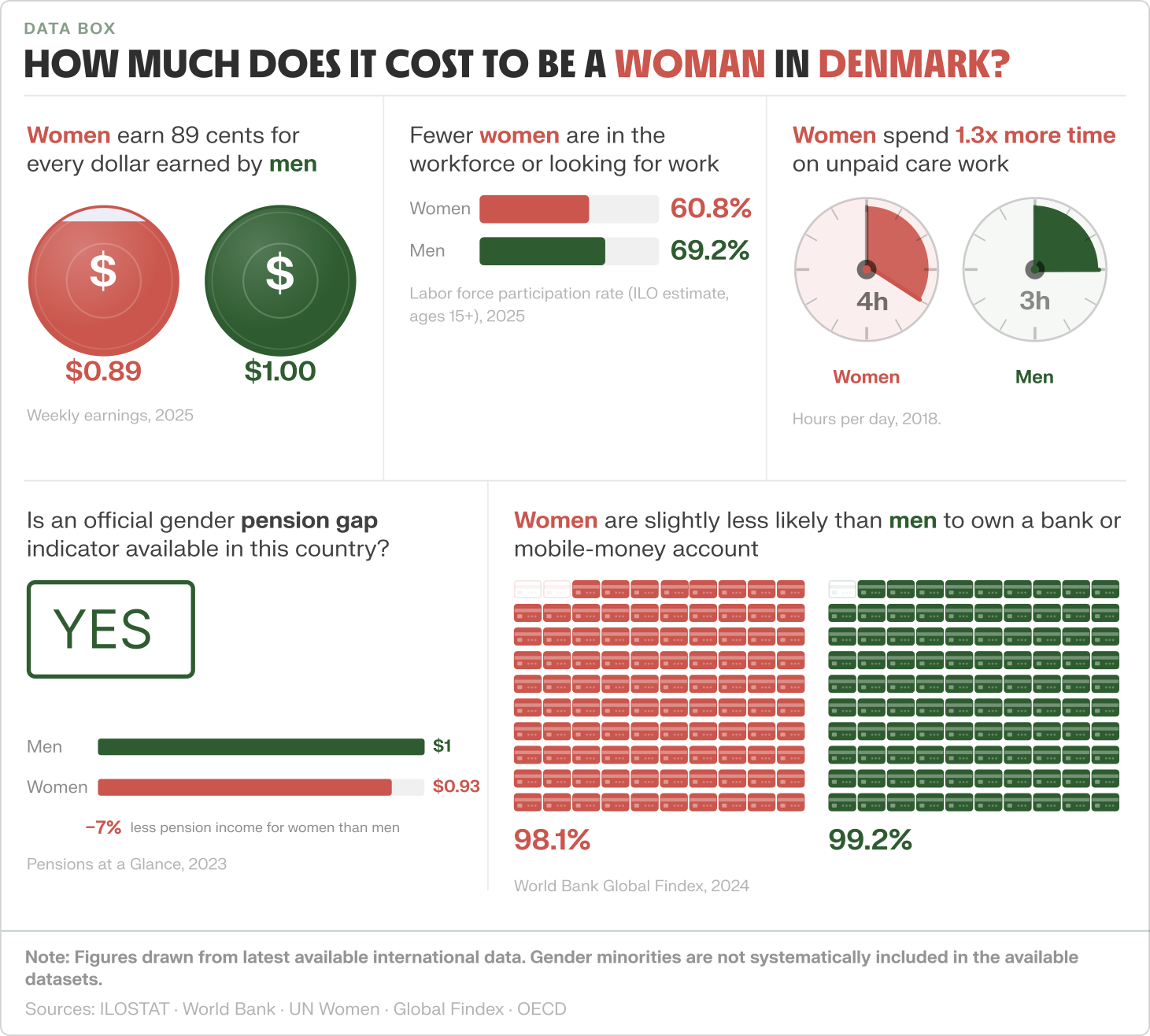
Visualizing the data
Finally, the constraints in the data – its inconsistencies and gaps – informed how we decided to visualize it.
We created one coherent data box format, focusing on indicators that could be compared while allowing the graphics to be adapted for each country.
Where harmonized indicators did not exist (i.e., pension gender gap), we chose not to fill the gaps with non-equivalent measures. Instead, we made those limitations visible.
The goal was not only to show what the data tells us about women’s economic lives, but also to visualize the absence and inconsistencies.
Related articles:
 Zara Rahman
 Qadri Inzamam
 Claire Cozens
Lead visuals by Gabrielle Smith. Edited by Eliza Anyangwe and Charlie Brinkhurst-Cuff
Lead visuals by Gabrielle Smith. Edited by Eliza Anyangwe and Charlie Brinkhurst-Cuff