They’re feeding Bangkok. Now, war in Iran means they can barely afford to feed themselves
The US attack on Iran and the resulting blockage of the Strait of Hormuz have sent fuel prices soaring and disrupted economies around the world. In Thailand, Fuller follows the women street vendors struggling to stay afloat as the cost of doing business rises
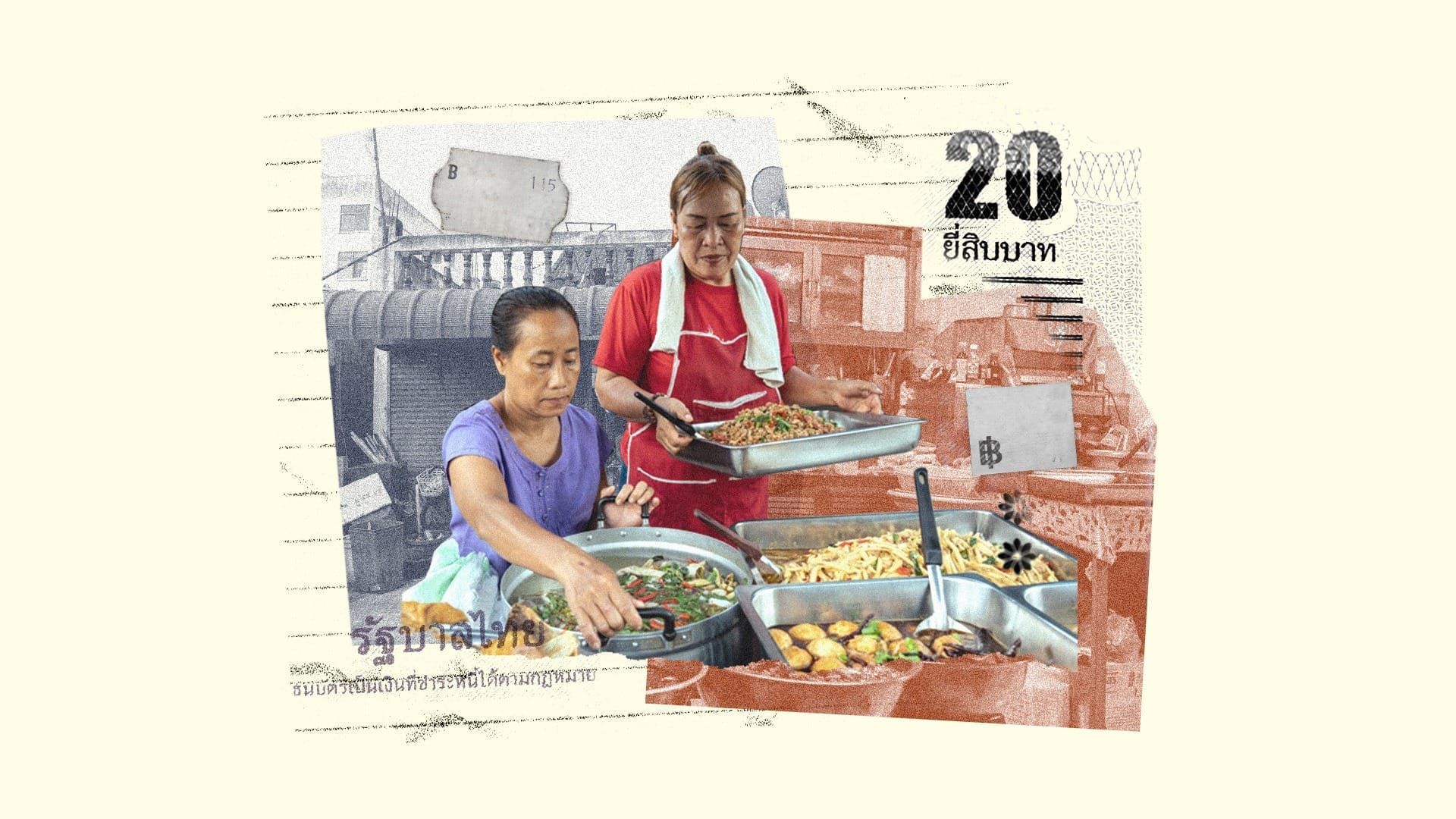
Bangkok, Thailand – At 5am the Thai heat is already oppressive inside Praewpan Nadtanara’s front room. The iron shutters are hoisted up, exposing the small living room-cum-kitchen and all its mismatched contents to the street, but the absence of a breeze means the opening offers no relief. Instead, the open flames stewing three pots of curries and noodles only add to the heat.
Nadtanara, aged 57, stirs and chops, adding spices to the dishes she and her assistant will soon transfer to a steel cart and push to the Moo Baan Nak Kila market at the end of her road in Bangkok's city center. Arriving there at 6am, Nadtanara, who wears a red apron with her hair pulled back, will have sold out of her seven dishes by 9am, earning her 2,000 baht ($60).
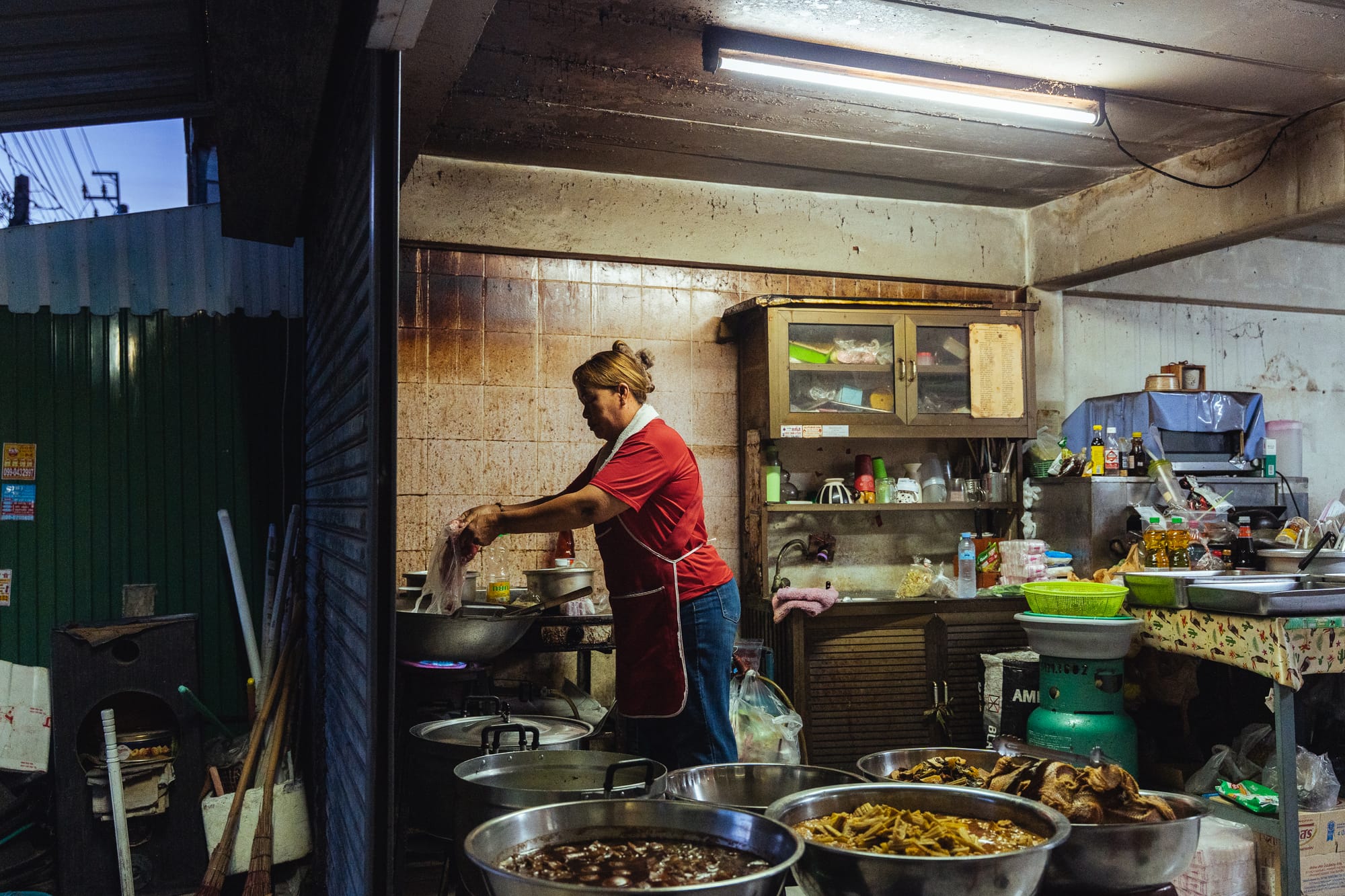
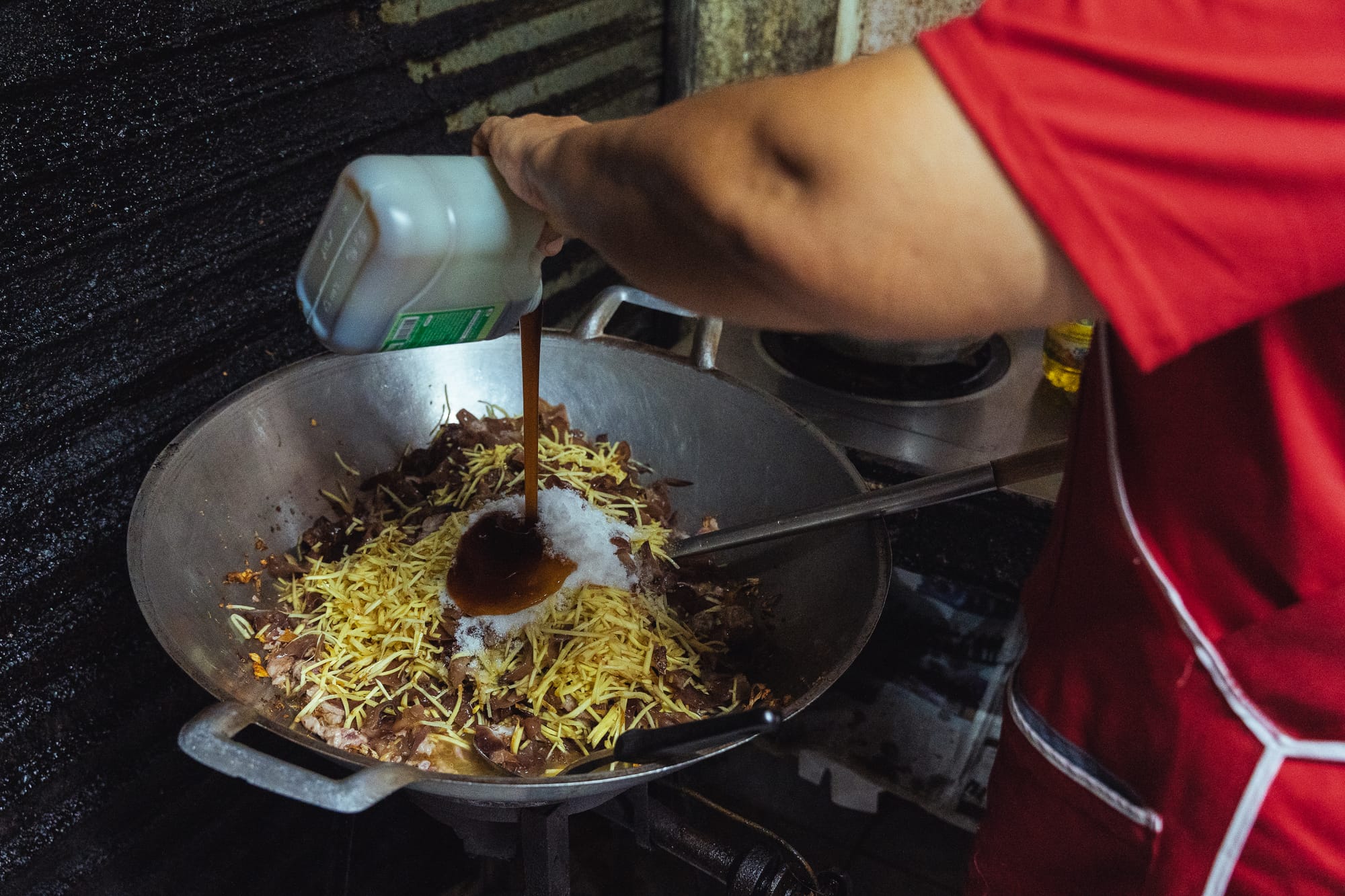
Praewpan Nadtanara prepares stir fried food at her home kitchen at dawn, close to Moo Baan Nak Kila Market in Bangkok, Thailand, 7 June 2026. Photography: Mailee Osten-Tan
That fragile daily wage has been in jeopardy since the United States launched its offensive on Iran in February and triggered an intermittent closure of the Strait of Hormuz trade route that, several months on, continues to impact prices of basic commodities. Street vendors across Asia, the majority of whom are women, are struggling to make a living as the rising costs of ingredients, packaging, gas for their woks and fuel for their motorcycles eat into their earnings.
A community under threat
From stir-fried dishes and sweet treats to fresh fruit, vendors not only feed much of the Thai population but often act as a draw for tourists. Yet right now their livelihood, like others’ across Asia, is at risk. Operating costs are higher while customers – both tourists and office workers encouraged to work from home – are fewer.
“As with any inevitable political crisis, it's always the poorest and the most vulnerable that are disproportionately affected. In this case, it's workers who are relying on cheap foods to sustain themselves, but also those who are selling it to them,” said David Welsh, Thailand country program director at Solidarity Center, a nonprofit that promotes labor rights, safe workplaces, fair wages and union representation. “There's no question that food vendors are absolutely impacted in a dire way.”
In Bangkok, several thousand street vendors are thought to be formally registered, but thousands more operate informally. Hawking on the city’s main thoroughfares, selling in markets, or trawling the busiest tourist areas for hours at a time, around 70% of them are women. In Cambodia, that number rises to 75%, and in Laos it’s as high as 90%. They are drawn to the occupation by the low barrier to entry and flexible schedule that can accommodate caregiving, said Marcela Valdivia, project manager and researcher at the research network Women in Informal Employment: Globalizing and Organizing (Wiego).
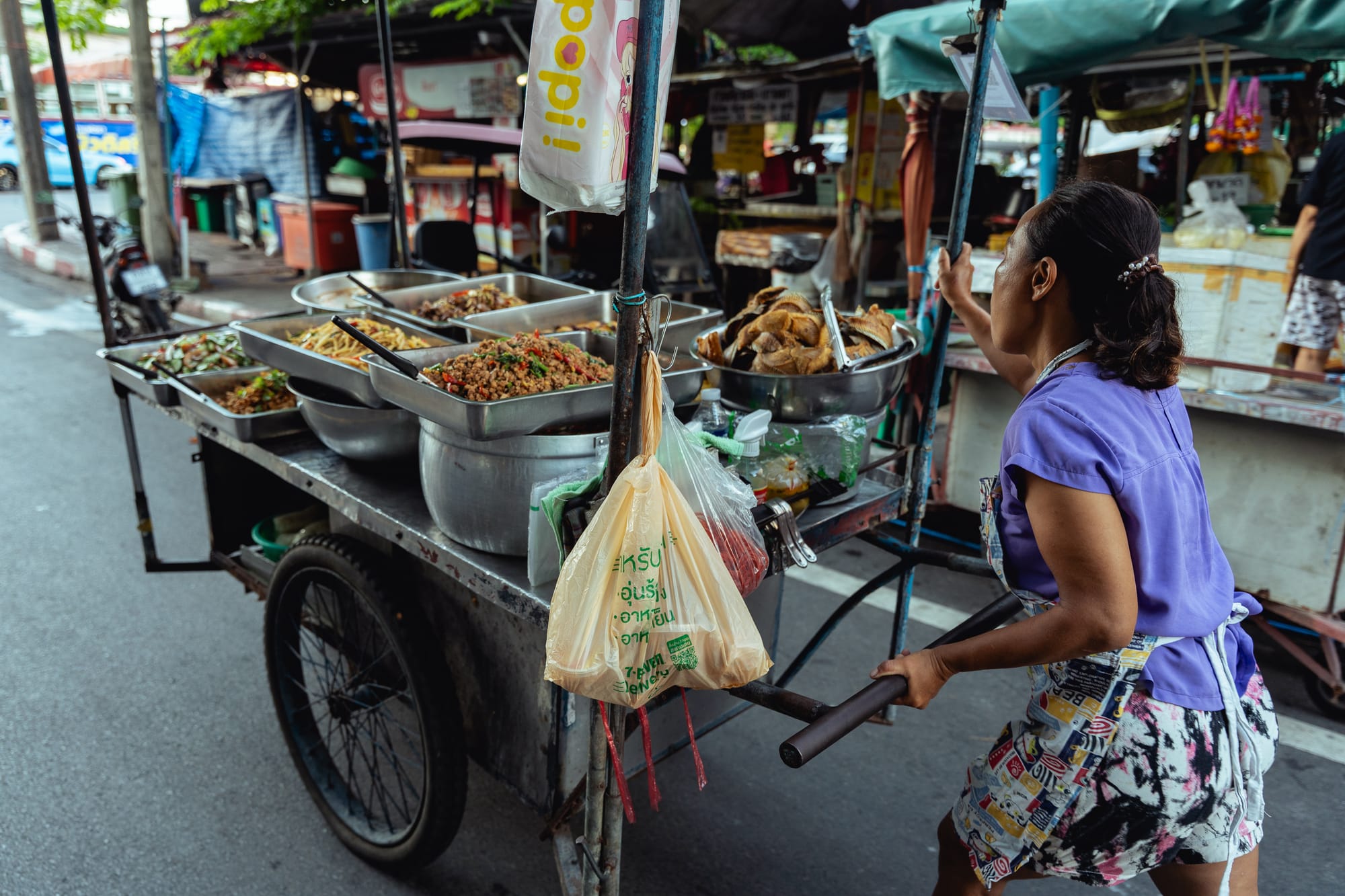
The majority of such workers are women who often juggle their long hours with caregiving responsibilities.
“Women are absorbing these shocks from both the perspective of their households, managing food insecurity particularly, but also their businesses,” said Ana Carolina Ogando, a research coordinator also at Wiego.
Loan sharks circling
At Moo Baan Nak Kila market, out of 180 vendors, 160 are women. Nadtanara is one of them. Each day she empties two bottles of cooking oil into her sizzling woks, but the price of this essential item has risen from 45 baht ($1.36) per litre to 51 baht ($1.55) since January. Pork, she said, has risen in price by 25% and chicken by 30%. This means the total cost of her ingredients, which she orders from a wholesale market using the messaging app Line, has climbed from 4,000 baht ($120) to 7,000 baht ($210) a day since January.
Informal workers are often from lower-income communities and can’t afford to simply absorb these higher costs, said Puttinee Kophatta, Bangkok coordinator at labor and employment nonprofit HomeNet. Instead, they have a choice to make: work later into the night to extend their trading day – which exposes them to a higher risk of robbery or attack – find other work, or borrow from a loan shark.
At this market, many of the women have opted for the latter, unable to meet a bank’s criteria for a loan and uncertain they’d be able to find employment elsewhere. The sharks, who circle the 400 sq metres market each afternoon to get their payments, are happy to lend but charge extortionate interest rates of up to 20%, which creates “a structural trap for many of these workers including women”, said Wiego’s Ogando.
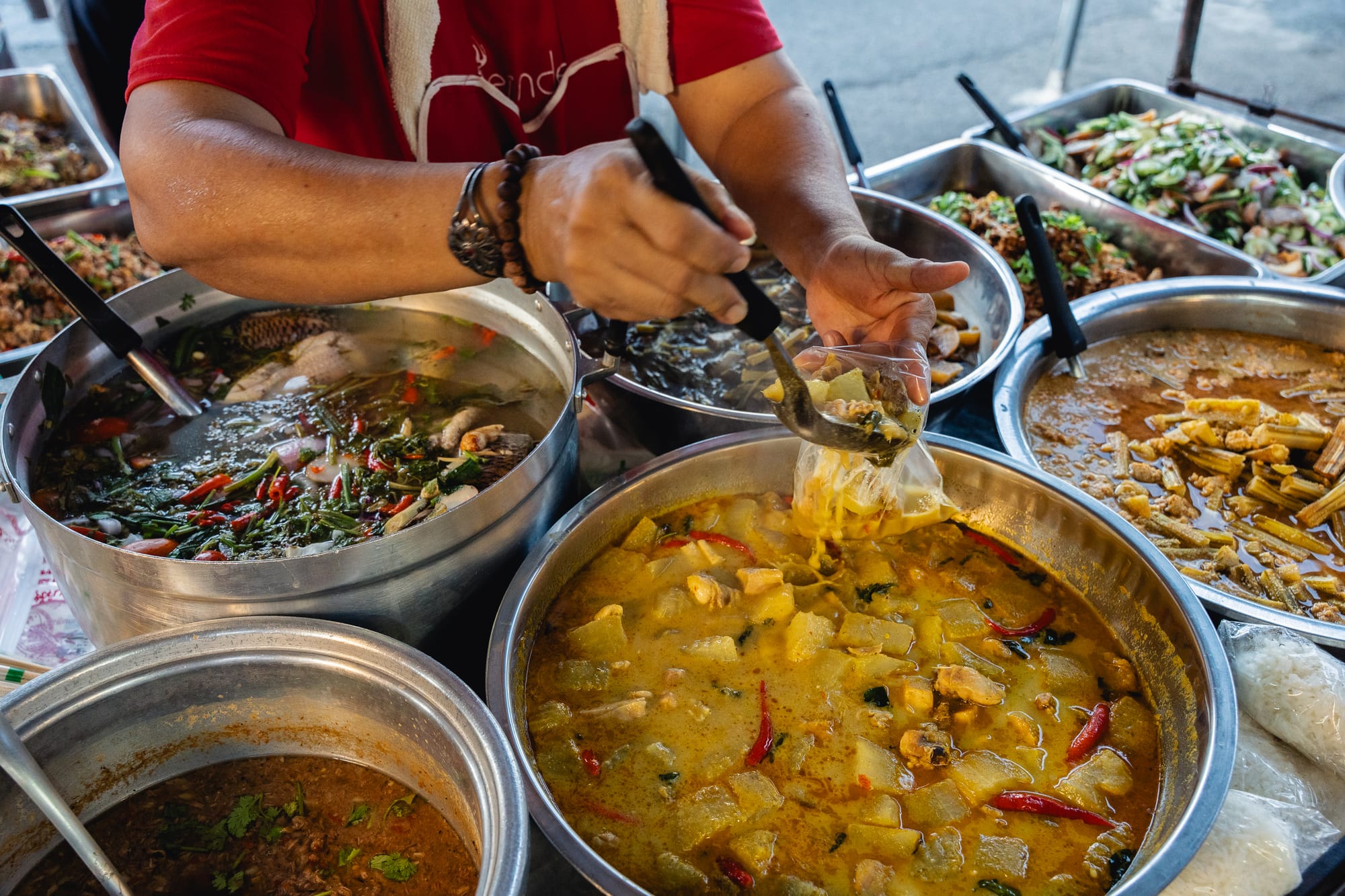
The only way Nadtanara has been able to avoid a loan is to reluctantly increase the prices of her dishes by 10 baht ($0.30). It may seem fractional but every increase is then felt by customers who themselves are struggling with the higher costs of living.
“It's not white-collar workers who are relying on street vendors. It's workers at the bottom of the pay scale,” said Welsh.
Before and after the US-Iran war
Nadtanara, who refuses to watch the news anymore because of how stressed she gets, was hesitant to make the change but supporting a son at university and an elderly mother-in-law meant she felt she had no choice. “I tried not to, but I cannot bear the cost anymore,” she told Fuller after her morning rush had dissipated.
Others in the market have been too scared to follow suit for fear they’ll outprice their customers. “They prefer to shoulder the burden by themselves,” said Kophatta. As a result, Lertluck Juntra, who has been a vendor for 25 years and sells tissues and wipes at a corner stand, and 60-year-old Tharinee Mabua, who sells local fruits – mangosteens, rambutans, and mangoes – from 6am to 9pm every day, are in debt to the loan sharks.
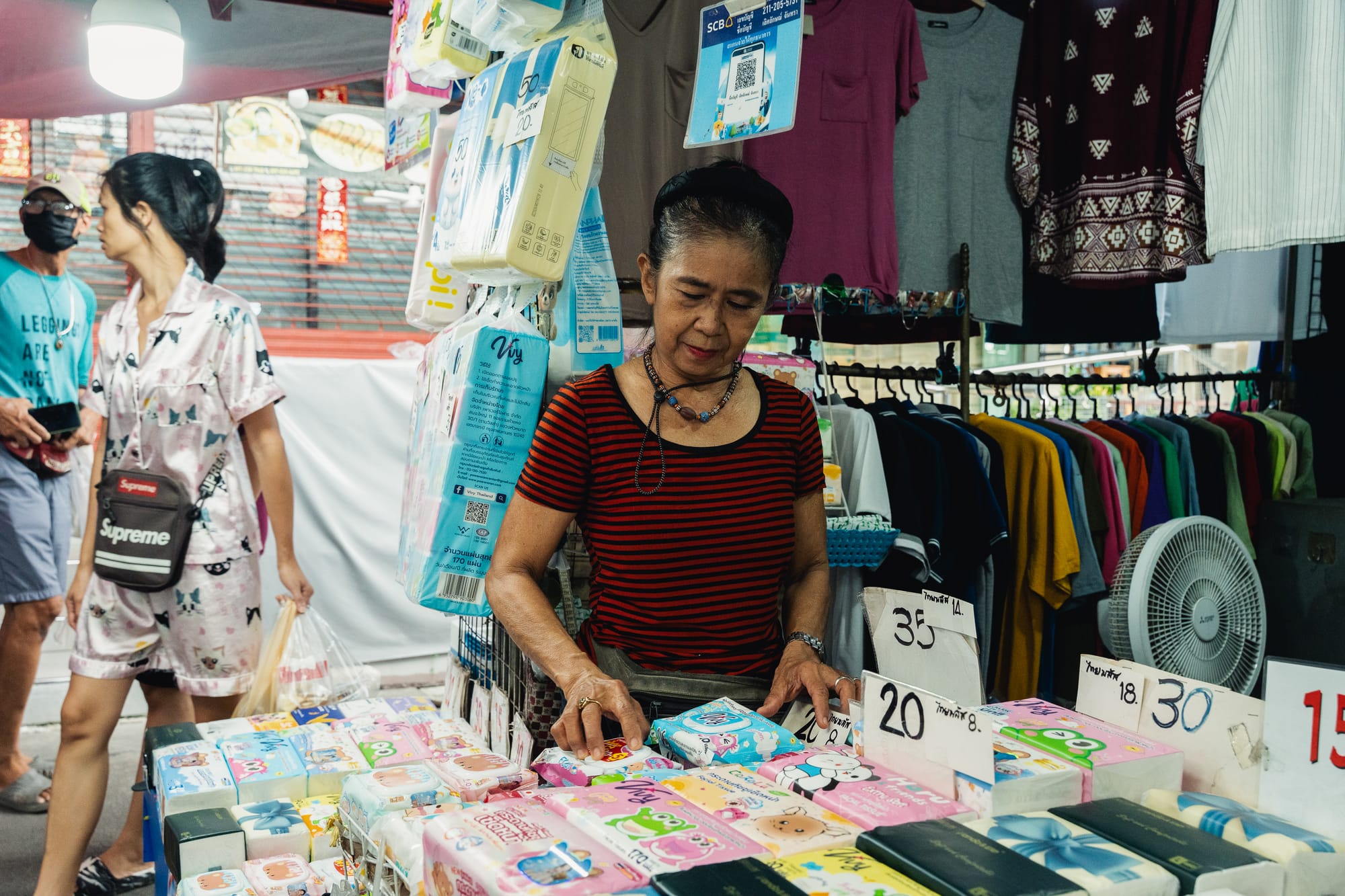
“Before the war, I would sell around 10,000 baht ($300) per day. But now it's like half,” said Mabua, whose daughter works beside her and whose husband is unable to work after suffering a stroke. The lower amount leaves little left over after purchasing stock for the next day and paying bills, which is why the family turned to a loan. Now Mabua must pay 400 of her 5,000 baht ($150) earnings back each day, the majority of which only covers the 20% interest fee.
Those selling food might be in a better position than those like Ranu Daweloa, president of the market and a trader who sells less essential items such as socks and toys. People have to purchase food but don’t necessarily need her goods and so her profits dip during times of crises.
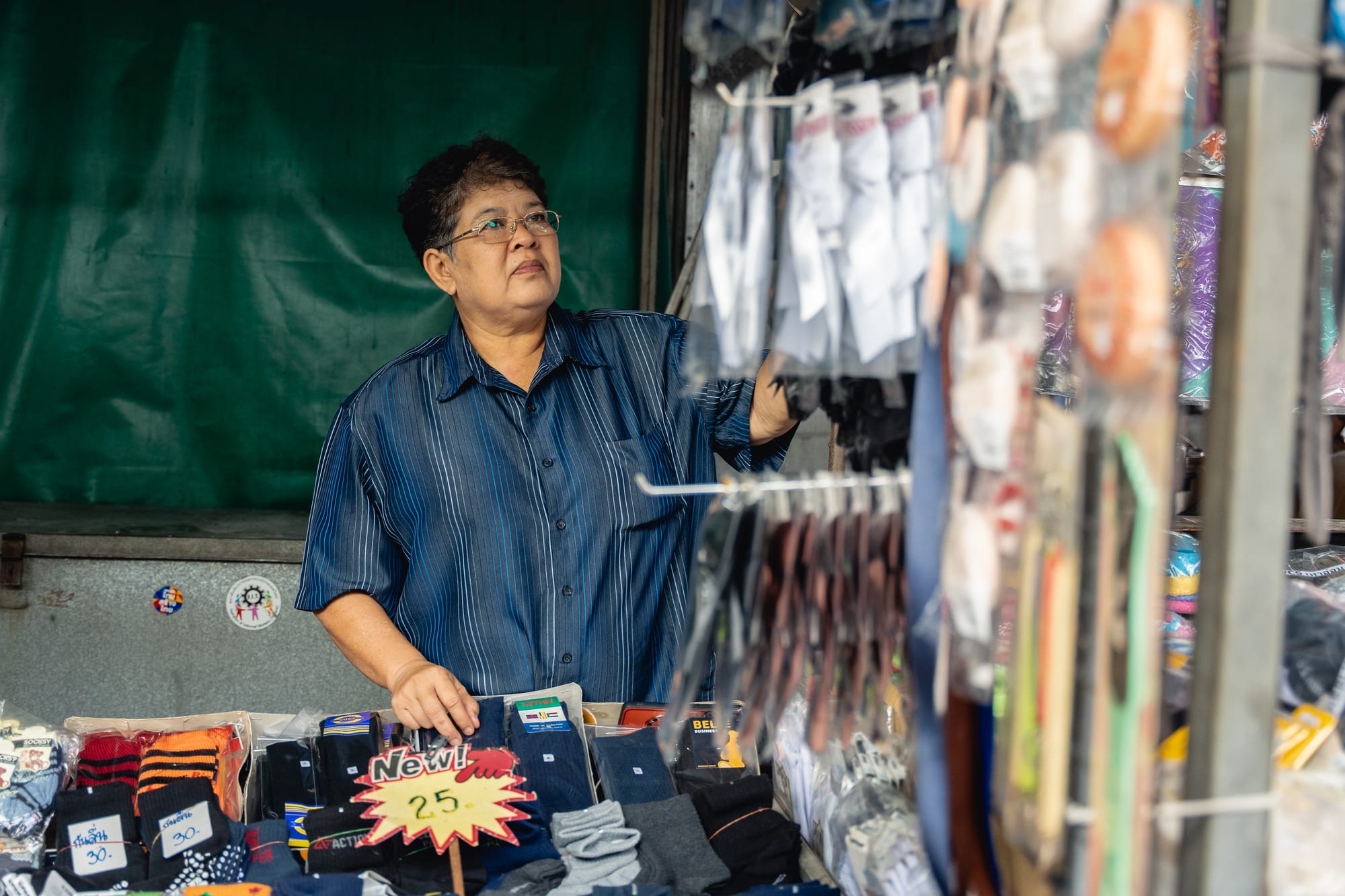
Additionally, she has to drive to another market to purchase her stock. Since the start of the US-Iran conflict, the cost of gas has fluctuated and at the time of speaking to Fuller in June, it was at a high of around 40 baht ($1.19) per liter. Daweloa shared that it was costing her 2,000 baht ($60) to fill up her tank at that time versus the 1500 baht ($45) she was paying in January. And while the cost has dipped slightly to 35 baht ($1.04) per liter, the cost of her total inventory has risen by 15,000 baht ($455) a month and profits are down. She’s struggling.
These women’s experiences are not unique. Across Asia, street vendors are paying the price for a war thousands of miles away, left exposed by the lack of government support for informal workers at a time of fiscal shock. Governments don’t typically factor in the needs of this demographic because the majority are not registered, don’t pay tax, and are excluded from labor laws. They also operate outside traditional welfare infrastructure.
Daweloa said several in the community are considering quitting to become domestic workers; another form of informal work but one that requires little upfront costs. But street food is a core part of many Asian countries’ tourism industry and they should therefore be better protected by governments, said labor researcher Kophatta.
“We can see vendors everywhere; they are the root of the economy. But then whenever the government issues policies or measures to stimulate the economy, they are always left behind,” she said. For example, the Thai government has taken steps in the months since the conflict broke out to soften the sting of the Middle East crisis on the general public but none of the policies include specific relief for street vendors. The same can be said for other countries in the region, such as the Philippines, Indonesia, and Vietnam.
Helping the street vendors
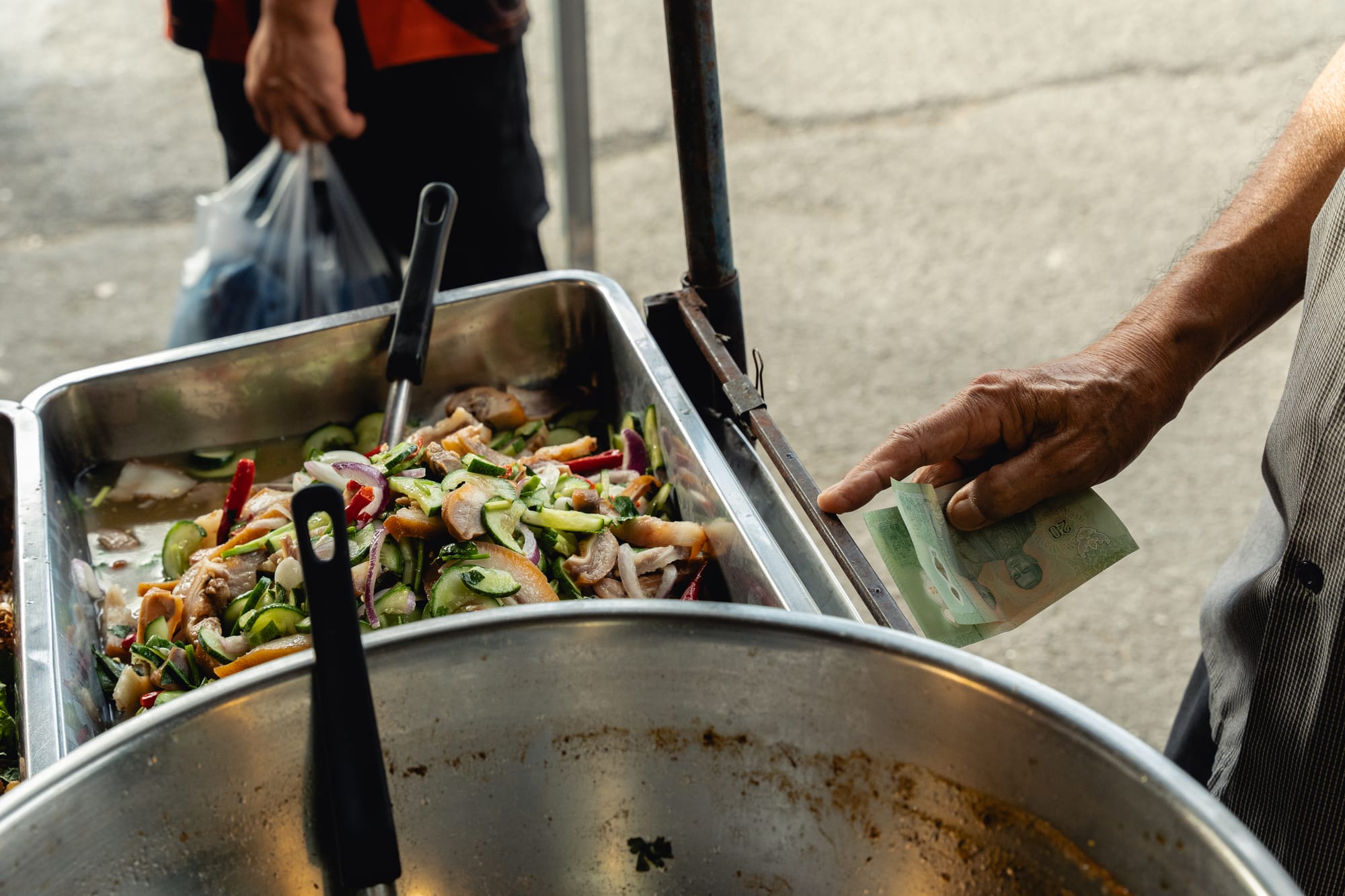
One initiative that is filtering down to street vendors, however, is Thailand’s 60/40 economic stimulus package, in which the government is subsidizing 60% of certain items, including food and drink, until September to mitigate the increased cost of living. “It really helps people to spend more,” said tissue vendor Juntra, in between serving customers. But she’s concerned about what will happen once the scheme ends and people have to once again pay full price.
Thailand has also increased welfare payments for those eligible and implemented price controls for certain businesses but not individual vendors. Elsewhere, the Philippines’ government is giving tax credits and rebates; Indonesia and Malaysia have implemented fuel subsidies; and Vietnam has reduced certain taxes and import duties. But these don’t specifically target vendors, and oftentimes exclude them altogether.
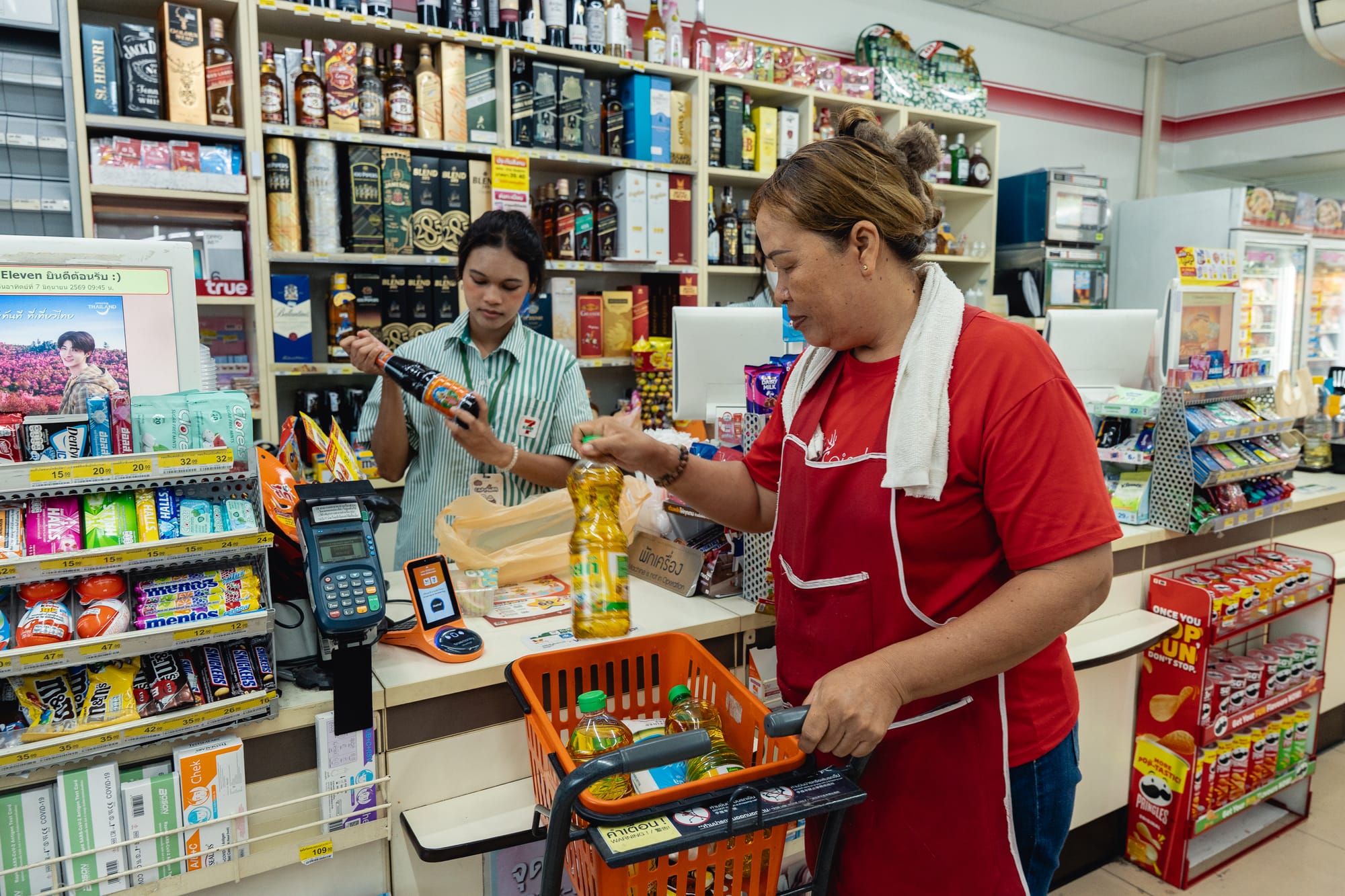
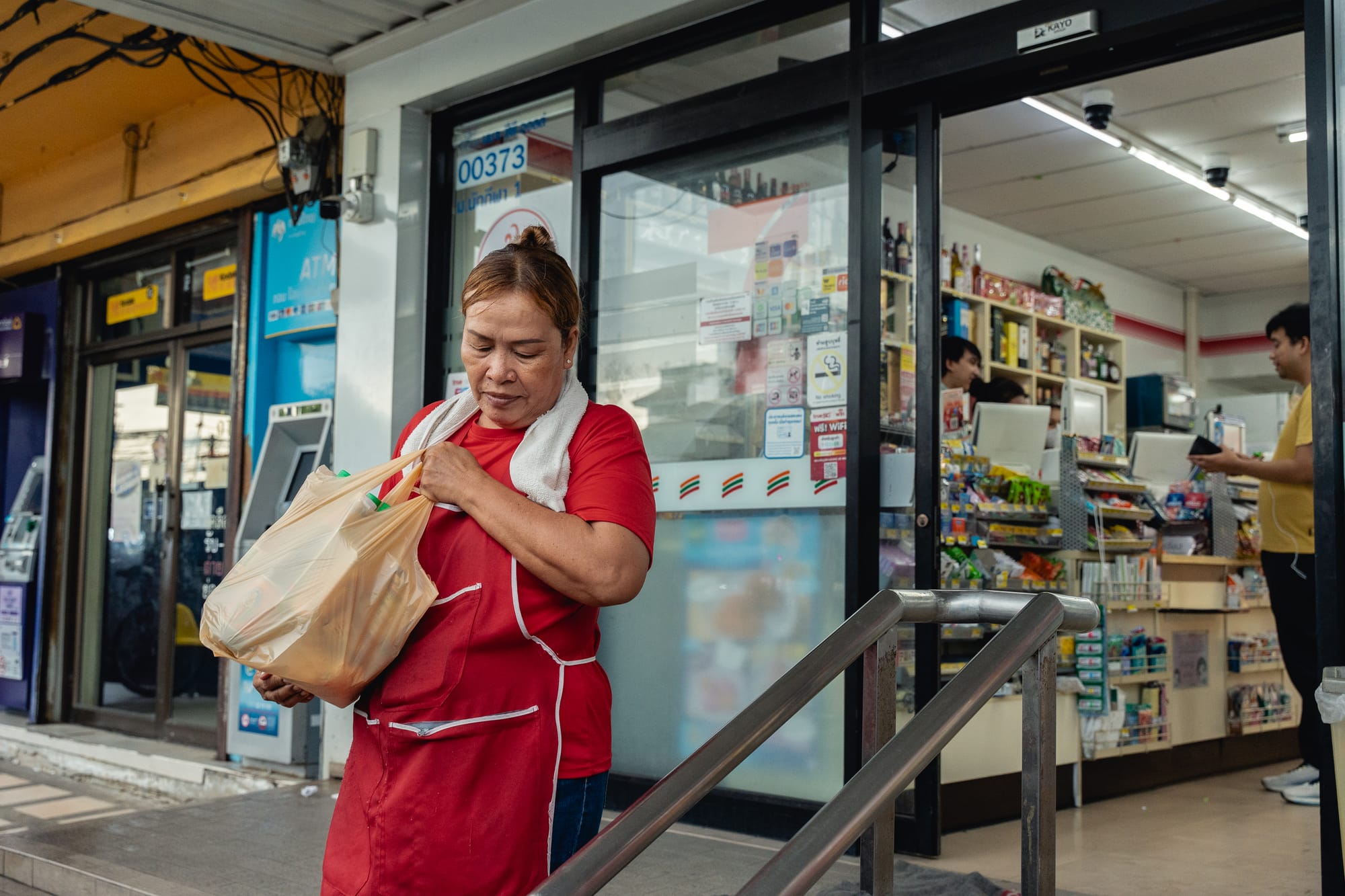
Praewpan Nadtanara buys soy sauce and cooking oil for the next day’s food production at a 7Eleven convenience store close to her stall located at Moo Baan Nak Kila Market in Bangkok, Thailand, 7 June 2026. Photography: Mailee Osten-Tan
The most helpful thing the government could do, said market president Daweloa, is to cap prices on fuel and oil; commodities that vendors rely heavily upon, especially those who have to travel to a specific location with their cart.
At the start of the year, the Thai government began exploring the possibility of accessing fuel from Russia at a cheaper price than it acquires from its usual supplier in the Gulf. The two parties remain in talks. In the meantime, as the US and Iran continue to trade attacks, prices, although lower for now, are still in flux. The Thai Ministry of Energy provides targeted relief when it can by intermittently freezing diesel prices.
“I sympathize with governments. This is not their doing in the region for sure, but… tax relief, enormous subsidies and policies specifically directed at food vendors and the poorest of the poor should be absolutely the priority,” said Welsh. “That's crucial.”
In the absence of government support, nonprofits are pushing for unionization and more financial literacy for women. Too many vendors rely on government lottery tickets, known in Thai as salak kinbaeng, when thinking about future finances, said Kophatta. “They are trying to find a way or a strategy to survive day by day,” she said.
Instead, labor and employment nonprofit HomeNet is investigating ways vendors across Asia could access bank loans while StreetNet International, a global organization for informal economy workers, is using the crisis to push for formal recognition.
“When we look at who actually makes a city run, it's really street vendors,” said Nastasia Tysmans, Asia regional organizer at StreetNet, “which is why I go back to the need for recognition as workers, which would also allow them to unionize and then be part of the conversation around the world of work.” It would give them access to social protections, said Tysmans, such as sick pay and insurance.
“Even without this crisis in the Strait of Hormuz, the whole situation of vendors is already dire,” she added.
As to what her message would be for the leaders responsible for the financial volatility she’s experiencing, who are themselves cushioned from it, Nadtanara asks: “Why do you have to compete with each other? You guys are so rich, why do you want to get richer?”
In the original version of this article, it was written that it cost the street vendor Ranu Daweloa 500 baht ($15) to buy gas. This has been changed to reflect the correct figure of 1,500 baht ($45)
Co-published with HARDstories
How we made it
Kilometres travelled: 20 km
Countries our sources are in: Thailand
Cold emails sent: 12
Hours of recordings: 5
Number of interviews: 9
Words written: 2,200
Street food dishes sampled during reporting: 3
Downpours endured while reporting: 1
Lead visuals by Gabrielle Smith. Photography: Mailee Osten-Tan. Data visualization by Carlotta Dotto. Edited by Eliza Anyangwe and Charlie Brinkhurst-Cuff
Lead visuals by Gabrielle Smith. Photography: Mailee Osten-Tan. Data visualization by Carlotta Dotto. Edited by Eliza Anyangwe and Charlie Brinkhurst-Cuff