How femonationalism is shaping far-right discourse in Europe
Everything you need to know about a growing ideology impacting the lives of women and girls
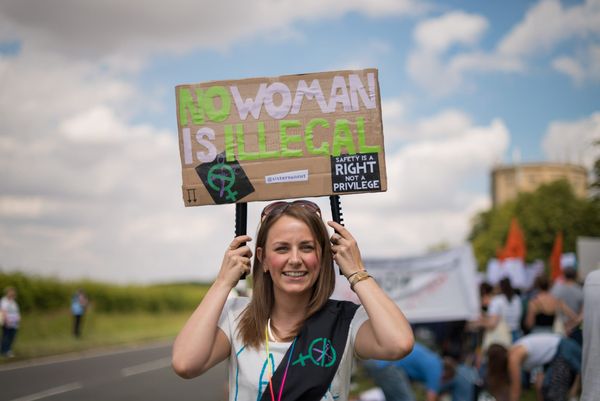
Over the past year, something significant has occurred outside of hotels housing asylum seekers in England. Grandmothers, mothers, and young women dressed in bright pink have gathered, holding placards with slogans such as ‘Stop the Boats’ and ‘Stop the Invasion’.
Some of these women are part of a new organization called The Pink Ladies, which has a clear and dangerous message that it wants to spread: that migrants pose a threat to the safety of women and girls in Britain.
It’s the kind of rallying cry that is gaining attention from far-right politicians and parties across Europe and is being used to bolster their xenophobic and anti-immigration agenda.
It’s also part of an ideology known as “femonationalism” – a loose blend of feminist, nationalist, anti-immigration, and anti-Islam ideas, which frames feminism as a means of defending national identity and cultural values against perceived external threats.
While The Pink Ladies and other women-led groups described below don't describe themselves as being part of a femonationalist movement, or as femonationalist groups, researchers say they fit under the umbrella term.
Here’s what you need to know about them:
What is femonationalism?
Sociologist Sara R. Farris first coined the phrase “femonationalism” in 2012. A professor at Goldsmiths, University of London, she tells Fuller that the term describes two phenomena: “On the one hand, how nationalist far-right parties mobilize certain feminist ideas within their anti-immigration campaigns. And on the other hand, how some feminists – and I want to stress it is only some – have joined nationalist discourses, particularly in their anti-Islam campaigns.”
Far-right and white supremacist groups have always had women supporters and even women-led offshoots – the Ku Klux Klan formed its first women’s group back in the 1920s. But Farris says she first observed femonationalism develop into a contemporary movement in the early 2000s. “I saw it start with the war on Afghanistan,” she says. “At the time, one of the big justifications Western governments made for this was the need to liberate Afghan women.”
In her 2017 book, In the Name of Women’s Rights: The Rise of Femonationalism, Farris tracks how politicians and institutions in countries like France, Italy and the Netherlands have justified Islamophobic views by promoting gender equality, with claims they wanted to ‘save’ Muslim women from sexism and misogyny.
Since then, Farris says the rhetoric has expanded to include all migrant men. “Now it’s revealing itself for what it is,” she says. “It’s no longer just about Muslims.”
Where has femonationalism gained the most popularity?
Femonationalist groups and their supporters are found in most Western European countries. However, France stands out for having some of the loudest and most well-established groups.
According to Farris, the most prominent is France’s Collectif Némésis. Founded by Alice Cordier (a pseudonym) in 2019, the group describes itself as “feminist identitarian” – referring to the far-right ethno-nationalist youth movement of the same name. It also has offshoot groups in other countries, including Switzerland and Italy.
Although Farris says Collectif Némésis only has several hundred members, it has attracted attention in the right-wing media by disrupting left-wing political gatherings with stunts and counter-protests, as well as holding marches in France.
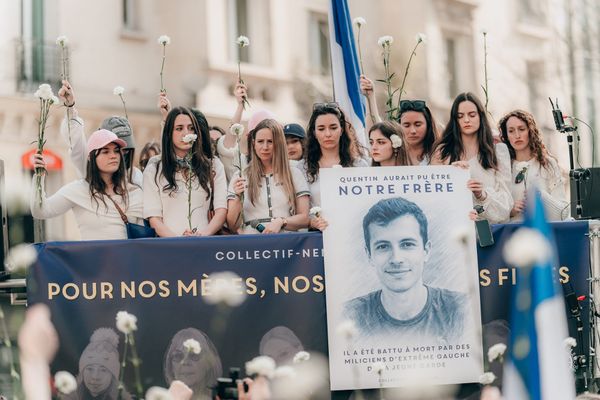
In February, a young far-right activist, Quentin Deranque, was beaten to death during a fight with alleged far-left activists in Lyon, while providing “protection” for Collectif Némésis. The incident ignited far-right groups across Europe, who coordinated rallies in his memory.
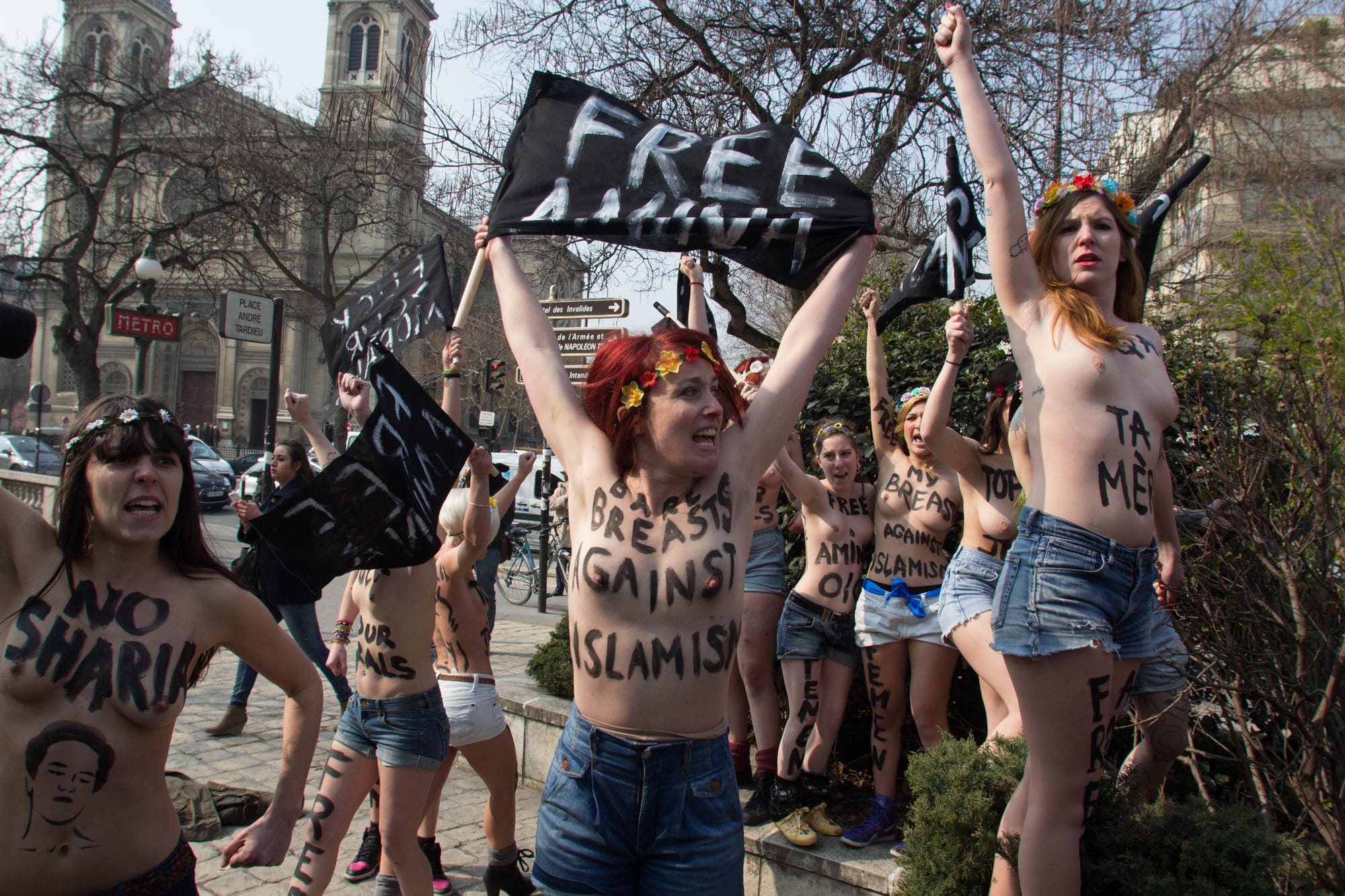
Another group is Femen, which describes itself as a radical feminist protest group “of brave topless female activists”. Originally founded in Ukraine in 2008, it is now based in Paris. Femen says it is supported by a global community of thousands of volunteers and has branches in more than 15 other countries.
Although the group’s protests have targeted a variety of organized religions, its anti-Islam stunts have been criticized for reproducing harmful stereotypes about Muslims.
In Britain, several new femonationalist groups have gained popularity and online traction in the past year, says Farris. The Women’s Safety Initiative is a newcomer on the scene, launched in April 2025 and claiming to have more than 500 members. Its website says it focuses on immigration as “it's one of the biggest issues facing women in Britain today”.
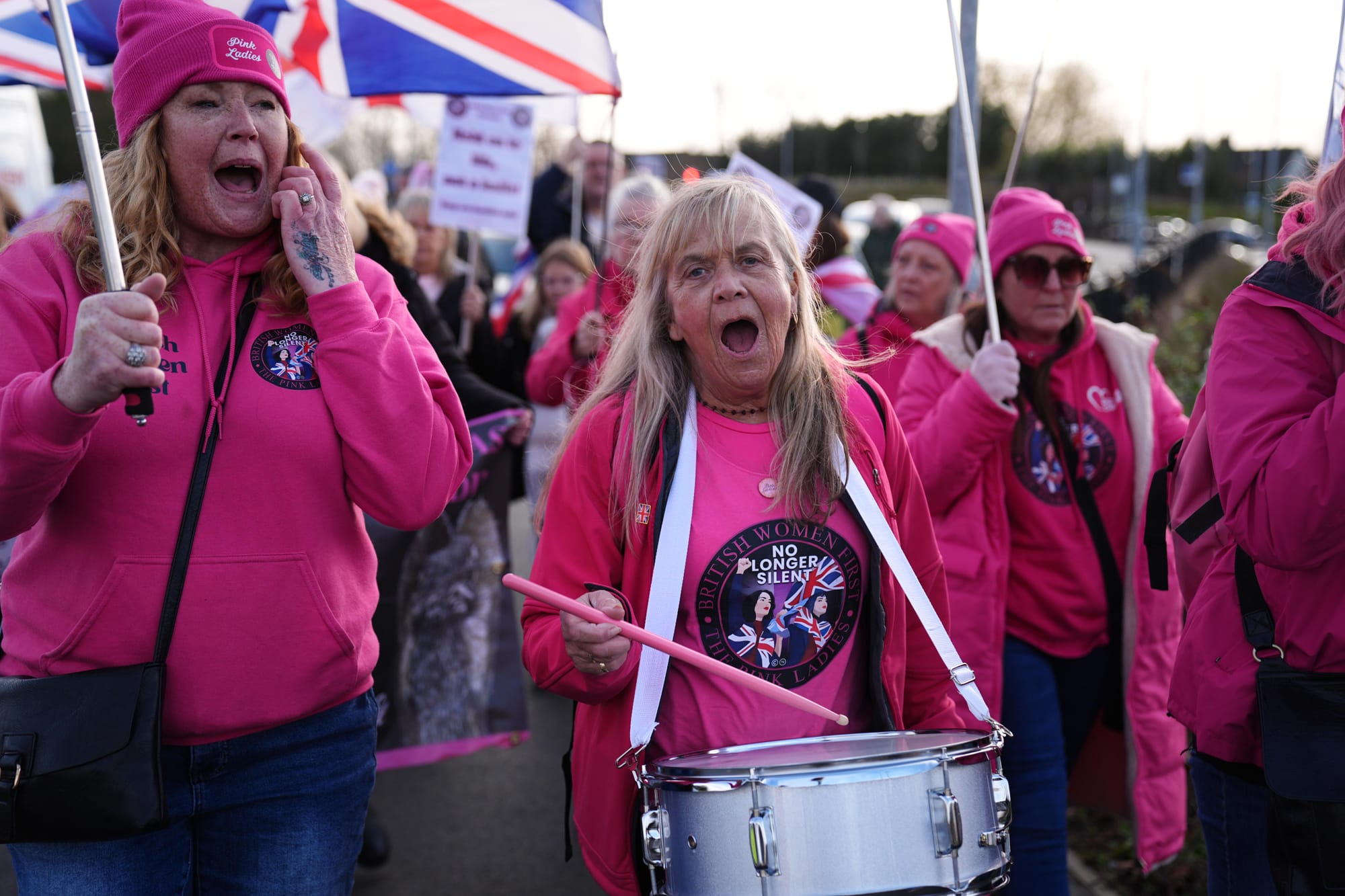
Marching alongside the Women's Safety Initiative are The Pink Ladies. They describe themselves as a grassroots movement made up of “grandmothers, mothers, sisters, and daughters who are deeply concerned about the future of our country, especially in light of mass immigration and, in particular, illegal immigration”.
The Pink Ladies are also closely linked to the far-right Reform UK party. Orla Minihane, Reform UK’s vice-chair for Epping Forest, is credited with founding The Pink Ladies and speaks at their rallies. According to her estimates, the group has a network of around 2,000 members.
Other countries where femonationalist groups and ideas are gaining appeal include Portugal, Denmark, and Germany, where a women’s group, Lukreta, linked to the far-right Alternative für Deutschland party (AfD), shares fashion tips and lifestyle content on its social media, as well as messages that immigration leads to “imported violence” against women.
What’s the connection between femonationalism and far-right politics?
Far-right political parties and femonationalists share some of the same narratives and goals, while reinforcing and amplifying each other.
Both have a clear anti-migration stance, with some groups calling for remigration as a means of mass deportation, and both cite concerns over women’s safety as a justification for their anti-immigration rhetoric.
In recent decades, the close links between femonationalist movements and far-right politics have been partly strengthened alongside the growing numbers of women leading far-right parties in Europe, such as Marine Le Pen in France (National Rally), Alice Weidel in Germany (Alternative for Germany), Siv Jensen in Norway (Progress Party), Pia Kjaersgaard in Denmark (Danish People’s Party) or Giorgia Meloni in Italy (Brothers of Italy).
Many of the prominent femonationalist groups across Europe have well-documented relationships with far-right groups and parties. Leading far-right political figures regularly repeat femonationalist rhetoric as a way to gain support and to stoke fears about migration by fuelling existing stereotypes that portray migrant men as the main perpetrators of sexual violence.
France’s Marine Le Pen has claimed that “the migrant crisis signals the beginning of the end of women’s rights”, while Italian Prime Minister Giorgia Meloni publicly backed comments by other members of her far-right party that migrant men are primarily responsible for sexual violence. In Germany, the far-right AfD party exploited a series of sexual attacks by migrants in Cologne and now regularly tops voter intention election polls.
“Like all nationalists, they (femonationalists) privilege ethnic racial populations. Nationalists fundamentally want to keep the racial ‘purity’ of their country,” says Farris. “It’s honestly a very eugenicist view of the world, even if they don’t say that outright.”
Femonationalists focus on what they say is the urgent need to protect white European women, according to Farris. “They don’t even pretend to be interested in Muslim women. They very explicitly say it is only [white European] women they are interested in keeping safe,” says Farris.
How do femonationalists push their agenda?
Groups such as Collectif Némésis and Women’s Safety Initiative may only have several hundred members or so each, but they are adept at gaining attention.
“They are very loud, and they are very tactical in trying to generate the maximum amount of media coverage,” says Farris.
They also know how to harness social media to spread their message, creating viral videos and infographics. One Instagram reel from Women’s Safety Initiative in February 2026 shows its members protesting alongside the slogan “We want our country back”, with 44,500 likes and almost 20,000 shares. The group has over 34,000 followers on Instagram, while Collectif Némésis has 120,000.
Femonationalist groups exploit certain cultural touchpoints or events in their respective countries. For example, in France, Collectif Némésis and Femen have targeted voter concerns about Muslim migrants posing a threat to secularism.
In the UK, the “grooming gang” scandals first emerged in the early 2000s, involving the sexual exploitation of vulnerable girls. Because some of the men involved were of Pakistani and Bangladeshi heritage, they've been used by the far-right to fuel the idea that this type of exploitation is an “Asian problem”, even though a 2020 government report by the UK’s Home Office found that the majority of child sexual abuse gangs are made up of white males.
Since then, the scandal has been repeatedly referred to by far-right and femonationalist groups in Britain, including by the Women’s Safety Initiative that highlights the scandal on its website. Critics say the impact of such tactics means to tarnish and vilify all migrant men as a threat to women and stoke anti-immigration fears, often under the guise of campaigning for women’s safety.
Who funds the femonationalists?
Charlène Calderaro, a post-doctoral researcher in gender and far-right politics at the University of Oxford, says tracing money flows to these groups is challenging as “they are extremely opaque”.
However, there is some publicly available information about individual groups.
Collectif Némésis is registered as a nonprofit in France and allows people to make donations in cryptocurrency on its website. It also regularly asks for donations from supporters on social media and sells merchandise. Calderaro believes the group must have “regular and substantial inflows of money”, given its expensive banner drops and sizable travel budget.
In Britain, a new far-right party, Restore Britain, founded by politician Rupert Lowe, has been supporting The Pink Ladies, including funding portable speakers and other equipment used during rallies.
The Women’s Safety Initiative raises funds online. According to its GoFundMe page, the group has so far raised £15,862 out of its £55,000 target since launching in April 2025.
Femen receives donations and sells digital photos and t-shirts on its website as a way to get funding, highlighting it’s an independent movement that hasn’t taken a “single cent from politicians and foundations”.
How is femonationalist ideology being challenged?
Women’s rights groups in the UK and France are pushing back against the femonationalist narrative, holding counter marches, setting up their own counter movements, and debunking misinformation online.
“In France, there are a lot of very active anti-racist feminist groups that have been fighting these ideas,” says Farris. Groups such as the Collectif Féministes Révolutionnaires regularly hold marches and protests.
In the UK, a new collective, Women against the Far Right, launched in September 2025 and aims to bring together female politicians, cultural figures, and campaigners, who “reject the far right’s racism and weaponization of violence against women and children”.
In addition, more than 100 British women’s rights groups, including Rape Crisis England and Wales and the End Violence Against Women Coalition, signed an open letter last year to Britain’s Prime Minister Keir Starmer and Home Secretary Yvette Cooper warning that “vital conversations about violence against women and girls are being hijacked by an anti-migrant agenda that... ultimately impedes the real work of tackling the root causes of society-wide violence”.
Farris highlights the need to counter femonationalist propaganda with evidence-based arguments, including data showing that most perpetrators of sexual violence are known to survivors. For example, globally, 38% of all murders of women are committed by intimate partners.
“What these groups are doing is actually extremely dangerous for women, because they want us to believe that the home is a safe space and the street is not, when all evidence shows the opposite,” says Farris.
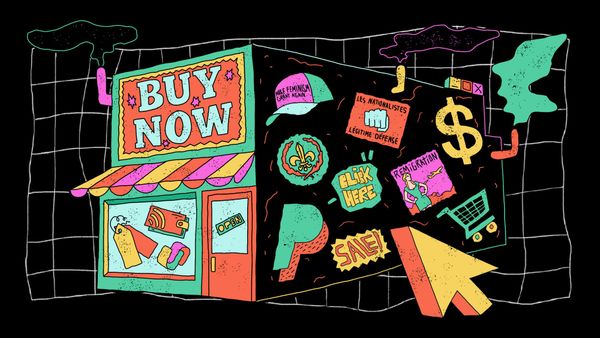
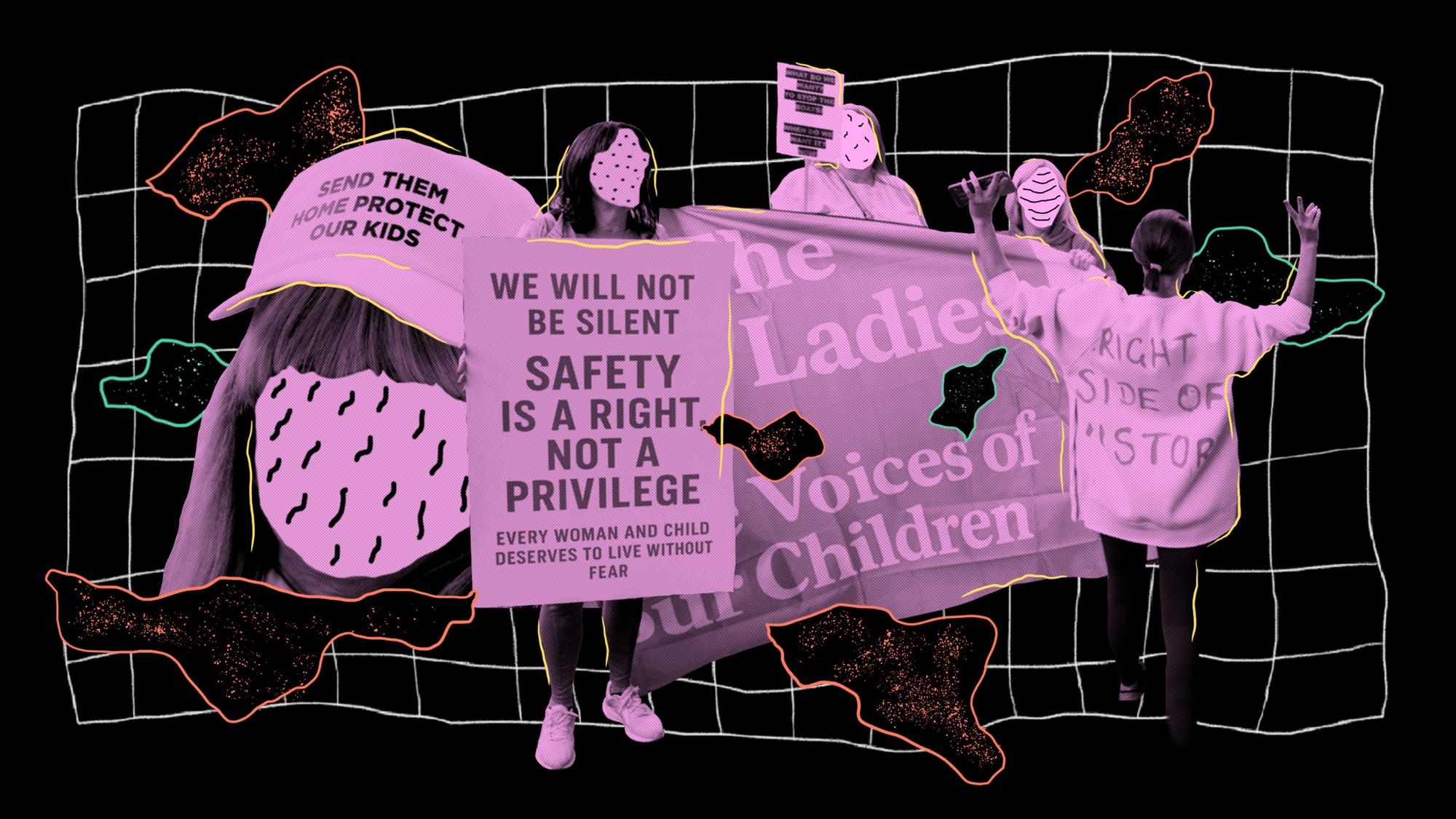
Lead illustration by Jawhar Soudani. Edited by Anastasia Moloney and Charlie Brinkhurst-Cuff
Lead illustration by Jawhar Soudani. Edited by Anastasia Moloney and Charlie Brinkhurst-Cuff