Uncovering the far-right playbook targeting feminists in Latin America
As anti-abortion politician José Antonio Kast assumes Chile’s presidency, activists warn his far-right agenda could mirror the restrictive shifts seen elsewhere in the region
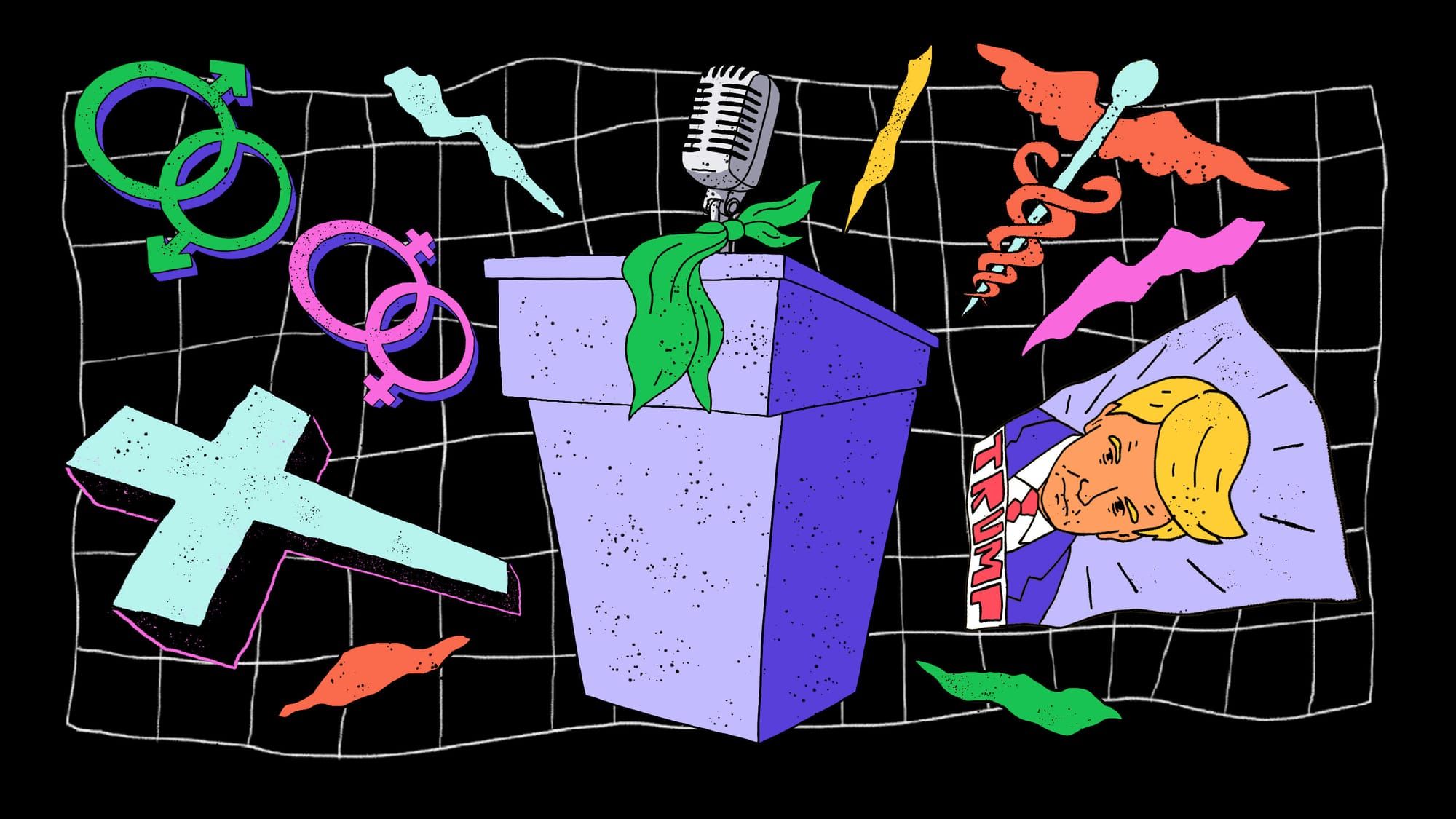
Since 2019, far-right governments in Latin America, from Brazil and El Salvador to Argentina, have used a playbook – a set of steps, strategies, and shared rhetoric – to target women’s rights, LGBTQ+ communities, and erode reproductive healthcare.
Now, another far-right leader has come to power in the region, José Antonio Kast in Chile, whose German-born father was a member of the Nazi party. Since Kast began his four-year term in March 2026, feminist groups have been bracing for what legal reforms and policies the new president will adopt that might chip away at hard-won rights.
Kast, whose government signals the biggest shift to the right since the end of Chile's military dictatorship in 1990, has already made his mark. This is what else to expect from his presidency.
Changes to sex education in schools
Kast has his eye on changing sex education taught in schools. During his first presidential campaign in 2017, Kast proposed removing school programs and curriculum content that he claimed “constitute propaganda or support for abortion and gender ideologies,” and last year he pledged to “guarantee education without ideologies”.
This stands in stark contrast to Kast’s predecessor, left-wing president Gabriel Boric, whose government in January 2026 revived a bill to expand sex education, sparking opposition from far-right lawmakers who labeled it “ideologically driven”. Approved by a congressional education committee in March, the bill has moved forward but still needs further legislative steps to become a law.
Kast’s vision echoes Brazil’s “School without party” (Escola sem partido) movement, promoted by Brazil’s former far-right president Jair Bolsonaro (2019-2022), which sought to restrict sex education by framing it as the “early sexualization” of children or as “ideologically biased”.
In El Salvador, President Nayib Bukele, in power since 2019, has restricted sex education in schools. In 2022, the Ministry of Education removed materials related to sex education, gender-based violence prevention, and sexual orientation for high school students.
Digital violence
Digital violence, such as online abuse and hate speech, is used as a tool by far-right movements and governments. In Chile, Martín de la Sotta, head of Chile Necesita ESI, an organization that advocates for sex education, says attacks on social media have intensified since Kast’s presidential campaign in the past year, which aim to silence and censor activists.
He himself has been the target of coordinated digital harassment. “They [far-right groups] took photos of me, at a party, and circulated them online, saying, ‘this is the pedophile who wants to touch your children,’ and things like that,” said de la Sotta.
Emilia Schneider, Chile’s first openly transgender lawmaker, who was reelected last year, has also been the victim of online harassment. Photos of her from before her transition have circulated online. “Her name is Emilia, and they published photos saying ‘Emilio’,” de la Sotta said.
Feminists exiled
Threats have forced women journalists and feminist voices to leave their home countries when they write about gender issues, uncover scandals, and question the policies of far-right governments.
Argentinian journalist Luciana Peker says online harassment against her escalated after she published a piece on the country’s rising number of femicides in 2022, resulting in death threats. In December 2023, ten days after far-right president Javier Milei took office in Argentina, she was forced to leave the country. “The violence came from sectors linked to those who came into [Milei’s] government, and therefore there were no conditions of safety to speak, to write, to live, or to work,” she said.
In Brazil, after Bolsonaro won the 2018 presidential election, a similar pattern of intimidation pushed Debora Diniz, a prominent reproductive rights scholar, out of the country. Diniz says she repeatedly received online harassment and death threats from far-right groups following her testimony before Brazil’s supreme court in support of decriminalizing abortion.
Diniz told Fuller that gender lies at the core of the far-right playbook. “Controlling women – when, how, and with whom they have children –is about controlling the reproduction of social life and, ultimately, the reproduction of power,” she said.
Similar dynamics of intimidation have also been documented in El Salvador under Bukele. According to Cristosal, a local human rights organization, Bukele’s authoritarian government has forced dozens of activists and women journalists to leave the country.
Obstacles to abortion access
Kast has called for a return to a total ban on abortion, even in cases of rape, which he said “defends life from conception to natural death”, a view shared by members of the Catholic church in Chile and his evangelical supporters.
Following legal reform in 2017, abortion in Chile is currently allowed only in three cases: risk to the woman’s life, rape, or non-viable pregnancy. Around 80% of Chileans back abortion in at least some circumstances.
A bill proposed during the previous government of Boric to allow women to get an abortion for up to 14 weeks of pregnancy is slowly moving through Congress. But it faces major hurdles in committees led by Kast supporters. “It’s unlikely to pass,” says Anamaría Arriagada, president of Colegio Médico de Chile, the national medical association.
Campaigners warn it could become more difficult for women in Chile to get an abortion. Even before Kast came to power, in abortion cases involving rape, nearly half of obstetric professionals working in public hospitals declared themselves conscientious objectors in 2023.
“Under an authoritarian, anti-rights government, it’s very possible that objectors will feel more space to exercise their refusal,” said Ingrid Narbona, a lawyer with Chile’s Network of Professionals for the Right to Decide. She added: “When rights are restricted, women don’t stop needing abortions; they turn to unsafe or illegal options.”
In El Salvador, Bukele has endorsed rhetoric similar to Kast’s “life from conception” stance in a country where abortion is totally banned. Once a supporter of abortion under limited circumstances, Bukele has adopted a firm anti-abortion stance, describing it as a “great genocide”.
Years of campaigning by women’s rights groups helped to secure the release of 81 women imprisoned under the country’s strict abortion law. Yet in a sign of an increasingly oppressive environment, El Salvador’s Citizens’ Group for the Decriminalization of Abortion announced its legal dissolution in February.
Spread of Christian fundamentalism
The gradual, and often quiet, spread of anti-gender and religious influence beyond the halls of power and into other institutional bodies is a key feature of the far-right playbook in Latin America, according to Giselle Carino, director of Fòs Feminista, a global sexual and reproductive rights advocacy group.
“This extends into national medical councils and bioethics commissions, where technical governance can be reshaped in line with conservative agendas,” she said.
In January, Argentina’s national commission on bioethics was formally restructured under the Ministry of Health. According to Carino, the move reflects a broader pattern in which “independent ethicists have been sidelined and replaced by actors closer to religious networks”, raising concerns over how abortion access may be interpreted in practice.
Carino also draws parallels between this Latin American far-right playbook and the rise of Donald Trump’s MAGA movement in the United States, pointing to a broader regional alignment around nationalist and anti-gender politics.
In Brazil, Bolsonaro relied heavily on evangelical churches and pastors to mobilize voters, using Christian rhetoric to oppose abortion and LGBTQ+ rights. Evangelical lawmakers from his party continue to lobby against women’s reproductive rights.
In El Salvador, Bukele frequently invokes Christian language to justify his policies, once claiming that God had spoken to him. In one social media post, he expressed opposition to abortion and same-sex marriage and has emphasized the role of “God’s support” in creating what he describes as a “more just country”.
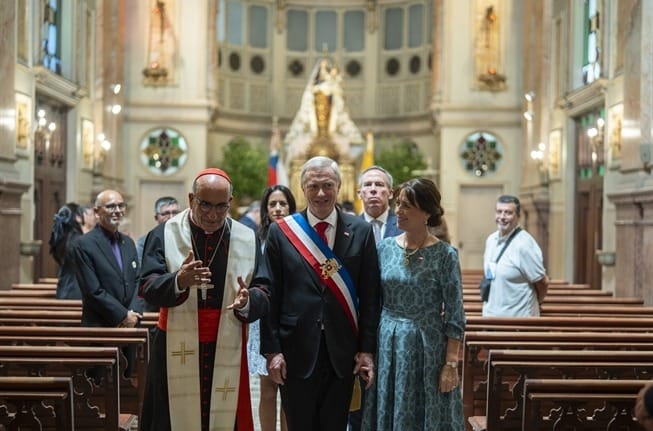
Kast, a member of the Schönstatt movement, an ultraconservative Catholic network, is no different. He has framed his politics around conservative Catholic values, saying in 2017: “I believe in God, I believe in the homeland, I believe in the family.” Since taking office, he has increased church services from one to up to four per week at Chile’s presidential palace, La Moneda.
Kast has already made his stance towards LGBTQ+rights clear. During his second week in office in April, he abstained from signing a regional LGBTQ+rights declaration at the Organization of American States.
Women’s rights funding cuts
Kast began his presidency by declaring an “emergency government” focused on security, migration, and the economy. To rein in public spending, he has pledged a $6 billion reduction in public spending.
“It’s impossible to see massive spending cuts without affecting health and reproductive rights,” said Arriagada.
In Chile, Luz Reidel, deputy director of advocacy at Miles, a sexual and reproductive rights organization, said: “[Kast] framing it as a ‘government of emergency’ allows authorities to deprioritize certain services, making abortion and sexual health appear less urgent.”
It’s a recurring pattern across the region. In Argentina, as part of austerity measures implemented by Milei, at least 13 gender-related programs were discontinued. Programs specifically designed to support the inclusion of trans people were also halted.
Under Milei, funding for programs addressing gender-based violence has also dropped by 89% between 2023 and 2024. Argentina’s Acompañar program, which supports survivors, saw its budget reduced by 90%, while the number of people receiving assistance fell from more than 100,000 in 2023 to just 434 in 2024.
Banned language
Far-right leaders in El Salvador, Argentina, and Brazil have all taken steps to remove or restrict terms and categories related to gender, sexuality, and identity, claiming they don’t align with their official government positions.
In 2024, Milei’s administration in Argentina banned “inclusive language” to include LGBTQ+ and non-binary people in official documents and public administration, framing them as “ideological distortions”.
In El Salvador, Bukele issued a similar decree last year, banning inclusive language in public schools and government materials, calling it “improper Spanish” and “gender ideology”. Reporting from El Faro, which obtained an internal education style guide, shows that the directive prohibits terms such as ‘feminism’, ‘feminist’, ‘inclusion’, ‘masculinities’, ‘new masculinities’, ‘sexuality’, ‘sexual orientation’, and words alluding to the LGBTQ+ community and climate change.
Similarly, in Brazil, former president Bolsonaro rejected gender‑neutral language, saying it is “harmful to traditional values” and that it “spoils the kids”.
As a lawmaker, Kast also criticized inclusive language on X, writing: “Let's stop this nonsense. Let's demand that people in Chile speak properly and stop copying bad ideas from abroad”.
“While there’s currently no concrete formal precedent for such a measure, it’s within what we can expect from this government,” said Reidel from Chile’s Miles organization.
Dismantling of women’s institutions
So far under Kast’s administration, the Ministry of Foreign Affairs has removed officials in charge of a division promoting feminist foreign policy. Kast's choice to lead the ministry of women and gender equality has raised concerns, following the appointment of Judith Marin, an evangelical who has long campaigned against abortion. “She has no experience in gender-related issues. It’s obviously disappointing,” said Reidel.
In Argentina, Milei dissolved the Ministry of Women, Genders, and Diversity, the government agency responsible for addressing gender equality, including gender-based violence, in 2024.
Activists say these moves are part of a broader effort – both symbolic and practical – to roll back gender equality through the dismantling of public institutions promoting women’s rights. “What may look like disconnected actions are in fact linked; they are all part of the same playbook,” said Carino.
In Brazil, the women’s ministry was renamed and reorganized by Bolsonaro in 2019, culminating in the Ministry of Women, Family, and Human Rights. The replacement of ‘gender’ with ‘family’ in institutional naming, according to Reidel, signals a symbolic but politically meaningful shift away from equality frameworks toward “traditional social roles”.
In El Salvador in 2024, the legislative assembly eliminated several specialized legislative commissions, including its commission on women and gender equality, in existence since 2009.
Women’s rights activists across Latin America show it’s possible to push back against the far-right playbook. In recent decades, women’s rights movements have successfully challenged gender-based violence and expanded reproductive rights through the use of protest, legal action, constitutional lawsuits, and social media campaigns.
Argentina’s Ni una menos (“Not one less”) grassroots movement, founded in 2015, emerged in response to the country’s high levels of femicide. Since then, the movement has galvanized millions of people to march in the streets, while inspiring similar activism against gender violence from Peru to Uruguay and beyond the region.
Argentina’s Marea Verde (green wave) feminist-led movement has also led to mass demonstrations since the early 2000s. It was instrumental in the legalization of abortion in Argentina in 2020 and helped to inspire similar legal reform across the region, including in Colombia and Mexico.
More recently in Chile, just three days before Kast took office, around 500,000 people participated in Chile’s International Women’s Day protests, the largest since the pandemic. As María Francisca Di Biase, a Chilean lawyer and gender activist who joined the march, explained: “Our rights are never guaranteed. They depend on us raising our voices. I have to keep fighting and marching.”
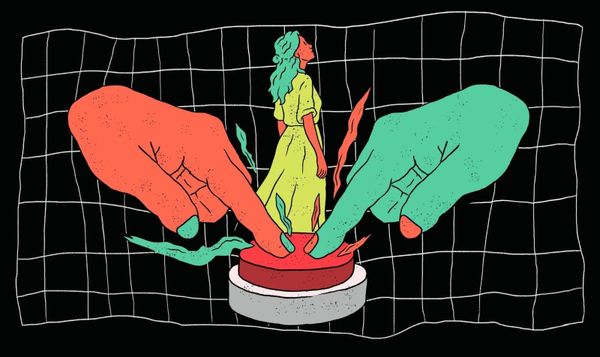
Lead illustration by Jawhar Soudani. Edited by Anastasia Moloney and Charlie Brinkhurst-Cuff
Lead illustration by Jawhar Soudani. Edited by Anastasia Moloney and Charlie Brinkhurst-Cuff