Amy Wallace’s big idea: The underreported story of the Epstein Files is about class
Amy Wallace who co-authored Virginia Roberts Guiffre’s memoire, Nobody’s Girl, discusses what the book and its main character’s experience tells us about power, politics and patriarchy in the United States today
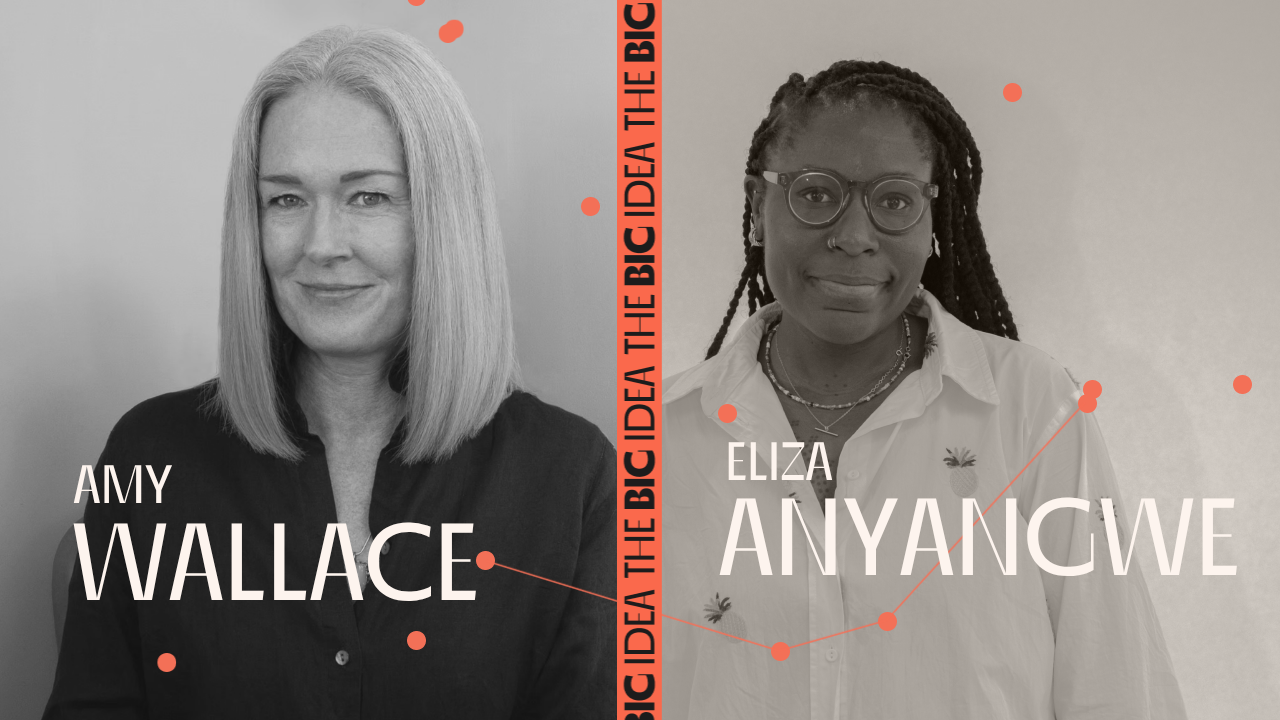
Amy Wallace has been catapulted into the public eye since ghostwriting Epstein survivor Virginia Roberts Giuffre’s memoir, Nobody’s Girl.
She speaks with Fuller’s editor-in-chief, Eliza Anyangwe, about why the release of the Epstein Files really isn’t about transparency or justice, why Giuffre insisted on including her own flaws and sense of complicity in her memoir, and how class and patriarchy ensure that "power protects power".
TRANSCRIPT
00:00:06:06 - 00:00:31:22
Eliza Anyangwe
All right. Hello, everyone. Oh, I love the one person who replied. It's a shame. I know who they are. Welcome, everyone. Thank you so much for staying for this session. My name is Eliza Anyangwe and I'm the editor in chief of Fuller, a global newsroom that focuses on issues that disproportionately affect women and gender diverse people. I'm so happy to see so many of you here.
00:00:32:00 - 00:00:52:18
Eliza Anyangwe
I have the very deep pleasure of having Amy Wallace in conversation with me today. But before we get into that, I just wanted to see how many of you were here for the last session, because I think, very interestingly and usefully, they've planned two Epstein file sessions back to back. So can you raise your hand if you were?
00:00:52:21 - 00:01:19:02
Eliza Anyangwe
Oh, look at that. Okay. So we don't have to start from zero. So thank you for staying. We are going to have a longer Q&A session with this conversation between the two of us. Firstly, because there are fewer people on stage. There are different perspectives to bring. And I think just also to really honor the opportunity to hear from survivors as we had in the previous conversation.
00:01:19:04 - 00:01:45:00
Eliza Anyangwe
Maybe there are more things to percolate and that what you want to bring up, if you are joining us, and I'm not really sure what the session is going to be about. The title is not on screen, so I'll tell it to you. Understanding US power and Politics. Politics and patriarchy in the aftermath of The Epstein Files with Virginia Roberts Giuffre, coauthor Amy Wallace, I do want you to give her the biggest round of applause.
00:01:45:00 - 00:01:49:19
Eliza Anyangwe
Flees.
00:01:49:21 - 00:02:20:25
Eliza Anyangwe
Welcome. Also Perugia novice. Welcome to the puddle. When I approached Amy, obviously, like everybody else, probably in this room, the story of what Jeffrey Epstein had done, but really framed through the lens of these, the Epstein files and the political dimensions. Were these going to be the revelations that could be a chink in President Donald Trump's armor or not?
00:02:20:27 - 00:02:46:08
Eliza Anyangwe
And they continue to be discussed in that context. And I heard an interview that Amy gave that was so much bigger than that, so much broader than that, that centered the human beings behind the abuses, that talked about the implications for the systems in which we live. What are the reasons that this type of harm is perpetrated and unaddressed specifically?
00:02:46:08 - 00:03:37:04
Eliza Anyangwe
And why are they in the media now? What is it? Even as we are grateful for this moment, can we glean from why it is in the press now, and will that lead us to anywhere different in the future? And I really loved the wisdom with which Amy spoke about these issues. But as the book has been 23 weeks now on the bestseller lists, and people continue to want to understand Virginia Roberts Duffy's story, I was also really fascinated by the opportunity to be in conversation with someone who is usually in the background as a ghostwriter, coauthor, and now is cost much more visibly because as next week is the anniversary of Virginia Giuffre death,
00:03:37:04 - 00:04:02:08
Eliza Anyangwe
Virginia is no longer here to speak for herself. And so we have a fantastic opportunity, but also have to walk us very specific line because, of course, Amy is not a medium. At least we haven't had that conversation and obviously can speak about the intensity of the time that you spent together writing this book, but obviously cannot be predictive in what Virginia would have said to various things.
00:04:02:08 - 00:04:27:16
Eliza Anyangwe
So I just wanted to sort of set the stage in that way for our conversation that we want to talk not just about the Epstein files, but what we understand about politics, power and patriarchy in the US and beyond. Now, Amy, you've been a writer, a journalist. You've just written other books. How did you end Virginia meet? How did you start on this journey?
00:04:27:19 - 00:04:57:22
Amy Wallace
Well, first, I just want to acknowledge that Virginia should be sitting here in this seat that I'm in right now. As Eliza said, she, she passed away almost exactly a year ago. And about a week, a week from now will be the the anniversary. And again, as Eliza said, I was hired to be her ghostwriter. That means I collaborating with her, helping her shape her story, helping her bulletproof her story.
00:04:57:25 - 00:05:27:06
Amy Wallace
And that was very, very important in the sense that she was already known to be a victim of very powerful men who were going to had threatened her already, either her physical safety or her legal safety. Meaning, take our names out of your mouth, or we will keep you in court for the rest of your life. So we went into the project together, knowing that that was the sort of mandate we had to not get anything wrong, not a single thing.
00:05:27:08 - 00:05:58:13
Amy Wallace
And that's why I'm really honored to be speaking at a journalism conference, because I would not have been able to do that work if I hadn't been trained as a journalist. I worked for three different newspapers. I worked for, written for many, many magazines. So how did we come to start? What generally happens when people are thinking about writing a book is that they meet with writers, and there are a handful of us who do it, and our names are passed around.
00:05:58:20 - 00:06:30:16
Amy Wallace
Given what work we've done in the past. And as it happens, a magazine editor that I had worked for at Esquire in the United States recommended me to be one of those people that she talked to. And we had a zoom, I believe it was April of 2021, March or April, and we we met. She was in Perth, Australia, and I was in, I think, Los Angeles at that point, and we just clicked.
00:06:30:19 - 00:07:02:10
Amy Wallace
I can tell you more about that conversation, but it was a pretty I thought of it when I was listening to the previous panel because at one point in the conversation, her agent basically throws it to her and says, well, Virginia, tell me a little bit about yourself. And Virginia had been asked so many times to describe on command the worst things that I've ever happened to her that she launched in and she just started.
00:07:02:12 - 00:07:34:16
Amy Wallace
We barely met on zoom, and she said the first time I was, you know, sexually abused by Jeffrey Epstein and Maxwell was after I. And she just started in and I sort of viscerally reacted. And I said, whoa, whoa, hold on. If you and I work together. She hadn't hired me yet. If you and I worked together, this is not where we're going to start.
00:07:34:19 - 00:08:01:21
Amy Wallace
We will build trust. We will get to know each other. We aren't starting here. And you do not have to serve that up to me or anyone else on command anymore. I can't help but think that was part of the click that ended up being what made us work together, and it was not something I planned, but it felt so.
00:08:01:24 - 00:08:22:20
Amy Wallace
Like a trained monkey, she was being asked by her own representative and not in a mean way. But you know, we're trying to get business done and we needed to find out what we were going to do. But it felt so jarring to me, and I reacted, and I can't help but think that's part of why she hired me.
00:08:22:26 - 00:08:44:22
Eliza Anyangwe
And if you're not, if you haven't seen it in the program already because of the sort of delicacy of the role really for anyone else's story of being the ghostwriter, but especially now we heard in the last panel. And if, you know, last year there was a fantastic conversation also about survivors and telling their stories and how to do that in a way that's not traumatizing.
00:08:44:23 - 00:09:12:25
Eliza Anyangwe
I'm there is a sort of technical side to this that I'm very fascinated with how you did that while honoring the person's experience, yet asking them for their receipts, which is this terrible, difficult thing that journalists have to do. And so Amy is running this workshop on Saturday, 3 to 350, if you want more of the sort of like the technical side of it, please do come to that if you're also thinking about any questions on that, so that we can really talk about the systemic and the fallout.
00:09:12:26 - 00:09:18:27
Amy Wallace
Yeah. The process, please come. We'll talk all nerdy sourcing and how we got it done.
00:09:18:28 - 00:09:20:12
Eliza Anyangwe
All the post-it notes you will need.
00:09:20:12 - 00:09:26:10
Amy Wallace
To buy post-it notes, all the bulletin boards, all the three binders. It was a little nuts, but yeah.
00:09:26:13 - 00:09:49:15
Eliza Anyangwe
So then setting that aside, how much did you understand of the prevalence of sexual violence, sexual trafficking, pedophilia? Like do you come to did you come to that meeting? And what now? Do you know about that, that you think is something that we need to hold in our minds?
00:09:49:18 - 00:10:20:08
Amy Wallace
Well, I've been a journalist for more than 30 years. It's probably 40 at this point and done a lot of different kinds of of in-depth investigations and also very personal reporting about people's intimate experiences and stories. So I had that going for me, but I didn't have any particular expertise in either sexual trafficking or sexual abuse. I kind of we were finding our way to gather, to some degree, just as two women trying to get this done.
00:10:20:10 - 00:10:53:10
Amy Wallace
I learned a lot about it, for sure, not just in terms of her personal experience, but also in terms of, you know, there was talk in the last panel about women being believed or not believed and and part of the complication there, I think, is understanding what trauma does to you and does to memory. So Virginia had an incredible memory, and I couldn't have helped her accomplish this book of hers without that memory.
00:10:53:11 - 00:11:25:19
Amy Wallace
But what I learned was that when you are horribly traumatized, sometimes what your brain does is it splinters it. So you still have all the pieces there, just in different rooms in your head and the particular place. I learned this and then later talked to psychologist friend of mine about it and she was like, oh yeah, that happens all the time, was when she's describing to me the first two weeks of being in Epstein's orbit, you know, Glenn Maxwell procures her at Mar-A-Lago Spa, owned by Donald Trump.
00:11:25:19 - 00:11:50:09
Amy Wallace
She's working at the front desk. Glenn comes in cooing and British and posh and tells her, though there are so many opportunities for you, blah, blah, blah. That very day, she's raped by both Jeffrey Epstein and Glenn Maxwell. And she's describing going forward the first two weeks. And there's always this question for for the survivors. Well, why did you stay?
00:11:50:15 - 00:12:13:12
Amy Wallace
You weren't shackled. You know, if it's a terrible why didn't you leave? That's I mean, they've heard it and heard it and heard it. So she's telling me that whole progression of how that now she has to come every day, then they offer her a job, then they say, we don't want you to work at Mar-A-Lago anymore. It's this sort of systemic isolation of the victim.
00:12:13:14 - 00:12:39:17
Amy Wallace
And I'm writing it. And then like three months later, she says to me, well, you know, I told you about that photograph, that photograph of Sky. The sky is her little brother. You've probably seen very articulate spokesman for Virginia now. And I said I you didn't tell me about that picture, but tell me again or I don't remember.
00:12:39:18 - 00:12:58:03
Amy Wallace
Tell me again. And she said, oh, well, you know, about two weeks in, Jeffrey Epstein, he called me into his office and he, he threw this photograph down of Sky. Sky was in middle school. He was, you know, 12 maybe at the time.
00:12:58:06 - 00:13:22:06
Amy Wallace
Little backpack on his back. He's taken it's a picture taken at his school. And Epstein basically says to her, if you mess with us, he's going to pay the price. Okay. That was very relevant to the earlier section of the book we had been working on, but she had kept that in a different place in her head. Why?
00:13:22:07 - 00:13:55:24
Amy Wallace
Because and this tells you a lot about Sweet Virginia. That was the worst thing that had happened for her. Was the threat to Sky not being raped repeatedly, not being trafficked repeatedly, but the threat to her little brother. And she kept that memory sequestered. So that was a huge education for me, because generally we're used to and the and the survivors are used to being asked to kind of tell their story real quick, all in order, all the salient points in a row.
00:13:55:26 - 00:14:03:12
Amy Wallace
You know, I find that out months later. I put it in the right place in the book. So.
00:14:03:14 - 00:14:42:25
Amy Wallace
I learned a huge amount. And I guess the other thing I would say I learned directly from Virginia, which is to me, the most heroic thing about her for all she did, for all the bravery, for all the taking on of the most powerful men in the world, the things she really wanted to do with this book was to help other survivors of sexual abuse of all kinds men, women, not just Epstein and Maxwell, survivors, everyone, half the population probably, if not more, feel not alone and feel less shame.
00:14:43:01 - 00:15:24:09
Amy Wallace
And that was the reason that the book, every time something happened that was messy, she tried to kill herself while we were working on the book twice. Back to back. She recovers, we get on zoom, and she says, we're putting that in the book. Why? Because if I try to make my life look all peachy keen, because I've won a couple of settlements and I have a family and I'm, you know, seemingly past it, I will make other survivors feel shame because they haven't gotten over it and I haven't gotten over it.
00:15:24:09 - 00:15:54:13
Amy Wallace
And I want to show everybody that. And so that I think is a real power of the book. It's this unvarnished, warts and all human portrayal of, yes, I took Valium sometimes. Yes, I have my own flaws. Yes, I procured because all the girls were asked to procure. But she doesn't give that as an excuse. She's telling you how the system worked, and she's admitting her own part in it, which is how they kept the survivors.
00:15:54:14 - 00:16:00:26
Amy Wallace
The victims. They made them complicit in their own abuse. That's part of how this works.
00:16:00:26 - 00:16:20:24
Eliza Anyangwe
Yeah, that was really something. Well, many of the things you said came across to me as I was reading the book at Virginia. And writing her memoir doesn't try to do what statesmen do with, you know, writing history, which is they try and make themselves look good. I mean, we see Trump doing this in the white House every day, right?
00:16:20:25 - 00:16:46:02
Eliza Anyangwe
He is rewriting history to make himself look good. And when I read this book, the sense that I was like, you are admitting your complicity. You are making yourself a more difficult character to like. But I thought that was incredibly brave that she would be willing, as she participated in this exercise of telling her story not to make herself.
00:16:46:03 - 00:17:12:02
Eliza Anyangwe
We heard this earlier, the sort of perfect survivor, but to be the most human and relatable person that she could be. And though my experience as on a on a human level is so different to hers, I connected with her of her music. I was like, I like Matchbox 22. I liked the Google dolls, and it was really fantastic that in this book that captures so much of what is wrong with the systems and the societies in which we live.
00:17:12:03 - 00:17:19:16
Eliza Anyangwe
There was also this really deep human person willing to be venerable and willing to be seen. So that was really extraordinary.
00:17:19:16 - 00:17:43:09
Amy Wallace
Yeah. And I really do want to stress that. I mean, I've worked on two other books with their basically leadership books by men who ran companies very different projects. And I'm fond of both of those men, but sometimes I had to push them to put stuff in that was not as positive. I was often doing it to say, if you don't raise it, someone else is going to raise it, so I would, I was doing it in a defensive way.
00:17:43:12 - 00:18:07:02
Amy Wallace
In Virginia's case, she led the train on that. She was the one who said, I didn't have to say, well, maybe we ought to put that in to make you more human. Never. She was the one who was really, really clear because of her own experience of the shame that she still carried, that she was not only not going to do that to others, but she wanted to help others by showing her own vulnerabilities.
00:18:07:02 - 00:18:45:00
Amy Wallace
And I guess the other key point which has been made before is that not in every case, but a lot of the girls and women who survived Epstein and Maxwell's abuses were particularly chosen because they had complicated stories. They weren't chosen because they were. They were chosen because they were already vulnerable. Virginia had been abused by her father, and she had been trafficked by another man before she met Epstein and Maxwell and Epstein and Maxwell had an uncanny ability to spot those girls because they were easier to manipulate.
00:18:45:00 - 00:19:15:13
Amy Wallace
They were. They needed reassurance. They needed validation. And and weirdly, even though they were raping them in Virginia writes about this really well, I think they did offer her validation at times, even as they were hurting her, which makes it a really complicated stew to to get to extricate yourself from, because you are being seen and told that you have potential in a way that you have not been told enough.
00:19:15:18 - 00:19:47:16
Eliza Anyangwe
So let's step out further than to the systemic. There have been some consequences, limited consequences from the revelations that have come out in the Epstein files, predominantly in the UK. There has been some fallout in Norway, in the US, really not very much to speak about in in all the time you've been speaking about the book since and as you've been watching the fallout, what are you understanding about the systems in which we live?
00:19:47:18 - 00:20:11:12
Eliza Anyangwe
Because all of Fuller's journalism tries to get at that, right? We know that no one person's story can capture everything. We don't want to create an archetype. Instead, we want that experience to point to something systemic. And what is it that you think is systemic in Virginia story, and the story of the countless other survivors of Epstein and Maxwell.
00:20:11:14 - 00:20:17:02
Amy Wallace
Money class.
00:20:17:04 - 00:20:51:15
Amy Wallace
The men who are being protected. And let's not be unclear about this. Their names are in those files. I know the names that Virginia reported, and there are a lot of them, and you've heard of them. So the idea that that Attorney General Pam Bondi, who, by the way, refused to testify yesterday before the the House Oversight Committee in the United States because she's no longer attorney general, so she doesn't have to even though she was subpoenaed.
00:20:51:18 - 00:21:17:13
Amy Wallace
Her successor, Todd Blanche, has now said, you know, basically we're done with those Epstein files. But if the survivors would like to come forward and say something, I mean, if they have anything incredible to say, we'll absolutely investigate. That is so disingenuous. That is so insulting, not just to the survivors, but to all of our intelligence. These women have already come forward.
00:21:17:14 - 00:21:44:03
Amy Wallace
We just saw two of them speak. And there are, as they pointed out, a thousand of them. Not all of them have come forward for understandable reasons, but they have come forward and said their experience and who they were trafficked to, they should not be asked. Or the first lady, Melania, thinks there should now be a congressional hearing, and these women should have to get up and say again, and maybe they should name the names on the congressional hearing, really, who's going to protect them after that?
00:21:44:03 - 00:22:10:18
Amy Wallace
Because, again, let's not kid ourselves to name these men's names is to put yourself in physical danger. And and Virginia writes about this very well in the book, her decision making. She want to name all the names in the book, but she had to make decisions about her own personal safety and her family's personal safety. She has three teenagers.
00:22:10:20 - 00:22:32:25
Amy Wallace
She she couldn't afford to name them again. And why should she have to name them? She named them to law enforcement, and she did it on two separate occasions. So the idea that those names have been redacted from the files, the partial file release that's happened. And so that's why I lead with the word money, because who are those people?
00:22:32:25 - 00:22:59:02
Amy Wallace
Those people are either direct donors or they're dark money donors. They've put calls in, I'm sure. Leave us out. We don't want this. I can't help but believe that that is what is happening, because what we watched happen, they did not follow the law. They did not protect the women. They did not protect the survivors. They unredacted their names, phone numbers, addresses.
00:22:59:02 - 00:23:18:15
Amy Wallace
In some cases, the search function on the on the Epstein files doesn't work. I watched Danny, one of the survivors, say she put her name in. She got six hits. She wasn't supposed to get any. And then as she went through the files, she found other documents that she was in that didn't come up named. She was named.
00:23:18:15 - 00:23:40:13
Amy Wallace
So the search function doesn't work. It's designed to be confusing. So it's it's it's a cover up. I mean, there's just no other way of describing it. Obviously it's a cover up if you're going to release the names, if you're going to release the files under the new law, release the files and redact the names of the survivors.
00:23:40:13 - 00:23:48:22
Amy Wallace
And they didn't do that. They redacted the names of the men. And those were not poor men.
00:23:48:25 - 00:24:20:28
Eliza Anyangwe
As we were preparing for today. And it also really wonderful that we are coming after the session that we did, because it was named there. And so with so many of you having attended that, let's talk to this more. And I was asking you about systems and you said class, because actually, in some ways, the success of the book shows transcends, you know, the political divide in the US because it is a story also of the exploitation of the the poor, the working class.
00:24:21:00 - 00:24:23:10
Eliza Anyangwe
Do you want to speak a bit more about that?
00:24:23:12 - 00:24:37:01
Amy Wallace
Yeah, we had a, you know, a pre call to discuss sort of what we were, how we would go about this. And I find this heartening and disheartening at the same time that the book.
00:24:37:03 - 00:24:46:00
Amy Wallace
Has appealed to all stripes of people in the United States and around the world.
00:24:46:02 - 00:25:18:06
Amy Wallace
The disheartening part of that, I think, is because so many people have been sexually abused in this, in this world, at many of them as children, when they were the most vulnerable. And I do think that that's an underlying engine of the book selling and capturing people's attention. But I have found it heartening that, you know, in the United States, there's a vast spectrum of ideology, MAGA sort of being on the father.
00:25:18:06 - 00:25:48:06
Amy Wallace
Right? MAGA doesn't like pedophiles and MAGA to speak very generally and therefore incompletely. But, you know, that's a lot of people who feel disenfranchized feel like the system left them behind, feel like they're never going to get ahead. They don't even have a middle class life. They can't send their kids to college, etc., etc., etc. those people don't like the idea that rich men raped poor girls.
00:25:48:08 - 00:26:27:16
Amy Wallace
And I think that's an opening because it isn't just hand-wringing liberals saying that women shouldn't be sexually abused. This is a vast spectrum of people coming at this from a lot of different vantage points. And while I was watching the past panel and, you know, this whole question of me too, and have we made strides? And I agreed with everything that Liz and Jess, particularly the whole panel, said about me to allowed women to say it happened to me and now we have to push forward.
00:26:27:18 - 00:27:06:02
Amy Wallace
Remember, there was a backlash after me too as well, but I'm hopeful that the universality of the unfortunate universality of being victimized and again, women and men has broken it open a little bit. And I don't, you know, we don't have anything to show for it, really, in the United States other than some people losing their contracts at CBS news or, or, you know, valiantly resigning from the board of the hotel chain that they run.
00:27:06:04 - 00:27:37:28
Amy Wallace
But I'm hopeful that the way for personal story has entered the culture because of her bravery and being willing to tell it. Or as I say, warts and all, it's reached more than just one political group, and I am hopeful that that is going to simmer under the radar and have more impacts.
00:27:38:01 - 00:28:03:21
Eliza Anyangwe
It's time to come to you. As you're thinking about your questions. I do just want to ask you this. When did you and Virginia allow yourselves those moments of visioning, of wishing, of thinking this is what we want to happen in the world when the book comes out, what was where, or did you restrain yourselves from that and just focus on the exercise of getting the story and organizing the story?
00:28:03:21 - 00:28:12:06
Eliza Anyangwe
Or did you, as you were doing so, have those moments where you thought, this is what we want the impact of this to be? Well.
00:28:12:10 - 00:28:37:14
Amy Wallace
The first thing I'll say is we were very clear about what we wanted the impact to be for Virginia. And this is very sad to me because she didn't make it to see it. But we we talked about it once. We talked about it 150 times. I talked about it with her family. I went to Australia twice and lived with the family, lived in their guest room while we worked on the book.
00:28:37:16 - 00:28:50:24
Amy Wallace
And that was this, that after she came forward publicly in 2011. So basically after 15 years of of.
00:28:50:26 - 00:29:09:09
Amy Wallace
Vomiting up her worse experiences on command over and over and over in every media again, just as Jess and Liz we're talking about, you never say no to an interview requests because you have to keep talking about it because no one's paying attention. So if you're going to get your moment, you have to take it. And she took it and took it and took it.
00:29:09:09 - 00:29:30:22
Amy Wallace
And she writes about that in the book. What a toll it took on her. But what we talked about over and over again was once the book comes out, yes, ironically, you and I have to go through it all again in the process. So we are going to hopefully not injure you, but you're going to have to relive it with me.
00:29:30:22 - 00:29:42:08
Amy Wallace
Some of the things you relive with me, she'd never talked about with anyone. But then the book will come out. This is the book.
00:29:42:10 - 00:30:03:14
Amy Wallace
And from that day forward when somebody says, well, tell me again what the first time was that you, you know, where were you and what did they do and where you can say, I really respect your need to know that. I'm glad you're interested. I'm glad you care. My best and most careful telling is in this book, and you don't have to buy it.
00:30:03:14 - 00:30:30:21
Amy Wallace
You can take it out of the library. I'm not asking you to spend money, but I am now moving forward in my life. I am now an advocate for other survivors. That's that was her goal. And, you know, it is the worst tragedy to me that she did not make it to enjoy that payoff and also to see all of you, to see the world actually paying some attention.
00:30:30:24 - 00:30:49:28
Amy Wallace
We didn't talk about we didn't know how the book would be received. We didn't know that President Trump would mention her name on a, you know, on the Air Force One. We didn't know that. We didn't know the Epstein files were going to continue to be, you know, when when I last saw Virginia in person, it was right before the presidential election.
00:30:49:28 - 00:31:15:20
Amy Wallace
I was in Australia with her, basically reading her the entire manuscript one more time. And, you know, Trump was campaigning on releasing the Epstein files. So we didn't know if that was going to happen. And it almost didn't happen. And it only has halfway happened so far, but we had no idea how it was going to roll out, and we didn't really speculate.
00:31:15:22 - 00:31:23:22
Eliza Anyangwe
I know that when I spoke to you, it's, you know, telling you that this event is happening in April and you were like, oh, it's going to be done by then. Yeah.
00:31:23:28 - 00:31:27:10
Amy Wallace
We talked in December and I was like, well, okay.
00:31:27:16 - 00:31:45:26
Eliza Anyangwe
Like the world would have moved on. Yeah. All right. I definitely miss old how much time we would have for questions, but we do still have some. So if you have any questions let's see your hands. Fantastic. There is one at the back and one here at the front while a mic gets to the hand. Or there's only one mic.
00:31:45:27 - 00:31:48:00
Eliza Anyangwe
Okay, so let's take the one at the front and then we'll come to you.
00:31:48:01 - 00:32:14:14
Audience Member 01
Hi, I'm Kyle Spencer. I, I publish a newsletter called reporting. Right. So I'm looking forward to talking to to you later. But my question, Amy, we all have had relationships with sources who have had traumatic things happen after our reporting. How have you, as a journalist, dealt with Virginia, the loss of Virginia?
00:32:14:16 - 00:32:26:16
Amy Wallace
Well, maybe some of you journalists will relate to this. The first thing I did was I just worked. I self soothe by working. I mean, I was devastated.
00:32:26:19 - 00:32:50:07
Amy Wallace
For some of the reasons I've already described, but also because I loved her. I'd worked with her for four years, and the only way for us to get this level of depth and intimacy was to have a real human relationship. I mean, sometimes I joke, you know, we are all supposed to have boundaries. We had none. We just we gave that up.
00:32:50:09 - 00:33:19:27
Amy Wallace
If she called, I answered. And you know, from California to Australia is a tricky time difference. But she needed to she needed somebody to talk to. And there were a small group of us. Her publicist, Dean von muffling, had been involved from the beginning, and she was a really close confidant. But it was basically me and Virginia and Denny and our editor and and Virginia didn't.
00:33:20:00 - 00:33:57:07
Amy Wallace
She couldn't confide in a lot of people. So I have tried to do a little bit more self-care. It's I didn't expect to be in this role. And so I have found it helpful to be able to not speak for her, but speak up for her. She deserves that. But it's a huge loss, and it's a good reminder of, you know, the wolf at the door for people who who have survived trauma, it's always there.
00:33:57:07 - 00:34:11:08
Amy Wallace
And if you know somebody who survived trauma, if you are somebody yourself, you know, we all need to be taking care of each other. And, you know, I just something that's on my mind constantly.
00:34:11:10 - 00:34:23:27
Eliza Anyangwe
Thank you for that. The hand at the back. Do you someone ask you a question? Yes. Can we get a mic to the hand that is up? Okay. The mic is already at the front and then we will take. Yes, please.
00:34:24:00 - 00:34:40:05
Audience Member 02
I would like to know your opinion about one question. Do you believe Jeffrey Epstein is the only architect of his of this system? Or there is something else or someone else behind him? Maybe a network?
00:34:40:08 - 00:35:31:04
Amy Wallace
Thank you. The architect of the sexual trafficking scheme. Well, I think again, this goes back to something that was said in the earlier panel, supply and demand. And he couldn't have run a sexual trafficking scheme if there weren't a lot of demand for it. So I do think that Jeffrey Epstein was a particularly manipulative person and had a he was a very intelligent man, and he had a knack for meeting people and sizing up whether they were a CEO or a 14 year old girl sizing up what that particular person needed, what their insecurities were, what they hoped for, and then insinuating himself through that.
00:35:31:07 - 00:36:09:21
Amy Wallace
So he was a particularly effective leader of this, and he had his own reasons for it. He, we are surmising, was blackmailing some of these men and, you know, money, power, access, all those things were things he wanted. So but he wasn't alone. I mean, Glenn Maxwell was involved in helping procure and also abuse. And then all the men who came to the island, all the men who came to the houses and in Manhattan and in Paris and in New Mexico, those people knew.
00:36:09:24 - 00:36:32:10
Amy Wallace
Everybody knew the girls were there. Epstein was proud that he had underage girls. Remember, this is a person who who defined as all the girls he abused had to have their period. That was because then there were women, even if they were 11.
00:36:32:13 - 00:36:45:26
Amy Wallace
He was proud of that belief system, and he was happy to flaunt the norms of society. And so he wasn't alone, but he was an effective leader.
00:36:45:28 - 00:36:50:25
Eliza Anyangwe
And finally then, from the hand that was of the back. This will be our last question.
00:36:50:27 - 00:37:14:19
Audience Member 03
And thank you. My name is Juan. I'm a Swiss self-employed journalist and documentary movie maker, and I would love to hear your thoughts about the protection aspect because of stories that only can be told, because you build a trust with someone that is had or had something to tell. That isn't easy to tell.
00:37:14:21 - 00:37:18:22
Eliza Anyangwe
And do you mean how do you protect the person who tells you the story? Or.
00:37:18:25 - 00:37:45:14
Audience Member 03
Yeah, like sorry for my English. Like the story couldn't be told if there wouldn't be enough trust in you that you are the right person to tell the story, but also a person is ready to tell a story because of you. Like you're the missing piece that is needed for someone to stand up and tell their story. What are your thoughts about this aspect in protection?
00:37:45:16 - 00:37:49:15
Amy Wallace
Yeah, I mean, I think.
00:37:49:18 - 00:38:12:27
Amy Wallace
Virginia wanted to tell her story, but I don't think that she totally knew what that would mean, what that would involve. And so, yes, she needed to find somebody that she felt she could trust and and not just trust to tell things to, which is part of it, but also trust to protect her. And I don't think she understood that at first.
00:38:12:27 - 00:38:43:03
Amy Wallace
But, you know, and I will again, little shout out to my panel, my workshop on Saturday, how I did that was a rigorous process of making sure I knew every place that Glenn Maxwell was in, every city and every date of the two years and two months that that Virginia was in Epstein and Maxwell's orbit, because she got her picture taken a lot at society events.
00:38:43:06 - 00:39:09:22
Amy Wallace
You know, I had huge bulletin boards of every day that Virginia was, was new, them up close. We were not going to make a mistake. And I've got to say, just in a total nerd journalism sense, I'm very gratified we have not had a single challenge. And let me tell you, these guys were waiting for a challenge. They were they were looking for us to make a mistake because that's how they do it.
00:39:09:24 - 00:39:35:15
Amy Wallace
They then they discredit C. She's a liar. C she made it up. So I was determined that they were not going to get that chance. And you know, I'm very happy to be able to say for my own personal life and professional life, but also for Virginia, more importantly, that we haven't had anybody come forward and challenge.
00:39:35:18 - 00:40:19:03
Eliza Anyangwe
Thank you so much. Look, we are at time. We knew this was going to happen anyway where we thought, there's just no way we are going to get below the surface of this subject. But if I can summarize very quickly when we think about power, politics and patriarchy as we are reading the stories, and I really encourage all of you to pay and spend time with survivor stories, we must remind ourselves that these issues are intersectional, no matter how derided that word seems to be, that there are always people further in the margins who we do not see, and that that in itself is how the system is perpetrated, and that power protects power.
00:40:19:03 - 00:40:48:20
Eliza Anyangwe
And so if we're never interested in going beyond what is sort of garish and the lurid human side of the story. What did Glenn do? What did Jeffrey Epstein do to the what are the systems that uphold them? We will never be able to tell that to change those systems. And we rely on every story told, every writer who takes the stage to create that counter-narrative that opens up the opportunity for change and systems change is fundamentally what journalists want, right?
00:40:48:21 - 00:41:10:27
Eliza Anyangwe
We do this work so that something is different in the world in which we live, but it doesn't get there automatically. And so thank you to me, Wallace, for that work that you have done. Thank you to Virginia as well, and to the survivors who are here with us. And thank you for coming. Enjoy the rest of your festival.
Interviewer: Eliza Anyangwe
Guest: Amy Wallace
Producers: Imriel Morgan and David Roberts
Video editor: David Roberts
Collage: Erica Hensley