Newsletter: Pride under persecution
Ghana just passed one of Africa's harshest anti-LGBTQ+ laws. But queer joy is surviving anyway

“Love is love,” we’re told. Except, politicians in Ghana are bending themselves over backwards to disagree.
On Friday 29 May, lawmakers in the West African country passed a bill that criminalizes – and carries prison sentences for – the "funding, sponsorship or promotion" of, or failure to report “prohibited LGBTQ+ acts” to the police. It now awaits ratification by the president.
This news, at least in my portion of the internet, was widely reported. And so it should be. But often missing from stories about the virulent backsliding on women and LGBTQ+ rights around the world is the quiet but unrelenting efforts of queer communities to write, sing and celebrate themselves into existence, even when every policy and politician seems to be trying to erase them.
I have seen this pride under persecution up close. In 2023, I was invited to Abidjan to attend a multi-day workshop for and by activists from across the African continent. Its goal was “to identify strategies to initiate the process of decriminalization of homosexuality in Africa based on a contextual and decolonial approach”. There, I heard an intersex campaigner from Ghana talk passionately about the double harm of discrimination and invisibility within LGBTQ+ movements. A trans woman from Benin explained that while cis women’s feminism might enable them to shake off the strictures of femininity (the makeup, the interminable shaving of body hair, the push-up bra), for her, these signifiers guaranteed her safety. Looking like a man in a dress would almost surely invite violence.
As activists in Ghana and around the world take stock of the swelling tide of hate, it’s easy to wonder what those three days in Abidjan achieved. In moments of doubt or cynicism, I seek out clues of transformation written, spoken or sung. Perhaps in one place they are muted, allowing for a period of necessary grief and recalibration. But I assure you, somewhere else there is joy even in the margins.
A few places to start looking for signs of it:
- Tiffany Mugo, host of the podcast ‘What is this hot mess’ talks “pleasure as liberation…and magical vulvas” with world-renowned South African sexual health doctor, Dr T.
- In ‘Seeking Sexual Freedom’, Ghanaian writer Nana Dakoa Sekyiama travels across the continent collecting tales of women’s journeys back to their bodies.
- ‘She Called Me Woman’ is a collection of queer Nigerian women’s “stories about resistance and resilience".
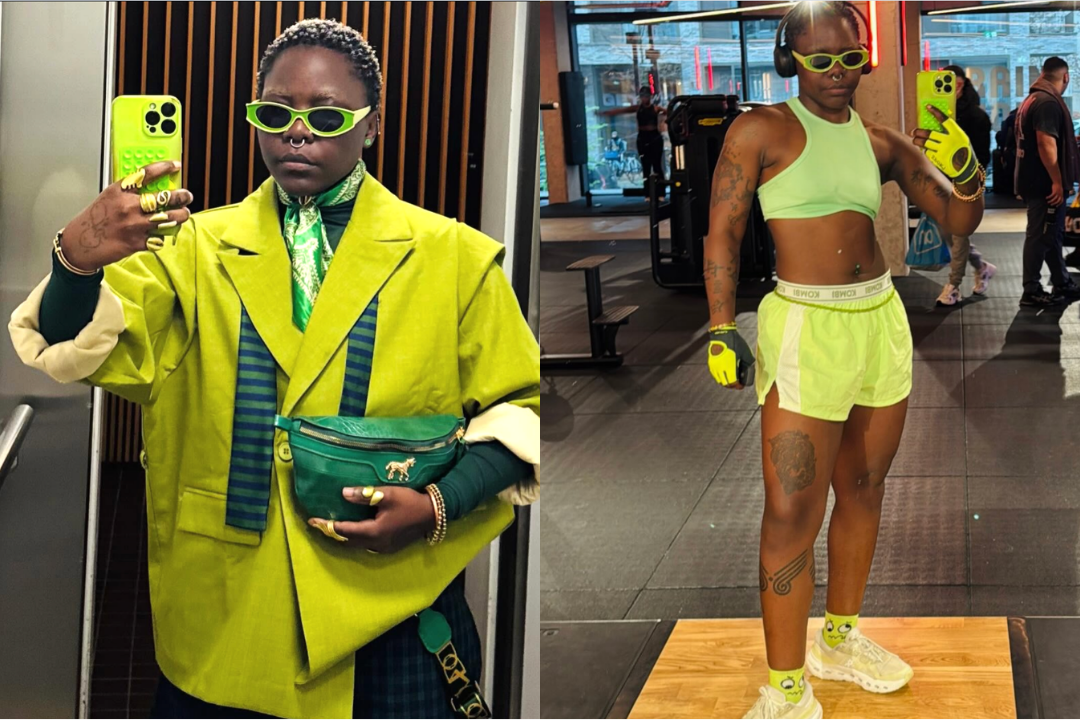
- And follow Ugandan “visual artivist” Papa De, whose Instagram and TikTok accounts are as much educational as they are a celebration of a life colorfully lived.
Where are you finding traces of joy this Pride Month? Drop me a line at eliza@fulleproject.org
If this newsletter is part of how you make sense of the world, consider leaving a tip. Fuller is independent, nonprofit and reader-supported.
Every contribution keeps Fuller's reporting free and independent.
The glass half full
Good news stories around the world about women and gender-diverse people
Indigenous women from the Amazon rainforest have won a prestigious award recognizing their fight to save the region from climate change. The Amazonia Indigenous Women’s Fellowship was recognised with the For Our Planet prize, which celebrated its work in challenging rainforest-protection issues.
Billionaire philanthropist Melinda French Gates has announced that she is donating more than $215 million to women’s health, with a specific focus on the menopause. In an essay for the New York Times, French Gates wrote that “solidarity is no substitute for systemic change… we need a menopause revolution”.
Politician Ruth Maryanne Cross Kwansing has become the first Pacific Islander elected to the United Nations Commission on the Status of Women. Kwansing, who is from the small archipelagic nation of Kiribati, said the achievement felt like a “miracle”. In her role, she will focus on gender and climate change, as well as economic empowerment for Pacific women.
Iconic outdoor swimming facilities in the UK will remain trans-inclusive after public backing. The Hampstead Heath ponds, in north-west London, made the decision after 86% of the public backed retaining the ponds’ existing trans-inclusive agreement.
We need 70 more survey responses to hit our survey goal.
Complete it, and you're entered to win one of three numbered first editions of It's About Time by Zara Rahman.
Give us three minutes to help us build the newsroom you need.
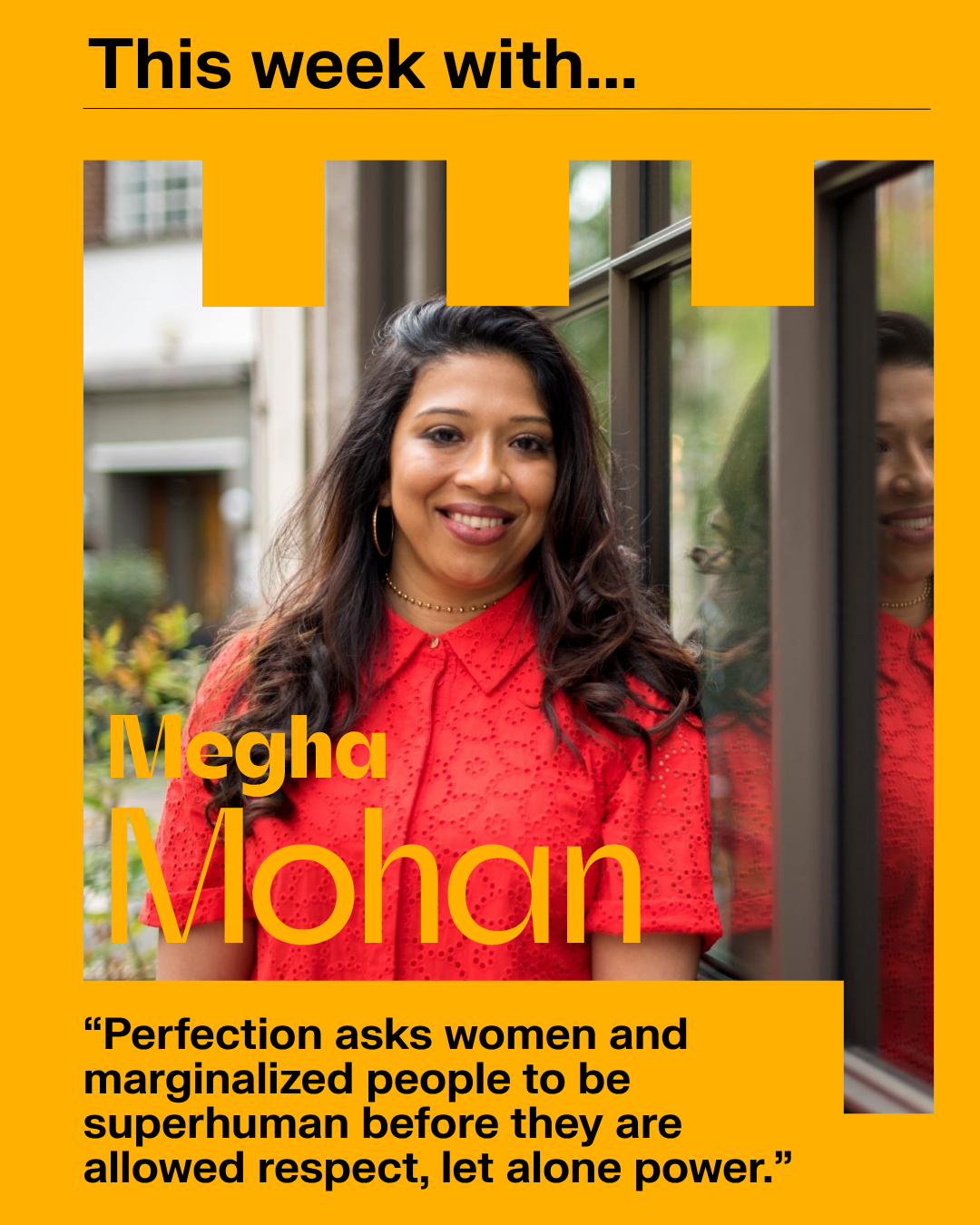
Journalist Megha Mohan became the BBC's first gender and identity correspondent in 2018. Since then, she has travelled and reported from around the world, covering stories such as female psychopathy and the marriage of trans women in India. She is the co-founder of Second Source, a community for women and non-binary journalists from underrepresented backgrounds in London. In 2026, she published her first book, HERLANDS: Lessons From Societies Where Women Make the Rules, which explores women-led communities worldwide and what they can teach us about new ways to live, think and govern.
What is something new you have learned about yourself in the past year?
Megha Mohan: I found myself tested in areas of my life that I had assumed were permanent, and it forced me to think more carefully about how I make decisions. For years, I sought reassurance and canvassed opinions from large groups of people before making important choices. This year taught me that while advice is crucial, the decision ultimately belongs to the person who must live with its consequences. I’ve learned to trust my own judgement more, and to extend that same grace to others.
In HERLANDS you document communities led by women across the world. How did you decide which ones to include?
I wanted HERLANDS to feel truly global and intersectional, moving across time periods, geographies, class positions and gender-diverse communities. I didn’t call NGOs for access; I wanted to find organic communities and write about them with care. It took years to earn trust. I wanted to write a quiet book, one someone could read ten minutes at a time and return to without guilt. Once I arranged it geographically and chronologically, from 30,000 years ago to today, it found its shape: a non-traditional, non-academic throughline rooted in lived experience, memory, care and the communities I write for.
You’ve said these communities aren’t perfect, nor made up of flawless people. Why is that important to remember?
Perfection asks women and marginalized people to be superhuman before they are allowed respect, let alone power. The communities in HERLANDS are not exempt from hierarchy, exclusion or blind spots around caste, class and sexuality. As a woman born in India, who has lived in the Gulf, I did not want to flatten women into neat symbols, as I have seen done to my own communities. I chose these communities for their multitudes. I am interested in reaching people panicked by the state of the world, and reminding them that ancient forms of wisdom have been holding us all along.
What’s weighing on your mind at the moment?
How quickly technology is being turned against women, and how slowly we are naming it. Technology-facilitated gender-based violence is quietly reshaping who gets to speak in public, most sharply for women in the Global South, who are rarely in the room when the tools are built. AI is accelerating all of it. Some of the most vibrant women I’ve known have gone quiet online, not because they ran out of things to say, but because the cost grew too high. And even when this violence is discussed, women who look like me are too rarely given the real estate to speak about it.
Has there been any positive change for women recently that you’ve found hopeful or inspiring?
I’m inspired every time I’m in a group of women. From London to Ramallah to Calicut, to Tegucigalpa to Blantyre. Even online, I meet people who are not waiting for institutions to make room for them. They are building their own spaces. I see it in reading collectives reclaiming forgotten writers, and in content creators from marginalized communities telling stories about their lives without an intermediary speaking for them. It is wonderful.
This interview has been edited for length and clarity.
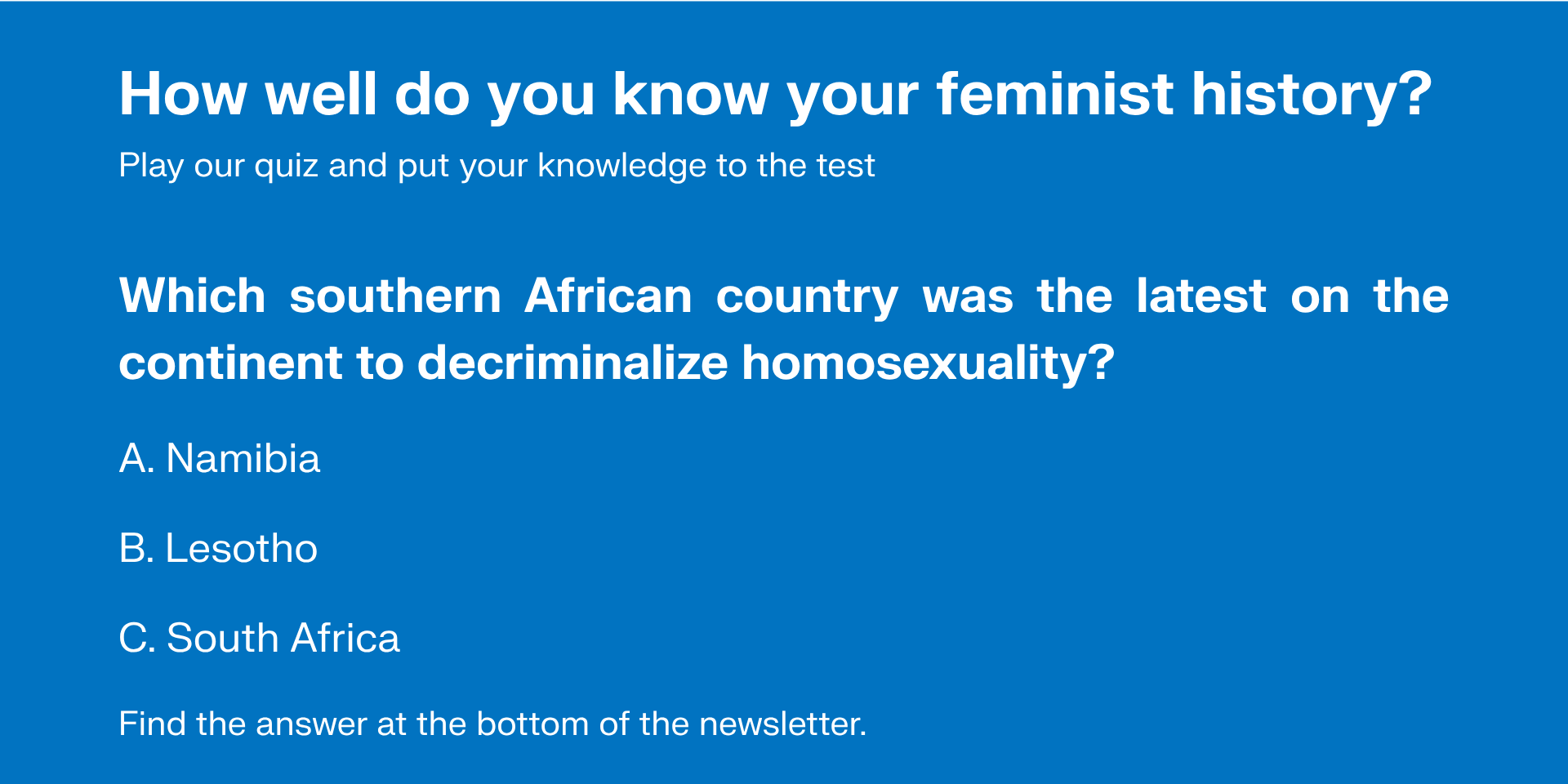
The answer to our feminist history quiz is: A, Namibia. In 2024, Namibia’s High Court determined that a colonial-era law criminalizing “sodomy” was unconstitutional. It joins just six other countries on the continent that have explicitly decriminalized homosexuality.