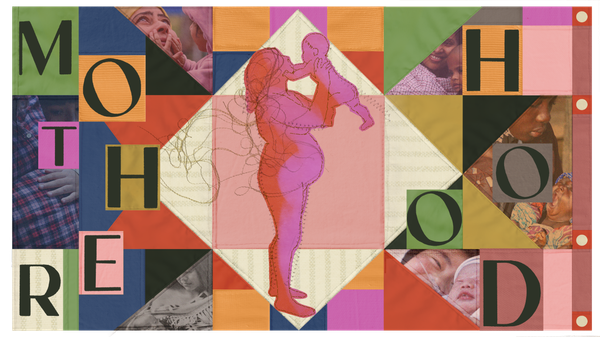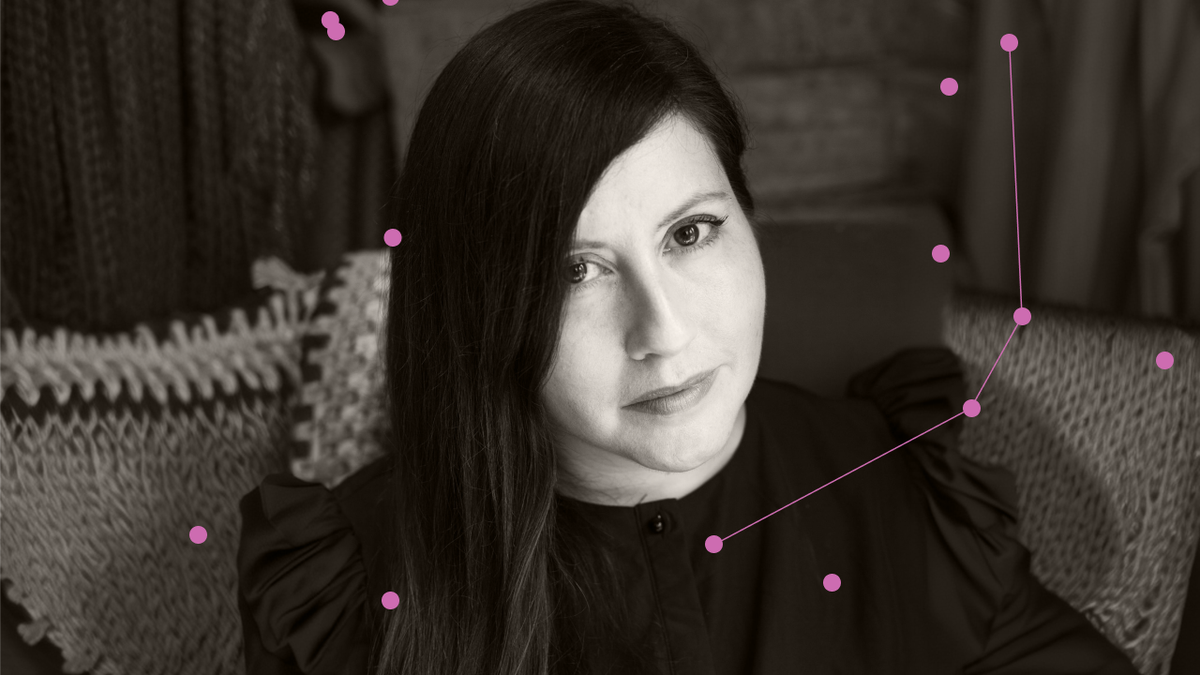
British feminist cultural historian, Elinor Cleghorn, talks with Fuller’s editor-in-chief, Eliza Anyangwe, about her new book, A Woman’s Work: Reclaiming the Radical History of Mothering. Their conversation covers the political policing of parenthood; choice and control; tradwives and single mothers; pronatalism and lessons from radical mothers and midwives from as far back as 9th century BCE.
Editor’s note: We are giving away three copies of A Woman’s Work! To enter the giveaway draw, follow Fuller on Instagram and comment “MOTHERHOOD” on this post!
Transcript
[00:00:00:00 - 00:00:38:24]
Eliza Anyangwe
When you hear presidents and podcasters talk about a fertility crisis, what are they really talking about? I'm Eliza Anyangwe, Editor-in-Chief of Fuller, and my guest this month on The Big Idea is feminist cultural historian, Elinor Cleghorn, whose latest book, A Woman's Work, Reclaiming the Radical History of Mothering, made her the perfect guest on our edition on motherhood. Now you'll hear I'm a little tired, but Eleanor brings such insight, clarity, and thoughtfulness to a subject that everyone seems to have an opinion about. If you enjoyed our conversation, please subscribe at fullerproject.org and share it with a friend.
Hi, Elinor. Welcome to The Big Idea, and I'm delighted to be here with you. Can I ask you to introduce yourself for folks who will be watching or listening to this?
[00:00:54:28 - 00:01:19:20]
Elinor Cleghorn
Of course, and thank you so much for having me, Eliza. It's a real honor to be here. My name is Eleanor Cleghorn. I am a feminist cultural historian, and I'm the author of two books. My first book was called Unwell Women, and it was published in 2021, and I have a book coming out very soon in the middle of March called A Woman's Work, Reclaiming the Radical History of Mothering.
[00:01:19:20 - 00:04:00:11]
Eliza Anyangwe
I found myself really moved when I started to read your book, because in remembering and in tracing and in the care, because I just, as I was reading as an editor, I thought, how did you find all of this out? There was so much detective work to identify examples and then piece these things together. And in the care that I felt as the reader of that, I was really struck by the political work of writing into being lives past and lived experiences that we are told we're supposed to accept don't matter. So I first want to thank you for that. I think there is such a valuable world building task that you set out to do by just writing back into the record the lived experiences of women from so long ago as the ninth century BC.
I was really, really moved by this work. I find that even in the work of journalism, especially now when accountability is so much more difficult. So just revealing wrongdoing, speaking truths to power is no longer sufficient to see that people's rights are respected and that their capacity to live fully and freely and die with dignity is upheld. We have to understand ourselves, even as journalists, as also just sort of bearing witness. And I really was struck by that in this book, you sort of allow us to bear witness to the lives of people who in many ways we are told didn't matter. So thank you. As your book concludes you in your reflections make these connections back to the lived experiences of an overwhelming number of women in the UK and the US.
You talk about anti-immigration and anti-LGBTQI, the patriarchal project of pro-natalism. I wanted to ask you about how you, even in writing this work, grapple with aging populations and the idea that there is a world in which young people are going to have to do so much more to care for an aging population. Is there ever an understanding of pro-natalist or pro-natalism rather that is feminist as far as you're concerned? Where does the patriarchal project step in and sort of hijack the concern about aging populations?
[00:04:02:03 - 00:04:35:00]
Elinor Cleghorn
This is such an interesting question because we're seeing so many think pieces, articles ranging from specialist to popular press. And I noticed in the UK that articles about things like birth rate crisis or fertility crisis are being published in fairly kind of centrist women's publications. What really troubles me about this issue is, well, many things, but first and foremost the language.
So demographic issues that we might need to think about in the future, aging populations, sustainability of certain systems, overwhelmingly these issues are approached in terms of fertility and birth rate, as in the responsibility for solving those problems in the future comes down to the production of children. And who does at the moment anyway, the biological, social, and all the work, the work associated with that is overwhelmingly done by women and it's overwhelmingly done with no meaningful economic or societal support.
And the more we see, I think the more we see the rise in these conversations around, you know, genuine demographic issue, it is completely true. How will we support our aging populations? But I feel like this is an opportunity then to completely re-shift the thinking around this and say, okay, well, how does society adapt in order to support aging populations? Not how can women be incentivized, coerced, or even forced to provide that future generation that will do again that caregiving labor, because that's what we're talking about, aren't we? We're talking about caregiving labor really. We're talking about who will perform it.
And that's why I think that we always have to challenge the terms in which these arguments are approached, the language we're using, the way we're going about this. And if it was up to me, I would ban the words fertility crisis and birth rate crisis. And say, these are societal issues we're going to face in the future that are to do with sustainability. And how do we do that?
[00:06:36:12 - 00:08:52:12]
Eliza Anyangwe
All of us. I'm still just thinking about this. I imagined for a second that I could wave my magic wand and give you that power and see what would happen. What world would I wake up in tomorrow? Because you're right, the words fertility crisis or, you know, the fear of what happens as the populations age tend to lead to a very simplistic and often extractive expectation of women and people who have the capacity to reproduce and the expectation to care, to do additional work. It is never a question about how do we reimagine the societies in which we live in. And I think that is such a light bulb moment for me, which is why I was sat just thinking about it, because of course, it is not about whether it is fact or not that populations are aging, it's whether or not the solution that is presented lays at the feet of women or people, you know, people who can give birth to children, the expectation that they will do that almost as a kind of national, as a national duty and expectation to produce children, that their agency is removed from them and that they are forced to have children.
I think about that obligation, the who gets to have agency, who gets to make decisions over their lives. And that shows up in conversations around motherhood, both in the who wants to have children, who is forced to, these narratives of sort of, you know, women should procreate to, you know, to do the right thing by society. And then also on the opposite end of that, who whose agency is removed, who cannot choose to not have children, right? You have pronatalism on one side and abortion and restrictions around abortion on the other side. And when we were thinking about motherhood, we grappled with to what extent should we also think about anti-abortion movements and campaigns and rhetoric? How did you think about that as you were writing the book? Is it possible to think about motherhood without examining and exploring the flip side of that coin, which is the choice and the autonomy of one's body to decide when and if to have children?
[00:08:53:13 - 00:09:38:20]
Elinor Cleghorn
Yeah, it's so important. Any discussion, I think, of motherhood that's going to meaningfully move any needles needs to accommodate the fact that motherhood should always be something freely chosen. That's what we dream for. It isn't. That's not the reality that we live in at the moment because we are in a situation in which the erosion of reproductive health goes hand in hand with the deterioration and downright destruction of services like maternal healthcare, right? So where you have the erosion of reproductive rights insofar as, say, taking away the right to abortion, the right to contraception, the right to even sexual health information.
What you also don't have on the other side of that is reinvestment, say, in maternity services. So it isn't about creating more babies, as we know. This has never been what abortion bans are about. They are about sending a very clear message about whose autonomy counts, about who has the right to decide what happens to their own body. When I was looking at the research in the book and looking into this, you know, the sort of history of not just abortion rights, but sort of rhetoric around abortion and reproductive health, around sexual health information.
The plain fact is that even in times in history where abortion was very much illegal, say, in the UK, it wasn't inaccessible for people with money to have an abortion that would not leave them unwell or worse. Abortion bans send a very, very clear message. They instill fear. And so the work of that political control is done by the individual, which we know is one of the most effective tools of extreme right-wing and fascist ideology is that the individual does the work of policing their own behavior because they are scared. And I think that also what's at the heart of abortion, although it's abortion law erosion, even though it's sort of couched in this save the babies kind of narrative, what it's actually about, I think, is sending this message that your right to enjoy your body, you know, your right to take pleasure and enjoyment and be that from sexual relationships, from a pregnancy, from a decision to have a baby is taken from you.
And that to me is this incredibly harrowing and cruel abuse of a basic human right that you remove all these rights around what we can do with our own bodies. And that means that we stop living in and for our bodies. Sex becomes too dangerous for many people, you know, for many women, especially. And we know that it will overwhelmingly affect women marginalized by in the dominant culture, women and people marginalized women in the dominant culture.
[00:12:15:10 - 00:13:37:14]
Eliza Anyangwe
Yeah, there's this idea of sort of curtailing pleasure. This is why in many feminist spaces, right, the idea of embracing pleasure is so central to the feminist fight because the dominant system does not want you to experience pleasure in whatever way you understand pleasure to be. But then there's also in what you said, an analysis of class. And I, as I was, you know, reading the book, I was sort of making mental notes and highlighting the references to class. Now, of course, you talk a lot about the United Kingdom and the United Kingdom has a class hierarchy that it did a fantastic job of exporting around the world. So we see this in lots of other places too. But I wondered if you could talk a bit more about this, right? You know, you mentioned the idea of new womanhood and British women of the 20th century embracing it.
And I would suggest, though I'm not sure, do correct me if I'm wrong, that the people who embrace, you know, tradwife culture, also not working class, like they're not the most vulnerable in society. And I wondered if there was a way of understanding class and the positions women take themselves or either how they understand or define or perform, you know, what it means to be a mother and mothering.
[00:13:37:14 - 00:15:00:17]
Elinor Cleghorn
That's a really interesting question. I love it. And you're absolutely right about the, you know, the British transplanting the class hierarchy. And with it, I think the gender division sort of implicit with the gender division of labor, that's absolutely inherent to that class hierarchy. You know, looking back over the centuries, it absolutely was middle class and higher class women who were able to sort of position their maternal identities, shall we say, as a source of agency in their lives. So I'm thinking about, for example, the women, so you talked about new womanhood, so the kind of late 19th century, early 20th century ideas about what motherhood and womanhood could be, that women had this kind of unique position in society, in that they had power from the domestic realm, not just in it, but from it. And from this kind of powerful position in the home, they could then extend their sort of maternal influence into their societies. There are those who've been afforded the voice, the social privilege of being able to speak up, and those who are, again, silence, diminished, infantilized, condescended to.
And I think, although it's not an exact equivalent, because I don't know off the top of my head, anyone in the trapwife space who's doing a kind of thinking about working mothers or mothers in poverty, or marginalized mothers, I can't think of anyone who's kind of doing that in the present, but I think there really is this resurgence of the idea that the domestic space is the space of our power, and that absolutely assumes a middle class or higher economic identity, because with it now, especially with Tradwifery comes an aesthetic.
It's also about that, it's more of an aesthetic project. It's a capitalist aesthetic project that sort of exploits the choice feminism idea in the name of, again, peddling a right wing ideology. But it's one that is dressed up in enormous amounts of money. So it's a performance.
[00:16:02:11 - 00:16:38:11]
Eliza Anyangwe
Absolutely. I was trying to think about, if I've ever seen a sort of Tradwife video, where the mother is a single mother, and how the idea in the West, right, I think perhaps it stems from the US, that even the word single mother has a negative connotation to it, right? Because oftentimes, if you were honest about it, it conjures up probably the image oftentimes of a woman of color, the assumptions or the stereotypes about what happened to the man in the scenario.
And so that's often an imagery that is derogatory and derisive of working class people, right? That's where single mothers are. And yet we know the practice of, especially these days, relationships, divorce is commonplace across classes, but the language of single motherhood and what it does to society when single mothers raise children, I've often found that when I was reading you talk about sort of new womanhood and the power that comes from being a married woman with children, I was also seeing this kind of opposite on the side of what we don't want, and what's bad for society is a black woman with a son, because that inevitably means that that son is going to be a problem in society later on. I find this also to be true in the way that people talk about in Europe as anti-immigrant sentiment has been rising for well over a decade now. The idea of why to support women's freedoms in parts of the global South in the black and brown world is because she will have fewer children who will try and seek asylum in our country, right? That a woman's womb, the womb becomes the site of immigration policy.
And so, yeah, there's never been, I was really conscious of this as we were entering into this work around motherhood, as I came across your work, God, there's never been an area that seems more politically loaded. And that seemed also weirdly contradictory because, yeah, the idea that motherhood is meant to be hidden away and it is both very natural. And so it's not no big deal, no fuss, the biologically right thing to do. And yet, yet so much time and political energy is invested in policing how people do it, when they do it, who gets to do it. It is really fascinating to me. Is there a world that you can imagine where mothering and motherhood doesn't feel so loaded?
[00:18:49:06 - 00:18:52:29]
Elinor Cleghorn
I think when we are able to dismantle patriarchy, that's when I imagine it. We dismantle patriarchy and then I think it will not become so loaded because reproduction is just so fundamental to the continuance of a, any patriarchal project. Be that a patriarchal society, a patriarchal government, a patriarchal family.
Women's reproductive labor is absolutely crucial to the sustenance of that. And short of, you know, going on like a reproductive strike and just kind of not doing that labor, I don't think it will ever not be loaded unless that system is dismantled.
And the point, your point about single motherhood or solo motherhood is so very much in my heart because I was raised by a single mother. And when I was a child in the eighties, my mother was on welfare, you know, this thing called child benefit and she also got housing benefit. Social workers, social services workers would come to her house where she lived with me and with her brother, my uncle, and, you know, essentially make sure that there was no boyfriend around.
Because if there's a man around, then he should be taking care of like economically providing for the mother and the kid, right? So this was in the eighties and they would like come around at weird times, like come around in the evening. It's just unbelievable. And when my mum told me this, it was so shocking because this kind of invasion of the privacy of single mothers has happened throughout history. It happened, you know, in the sort of early modern period in London, I write about single motherhood and the way that single motherhood mothers were treated in their communities and by society. And this idea of the invasion of the privacy of a woman who has dared to have sex outside marriage and become pregnant, it's just excruciating to read about. And one of the, my particular heroes who I write about in the book, a woman called Johnny Tillman, who was one of the first welfare activists in the US.
So in the sixties, Tillman was working as a union shop steward at laundry in LA and she was living in projects with her children and she had to take time off work for ill health. And when she was at home, she realized like how much her children really needed her care. So she decided that she would sign off work and go on to aid for dependent children, like welfare benefit.
And she was a black woman, black single mother. She also suffered from chronic illness. And this would happen, like welfare officers would essentially commit raids in the projects at all times of day or night. And in her words, because if you had an able-bodied man around, you couldn't be on welfare. So as she explained, as Johnny Tillman explained, she actually wrote an article for Ms Magazine for the first preview edition of the famous Ms Magazine about this called, "Welfare is a Feminist Issue." And she's talked about how this was an assault on love. This was absolutely not just an invasion of privacy because the state didn't want to pay for your children.
It was also that thing again about policing one's freedom, one's pleasure, one's joy in life, taking that away, this continual punishment, because you then would live in fear. And the way that societies have punished women for having children outside of marriage, regardless of the circumstances they might have been in. Like the crime is the pregnancy. The crime is not how that happened or the circumstances that that woman and their child are then forced into. The crime is always the woman's depravity, her loose morals, her failure to police herself and her behaviour. Never the man's problem, never society's crime, never the man's crime. What Johnny Tillman did was form community, was form a network of community support with other solo parents in the project that she lived in. So other people who were un-Aided, dependent children who would warn each other if there were welfare raids about to happen, who would support each other. And then she went on to become a welfare activist.
That's another example, I think, of the incredible kind of resistance that can happen at this very level of everyday life. I think similarly with my mum, she was really supported by other single mothers, family, friends. When you're a single mother, you build this network of other mothers around you because you have to, especially if you don't, you know, you're working, you're on the poverty line, you have to do this. This is survival. But from that comes, and I'm not going to kind of glorify romanticise this at all because it's incredibly, incredibly tough to live in that hardscrabble way. But from that, the necessity of survival can also come incredible community and kinship and care, without which I know that my mother would have had a far more difficult time than she did. I think the main thing that it's my personal kind of grief and something that I just cannot believe even having researched it and written it. The root of that is a fear of what happens if a woman is not dependent on a man, what happens if a child exists who does not have, you know, a paternal ruler. It's also wrapped up in some very ingrained, very, very long standing fears about women's independence, about women's sexual freedom.
[00:25:00:28 - 00:25:37:24]
Eliza Anyangwe
I think now, as you say, okay, we might not have the opportunity to redefine motherhood while we're living within a patriarchal society. I would add, of course, a capitalist one too, right? We need bodies to keep producing our GDP growth depends on bodies. But I want you to speak about community. How does community rather make motherhood something that is both individual, but also potentially radical?
[00:25:39:03 - 00:26:16:04]
Elinor Cleghorn
I think that one of the most pervasive myths around motherhood, the patriarchy over its centuries as entrenched, is that individual mothers, so by which they mean biological mothers, have every resource in them naturally to mother on their own. Okay, they have abundance of love is never ending. They can just find time, they can find more hours out of the day. If their child needs something, it comes from them. They give up food for the child. You know, they are this kind of interminable wellspring of love, resources,and they don't need any support from the state, therefore they don't need any sup port from anyone else. And the isolated model is that really benefits the heteropatriarchal capitalist models of the family, I think, the idea of isolation.
Because the patriarchal, what was also really important to the kind of formation of patriarchal was the formation of the patriarchal unit in the everyday life, which is the male ruled family. It absolutely mirrors the state, you know, the state's headed by a man. So what you have, this tiny little micro patriarchy that you're existing in, and it's about this enclosed, like little nation state, this kind of weird idea of a sort of sovereignty. So I think just bearing that in mind, any kind of community that takes caregiving, whether that's of children or each other, out of the confines imposed on us by the patriarchy, and it sort of expands that out, is radical in and of itself, because it's really difficult to do. You know, society, if we're really that concerned about people having more children, build the conditions in which people can create families and caregiving networks in ways that suit them. And I'm sure that I have friends who, you know, are mothering on their own, who are mothering after relationships have broken down.
Elinor Cleghorn
The idea that there might be the possibility to maybe mother in community with other mothers, or to bring up a child with friends, if that were even a possible, even an real possibility without a huge amount of work and money, that's also something that I think, when we think about what the future for mothering and motherhood could mean. You know, I don't like the things that often come with right wing pronatal rhetoric, which are usually to do with incentivising people to have children. And often that's to do with things like tax breaks, or, you know, and a tax break assumes that someone in the family is earning the kind of money where you pay tax, you know, you pay tax, like to the government. So what kind of procreation are you prioritising that? What kind of birth rate do you want? Monetary incentives, they always benefit the, you know, the model of this white middle class family unit.
What I want to see, or would dream of seeing is the conditions, not incentives, not to say, look, you can, we're going to give you this if you want to make a family with your friend, or, but just that the societal conditions were in place in which it would be truly possible to build care, gigming communities and the ways that were safe and joyful for anyone who wanted to do that. And that, of course, it sounds like completely utopian, because you're right. It's like, we've got a lot to do first, we've got a dismantled patriarchy, we've got a dismantled capitalism.
But I think it's there to dream for, and I think it's there to hope for, and there are these little pockets where it has happened, like talking about Johnny Tomlin in the Jeff Syngorn projects in LA.
[00:29:34:15 - 00:30:21:11]
Eliza Anyangwe
I think we've come full circle because we started off thinking about, you know, what it means with work like yours to bear witness. And we end with thinking about how in community too, these are acts of bearing witness. And so for us to actually reclaim the idea that feminism is actually fundamentally about extending the possibility of different types of love to co-exist, to live, and to, I think that is just so beautiful. And I hope you could hear it in my voice and see it in my face. I'm really moved by this work. I think I've said that already. And I just want to thank you so much for spending time with me, thinking about and talking about your big idea. This is really radical and really important and really necessary, not in and of itself, but that collection of things brought together at this moment in time. I wish you every success through your book tour as your book comes out. Remind us of the date.
[00:30:34:21 - 00:30:41:12]
Elinor Cleghorn
So A Woman's Work comes out in the UK on the 12th of March and in the US on the 17th of March.
[00:30:42:16 - 00:30:59:29]
Eliza Anyangwe
Exciting. And we are very lucky to be in the position of being able to give away a couple of copies of that also on our social media. So a big thank you to your publicist and to you for your generosity. Thank you for coming onto this conversation with me, Elena. I really appreciated your time today.
[00:30:59:29 - 00:31:10:27]
Elinor Cleghorn
Well, thank you so much, Eliza, for having me. And it's really meant so much to me to be read, that my work has been read and thought about so closely and so lovingly. Thank you.
Interviewer: Eliza Anyangwe
Guest: Elinor Cleghorn
Producers: Imriel Morgan and David Roberts
Video editor: David Roberts
Collage: Lara Antal