I took ayahuasca once. Lying there, on a single mattress placed on the living room floor of a small Amsterdam apartment, I had a vision of my mother, my grandmother, my great-grandmother and what felt like every woman in my maternal line, going back forever. I saw, well, sensed them all. And then I cried. An ugly, guttural cry that lasted somewhere between five minutes and a half hour.
Thanks to the “plant medicine” I felt like I was seeing – I mean really seeing – these women for the first time. And in that vision, I understood the incredible burden each one had carried as they tried to live in this world and mother their daughters. I saw the great and manifold obstacles that had stood in each one’s path and I felt a profound sadness. It was also clear to me then that, despite the wounds many of us carry from our mothers, each woman had tried her best. And so my chest also swelled with gratitude and knowing.
If the personal is indeed political, it seems to me that few subjects are more political than motherhood. The state of motherhood and the act of mothering have elicited through the ages countless fevered and diametrically opposed reactions: In the West, a woman is increasingly expected to have children as a civic duty but raise those children on their own. Mothers are both lauded and mercilessly critiqued, and while mothering is often talked about as the most “natural” thing in the world, there exist countless books, podcasts, TikTok accounts offering both essential, life-saving advice and dangerous disinformation.
Today, women are called selfish and accused of fuelling a ‘male loneliness epidemic’ for not settling down and breeding up; ‘tradwives’ sell their large families and submissiveness as a radical alternative (rather than the defence of the status quo, which is what it is); queer couples looking to have children are vilified as a threat to the ‘family’ – a mythical unit, at once foundational and timeless and yet somehow so vulnerable that the list of things it must be protected from keeps growing: feminists are a threat to the family, as is bodily autonomy, comprehensive sexuality education, trans people…
The expectation that mothers do more with less time is pervasive – as is postpartum depression, which remains underdiagnosed and taboo. The rate at which women continue to die in childbirth around the world (with disproportionately higher incidence of maternal mortality if you’re poor or belong to a racial, ethnic or Indigenous minority group), and the obstetric violence experienced by disabled pregnant people, are all underreported.
Lately, I have been watching to see how the US administration's xenophobic dogwhistle about “civilizational erasure” in Europe might start to inform policy proposals across the continent. In some ways, it already has: the violence of ICE raids (and its appeal to politicians like Britain’s Nigel Farage) is motivated by a fear that black and brown people – and especially Muslims – will come to outnumber whites. When the womb is a site of immigration policy, who gets to mother becomes a matter of national security.
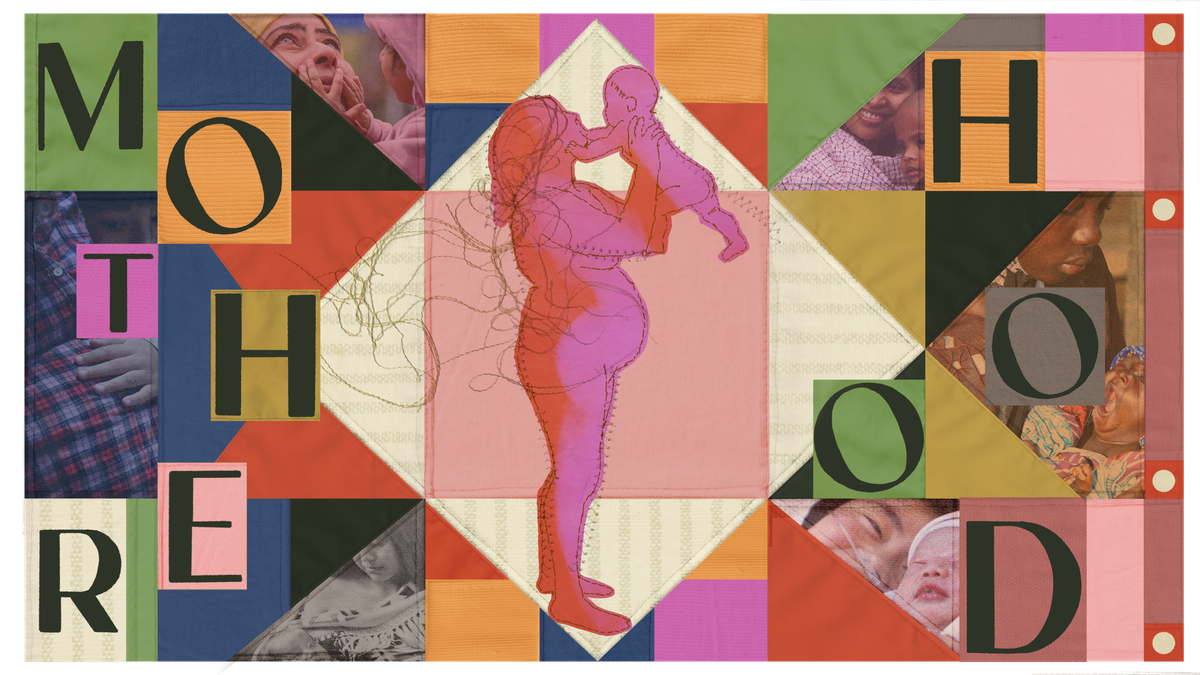
Constrained only by our capacity, this edition doesn’t pull at all of these threads. Still, throughout the month of March, Fuller will publish a range of articles, essays and multimedia content exploring the personal and political dimensions of motherhood. You can expect work on miscarriage, IVF, surrogacy and teenage motherhood. And, as we endeavour to engage your head and heart in every edition, the theme has also been interpreted by an artist – this time, Malawian-American poet, Upile Chisala.
For The Big Idea, I speak with Elinor Cleghorn, feminist cultural historian and author of the upcoming book, A Woman's Work: Reclaiming the Radical History of Mothering. Weeks later, I’m still thinking about what Elinor said she’d discovered through her research: that from the places where women were supposed to be hidden away, producing babies, came connection and community, and from that flowed strategies for resilience and resistance.
I’d love to hear your own motherhood stories: how have its personal and political qualities intersected in your life or work? You are always welcome to email me at: eliza@fullerproject.org.
Visuals by Lara Antal. Edited by Charlie Brinkhurst-Cuff.
Visuals by Lara Antal. Edited by Charlie Brinkhurst-Cuff.