Budapest, Hungary – Hungarians head to the polls on 12 April for a parliamentary election that poses the first real threat to far-right leader Viktor Orbán’s 16-year grip on power.
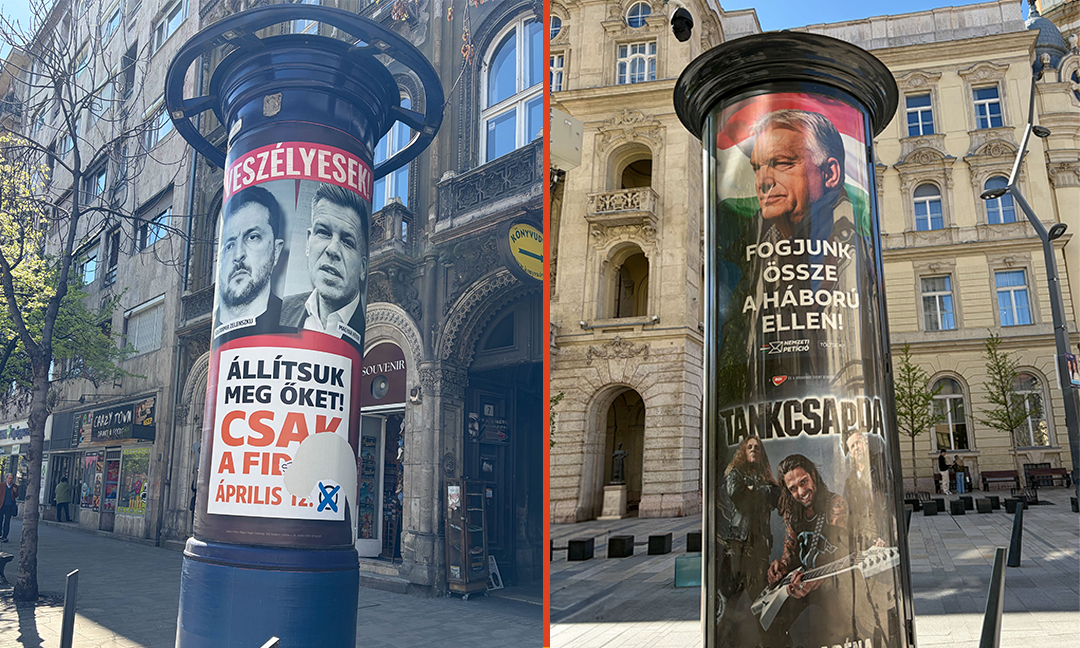
Why does Hungary matter? To those with an eye on geopolitics, Orbán is of interest because of his close relations with Russia’s Vladimir Putin and Donald Trump in the US, and his increasingly open confrontation with European Union leaders.
But it’s, in part, his stance on women’s and LGBTQ+ rights and freedoms that have also made Hungary's prime minister “a global far-right icon.”
In a 2022 speech, Orbán used the metaphor of a layer cake to explain what he saw as the urgent issues Hungary must address, “the most important at the bottom, the lighter and tastier morsels on top”. The bottom three were “demography, migration [and] gender.” Each one has been consequential for women, gender and ethnic minorities, as well as refugees and asylum seekers.
As Orbán told US conservatives in 2023: “Hungary is the place where we didn’t just talk about defeating the progressives and liberals and causing a conservative Christian political turn, but we actually did it.”
So, what might we expect from this tight election, where Orbán and his ruling party, Fidesz, are facing an unprecedented challenge from a former ally and center-right opposition leader Péter Magyar, while Hungary’s other far-right 'Our Homeland Party' could emerge as a potential key kingmaker?
LGBTQ+ activists and civil society organizations in Hungary speak to Fuller.
What’s the current situation for women and LGBTQ+ communities in Hungary?
New laws passed in recent years show that there has been a clear commitment by Orbán’s ruling party to erode the rights of LGBTQ+ communities, along with increasingly hostile rhetoric towards gay and transgender people.
Human Rights Watch has described this policy as the “demonization of LGBTQ+ people, women and girls, and minority groups”.
In 2018, gender studies programs at the two universities that offer them in Hungary were banned. This move was implemented to reinforce the government’s view that “people are born either male or female” and that it “does not consider it acceptable to talk about socially-constructed genders, rather than biological sexes.”
In 2020, the government amended the constitution stating that: “Hungary protects children’s right to identify as the sex they were born with, and ensures their upbringing based on our national self-identification and Christian culture”.
In the same year, other constitutional changes were introduced to ensure only heterosexual married couples can adopt children. The constitution had already stated that marriage must be between a man and a woman but was amended to explicitly define that in a parent-child relationship "the mother is a woman, the father a man".
Also in 2020, Hungary’s parliament passed legislation ending legal recognition for trans people, making it impossible for transgender or intersex people to legally change their gender. According to Human Rights Watch, the laws put them at "risk of harassment, discrimination, and even violence in daily situations when they need to use identity documents."
A year later, in 2021, Hungary’s parliament passed another law banning LGBTQ+ people from featuring in educational materials or on TV shows for under-18s. The legislation’s vaguely scripted text prohibits the promotion and display of homosexuality and gender reassignment, which Orbán’s party has framed as a measure to protect children.
In the latest assault on LGBTQ+ rights, in March 2025, the annual Pride parade was banned, as part of a new law prohibiting public events that portray "divergence from self-identity corresponding to sex at birth, sex change, or homosexuality." Then a month later in April, another constitutional amendment was passed recognizing only two genders.
The impact of these backsliding policies has forced many LGBTQ+ people to keep a low-profile, hide, or even leave the country, according to Dorottya Rédai, head of Labrisz Lesbian Association. “Everyday life for trans people has become particularly difficult, as many of them have a gender presentation that doesn't match the gender listed on their official documents,” she tells Fuller.
According to a 2025 Ipsos poll, 68% of Hungarians surveyed said transgender people face "a great deal/fair amount" of discrimination in today's society.
The government’s pronatalist policies (which include providing income tax breaks for Hungarian women with four children or more, generous leave entitlements and subsidized loans) are meant to boost marriage and the birthrate.
At the same time, reproductive rights and access to contraception have become more restricted during Orbán’s 16 years in power. In 2022, Orbán’s government tightened the rules on abortion, requiring pregnant women to have to first listen to the fetus’s heartbeat before they can access the procedure.
Women's political participation has also been undermined. Currently, women are underrepresented in political life in Hungary, with no women holding ministerial-level positions in Orbán's government.

Do Péter Magyar and his Tisza Party represent change for women and LGBTQ+ groups?
On the election campaign trail, the Tisza Party has avoided topics that would divide liberal and conservative voters.
Instead Magyar has focused on the need to tackle corruption, improve the economy and provide access to affordable housing, which are key concerns among voters, especially young people.
The Tisza Party has not specifically addressed LGBTQ+ people or the issue of domestic violence in their agenda either, but it promises “a country where everyone is equal” should it win the election.
On its social media channels, the centre-right party is also pledging to improve social and economic equality for women. In stark contrast to Orbán’s campaign, Tisza has a five-page chapter in its manifesto - "Equal opportunities for women in work and private life" - dedicated to improving opportunities for women and addressing issues, such as the gender pay gap and period poverty.
What does Hungary’s civil society say about the country's future?
Despite the lack of specific policy proposals from the Tisza Party to reverse years of harmful anti-gender and anti-LGBTQ+ legislation, rights activists told Fuller they are hopeful meaningful change could take place if Magyar were to become the new prime minister and oust Europe's long-serving leader.
Their cautious optimism is partly based on pledges made by Magyar in a June 2025 speech when he said his party is working towards a Hungary “where what matters is not where someone was born, where they grew up, what they believe in, or whom they love, but what they do for their community, their fellow citizens, and their country”.
Leading LGBTQ+ activist, Ádám András Kanicsár, says that although Tisza has not “openly prioritised LGBTQ+ issues”, any political change could lead to a freer environment “where members of the community can speak in their own voice, initiate conversations and be heard with openness rather than suspicion”.
“The aspiration is simple: to be treated as citizens acting in good faith, contributing to society rather than [the ones] undermining it,” says András.
He believes that if Orbán's Fidesz remains in power, their communication strategy that is “saturated with hostility, scapegoating, and misinformation,” will only continue. This could lead to a rise in online attacks and harassment against the LGBTQ+ community, according to András.
For Rédai, another Fidesz win would likely make it harder for her organization to get funding for its work. She is concerned, she says, that if LGBTQ+ people remain the “targets of government propaganda,” the discrimination they already face in the workplace and society at large, and the impact on mental health, could get worse.
Yet Hungarians show increasing support for policies that promote LGBTQ+ rights. According to another Ipsos poll, over the past decade Hungarians have become more accepting of same-sex marriage, with nearly half of people surveyed saying that they they agreed with gay marriage in 2023, up from 30% in 2013.
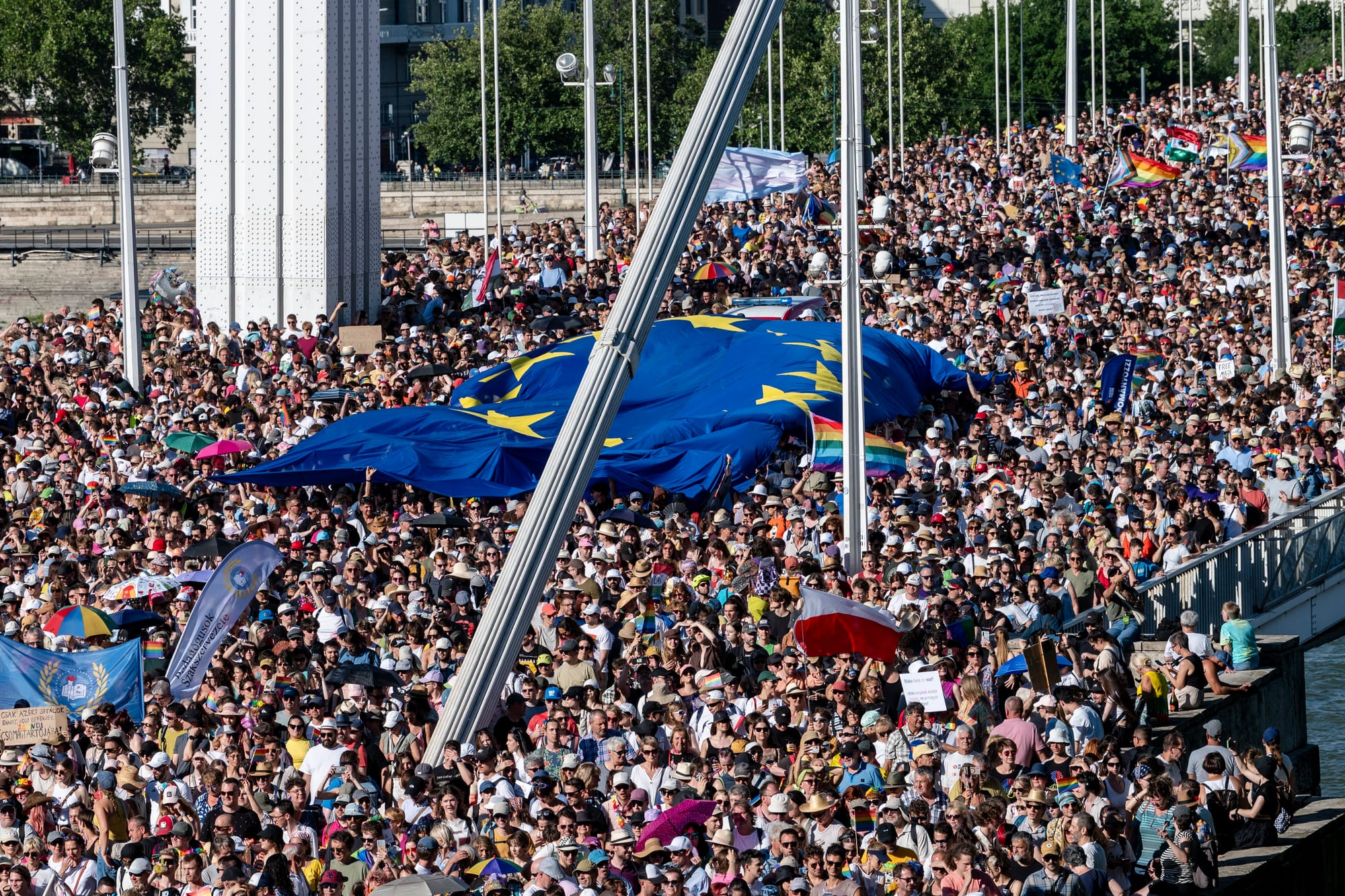
On 28 June 2025, around 100,000 Hungarians took to the streets in Budapest to hold the annual Pride march, in defiance of the ban imposed by the Orbán government.
Whatever the outcome of the 12 April election that is being watched closely across the world, it will impact women and LGBTQ+ people in Hungary. It now remains to be seen if Hungary’s lawmakers and political parties will align their views with voters who appear to want to move towards a more inclusive country.
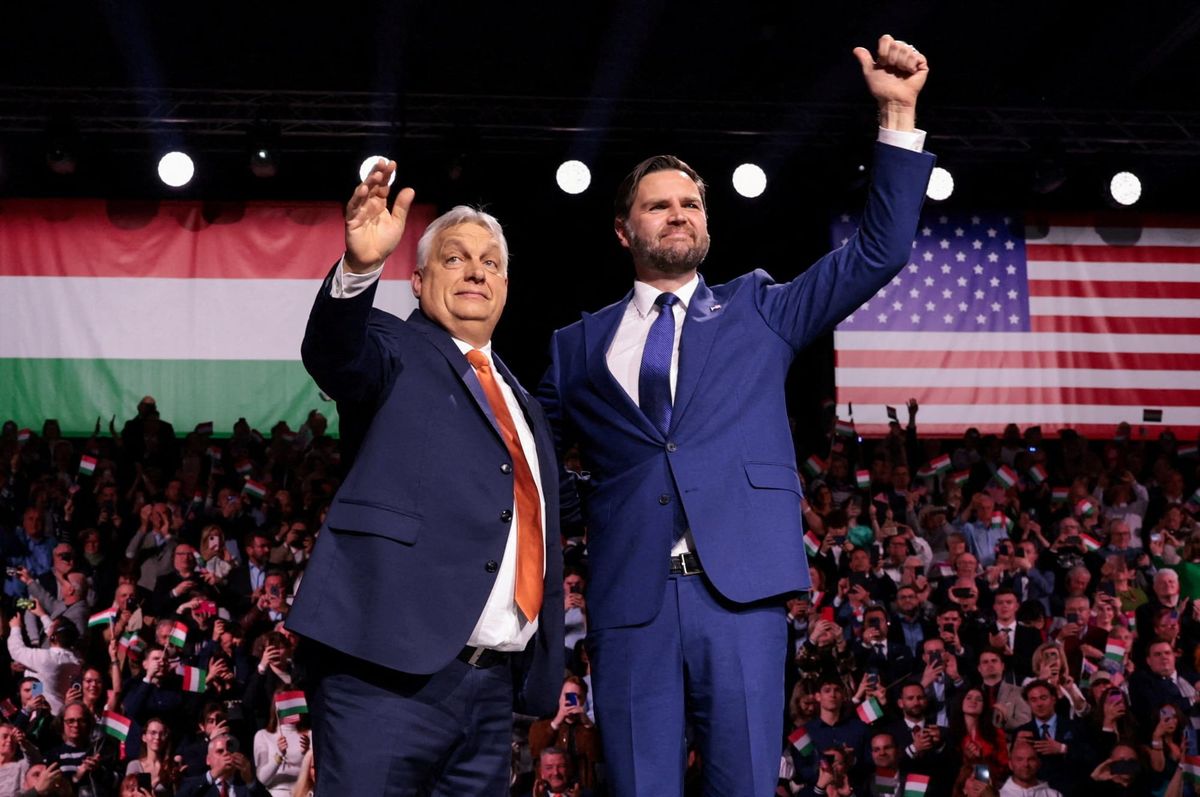
Header image: US vice president, JD Vance joins Hungarian prime minister Viktor Orbán in Budapest on 7 April 2026. Image credit: Jonathan Ernst/Reuters
Edited by Eliza Anyangwe and Anastasia Moloney
Edited by Eliza Anyangwe and Anastasia Moloney