
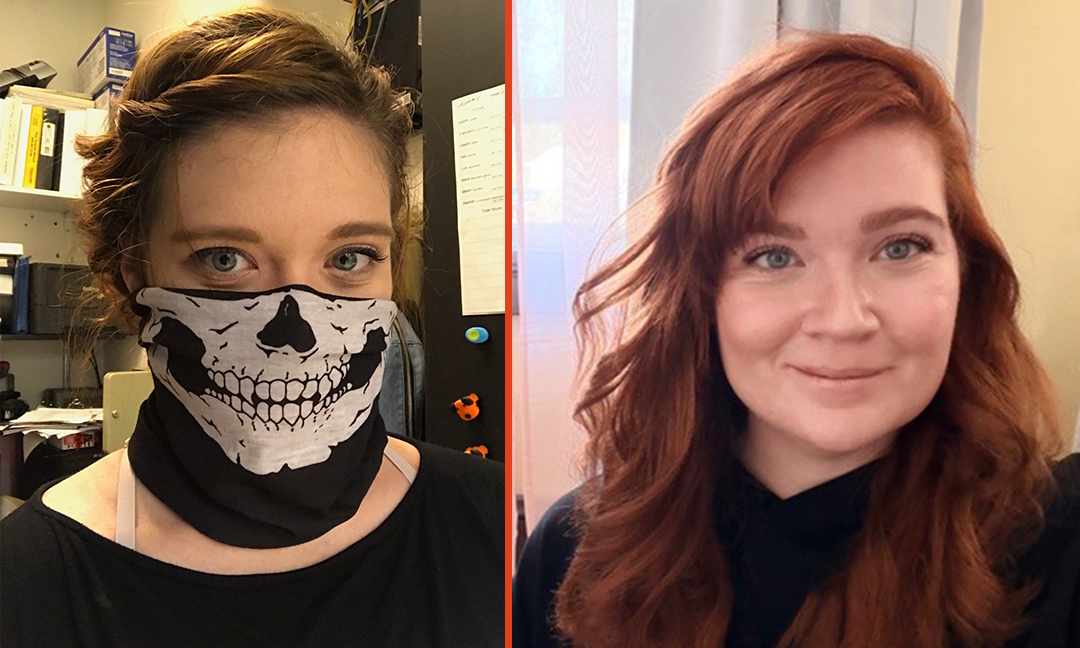
It's been almost a decade since I decided to leave my role as national women’s coordinator for the now disbanded Identity Evropa, one of the far-right hate groups that helped organize the deadly Unite the Right rally, held in Charlottesville, Virginia, in 2017.
My journey into the far right began in 2016 with butter and jam. My boyfriend at the time introduced me to The Blonde Buttermaker, a weekly YouTube show hosted by a pale, blonde woman in her 20s, who extolled the virtues of homesteading and learning to make your own pantry goods. She would talk about the rising cost of living and the importance of acquiring skills to create meals in a pinch. Then, towards the end of each episode, she’d pepper in: “And remember, when RaHoWa comes around, you want to be prepared!”
RaHoWa, I later learned, is short for “racial holy war,” a violent struggle white supremacist and neo-Nazi groups believe will cleanse the United States – and even the world – of all unworthy people, leaving only the purest whites to live in peace. I’d also learn that The Blonde Buttermaker was a show from Red Ice.TV, a white supremacist media company that normalizes the idea of a white ethnostate, created through whatever means necessary.
At first, I watched because I was desperate for my boyfriend’s approval. “The Left is losing,” he would tell me smugly, knowing that as a teen and young adult, I had campaigned for Barack Obama. “How about you try seeing it through with the winners?” But I continued because something about these women appealed to me. The ‘have-it-all’ feminism that was promised to me as a teenager seemed to be failing. So few women were actually living their dreams. But here, in these videos, were women bragging about their lives, their children, their husbands. They had it all. And I wanted it too.
Eager to continue learning, I discovered a far-right organization on YouTube that had a veneer of professionalism and applied to join. It took just 30 minutes and a quick interview to be invited to join their Discord chat platform. From then on, I paid $10 a month to find belonging in a hate group.
My radicalization began with messages marketed as “love of your people”. Hate for other people would come later. In June 2017, three months after I’d become Identity Evropa’s women's coordinator, I let a man in the movement pick my “alt-name”. I became Norah Fox, named after Norah Dacre Fox, a British suffragette and a fascist.
As women’s coordinator, I was expected to foster a spirit of community and sisterhood and disseminate any new rules, ideas and protocols following weekly online meetings. I would also guide women who wanted to represent Identity Evropa publicly, either through activism or the media, about what was and wasn’t acceptable to say.
But despite the sense of purpose my role gave me, it wasn’t long before I began plotting to leave. I noticed the contradictions of a group claiming to be a movement of peace but using slogans created by proud, convicted murderers. When I called this out, I received verbal threats from the leaders in my organization, as well as from other white supremacists I knew.
Then I heard about a woman asking a male coordinator for help because she had been physically assaulted by another member. Instead of support, she was immediately kicked out. She wasn’t the only one. I secretly planned my escape, slowly filling a storage unit with my belongings and renting a room from a woman who didn’t make me sign a lease, so there’d be no paper trail to track me.
In the years that followed, I would go from being a client of Life After Hate – a nonprofit started by former violent extremists to help other people walk a better path – to working for them. In my three years there, I ran a podcast and media project to try and reach people who are thinking about leaving far-right groups but aren’t sure how to do so. I’ve spoken to experts, journalists, researchers, as well as friends and families of people who have left the movement and the men and women wanting to leave. My story is not unique.
Today, the far-right encompasses many different ideologies and is more inclusive and accessible than ever before, welcoming conspiracy theorists and anti-vaxxers to anti-government and anti-authority violent extremists.
While the far-right movement is still mostly made up of male members, women are increasingly believers of the cause and the traditional lifestyles promoted within the movement. It’s not known how many women belong to far-right groups in the US, but their participation is rising. For example, women made up at least 14% of the arrests related to the far-right attack on the US Capitol on 6 January 2021. What’s clear is that women in the US and in Europe are becoming increasingly important as figureheads and broadcasters, who amplify messages on social media, making women today a key asset in the branding and outreach strategies of extremist organizations.
Not every woman who joins a far-right group wants to leave it. But for those who might want a way out, interactions with people not in the movement are key. I share my story and six lessons learned so you can understand some of the reasons smart, capable women choose to promote an ideology that directly deteriorates their quality of life.
What to know if you want to help young women leave far-right extremist groups
Start by listening. Most people I've spoken to have emphasized how exhausting living a life of hate and fear is. Death threats from within the movement are a common tactic for scaring people. In my podcast, The Daily Former, former extremists have discussed the constant expectation of having to be willing to commit violence against anyone deemed to be unworthy. So, allowing a loved one or friend to vent to you will remind them that it’s easier to be outside of hate than to continue finding ways to create and stoke it.
Don’t rush to judgment. Accountability is important but only from trusted sources. When I first left, I reached out to someone that I didn’t know I could trust. I felt so depleted, worthless and lonely that I told her the truth as I knew it at the time. At the very least, I thought I’d be able to tell my side of the story before getting doxxed. What kept me talking was that instead of telling me I deserved whatever hell was coming my way, she wanted to know more about me.
She asked me why I believed what I believed and often refuted my claims, using evidence. She started with my more moderate talking points and worked upwards as I became more willing to hear her out. There was never judgement, only conversation and curiosity. When someone wants to leave, it’s because they realize they’re the bad guy. Don’t make it worse. Instead of seeing me as a bad person, my friend saw me as a person with bad ideas. This distinction is important.
Directly engaging with ideology isn’t necessary. It’s best to avoid arguing and questioning the ideology itself and to only touch on how it impacts a person’s life.
If the person does insist on bringing up ideology, you can shut down the conversation and set that boundary. If you want to engage, ask motivational questions. Every far-right belief is shallow. For example, a common belief is "human biodiversity", which the far-right has co-opted and weaponized to try and legitimize racism and their desire to segregate by race.
By asking critical questions the goal isn’t to change their minds, just to plant a seed of doubt. I’d ask questions like: How does this serve you? What would happen if you stopped believing in this ideology? What do you gain/lose from believing what you believe? How has your life changed since you bought into this ideology?
Such questions encourage self-reflection without you needing to oppose any other beliefs or create friction.
Don’t forget that you care about them. A willingness to find commonality is an important step in building trust and helping someone remove themselves from the far right. Being seen as human is something the far right tells you will never happen once you leave. The sooner you break that illusion, the sooner you can witness a person transform.
You can limit interactions but maintain contact. Yes, having ties with a person belonging to a far-right group can put you in danger. However, completely severing contact with a woman in the movement will only push her further into the embrace of the far right. A white-victimhood mentality already exists in far-right groups, so cutting off ties completely will only prove them right in their mind and strengthen the bond they have with others espousing hate.
Nothing can get a woman to leave but herself. Whether you’re an organization or an individual looking to help someone leave a far-right group, your key role is to be supportive and to keep the lines of communication open. Many women who are thinking of leaving are afraid. If they refuse to engage, do not push the subject. Keep letting them know you are there for them if they want to talk. Sometimes the way you can help is simple and practical: some women may ask to use your phone and help with updating a CV.
When I began to share my experience in public, I was treated like a laughing stock. I remember during the first television appearance I did to raise awareness about the rise of far-right groups, one interviewer told me that the only requirement to fall into the far right is to be white “and a loser”. At the time, it felt true. As the US moves more to the right, I sometimes think about that journalist. I wonder if he still believes that it’s only the “losers” who get drawn into far-right movements.
Optimism is sometimes hard for me to muster. The fringe ideas I once believed in are now almost moderate compared to what the newest generation of the far right wants. But, as it has so often happened in the past, this iteration can be depleted of followers and influence if we allow women the opportunity to leave without judgment and offer them an off-ramp to start rebuilding their lives without fear of retaliation.
Want to know more about how to help people leave the far right with dignity? Here are a few resources to check out:
In the US, Life After Hate is a leader in the violence intervention community, helping people leave with a chance to build a better future. If you or someone you know is dealing with involvement in the far-right, they also support groups for friends and family members.
In Canada, the Organization for the Prevention of Violence is a non-governmental organization that can help someone leave or simply talk about their experience.
In the UK, Hope Not Hate, an anti-fascist organization, conducts research and provides support to people wanting to leave.
In Germany, Exit Deutschland provides ways out of extremism.
Header image: Trump rioters storm the US Capitol as lawmakers inside debated the certification of the presidential election on 6 January 2021, Washington, DC. Image Credit: Jerry Habraken-USA TODAY News
Edited by Eliza Anyangwe, Anastasia Moloney and Charlie Brinkhurst-Cuff
Edited by Eliza Anyangwe, Anastasia Moloney and Charlie Brinkhurst-Cuff