I once heard it said that the far right names the right problem but prescribes the wrong solution.
That might go something like this: “I know you’re finding it impossible to make ends meet. I recognize you’ve been let down by your elected representatives or you worked hard for cheap holidays in the sun that you’re now being told will ruin the planet. I see you are confused – scared even – about how fast society seems to be changing, and whether you have a place in it. Well, don’t be… because it’s all the fault of undocumented migrants, Muslims, transgender people and feminists! Vote for me and I’ll get rid of them!”
As the post-war global order comes apart at the seams, the far right offers quick fixes, arguing that love for one group or culture justifies hate for another. And so, the world over, we are bearing witness to the same phenomenon: the normalization of ideas and language that were once considered fringe and dangerous – and the ascension to political power of individuals and parties espousing these ideas.
This edition exists because women, sexual minorities and gender-diverse people are in the far right’s crosshairs. We are viewed as “alien groups” whose perceived perversion threatens the cultural fabric of society, or who, in our much-documented ‘refusal’ to marry men and procreate, help accelerate the ‘great replacement’ or a ‘white genocide’ – both terms capturing the fear of demographic decline at the heart of so many far-right ideologies and the justification for exclusionary policies and violence.
To get a fuller picture, the edition also asks: what about the women within the far right? While much smaller in number, women have long played a multiplicity of roles within white supremacist or far-right movements: from creating a palatable face for hate to embodying and espousing the need for a subservient, family-focused homemaker, instrumental to furthering the political, ideological and demographic priorities of the men in the movement.
Young women from South Korea to the US may reportedly hold more progressive views than young men, but they are no less vulnerable to – and attracted by – the narratives peddled by the far right.
For this reason, our piece by Samantha Froelich, former women’s coordinator for now-disbanded Identity Evropa (one of the organizations behind the deadly Charlottesville ‘Unite the Right’ march), is an important piece of service journalism. Froelich shares lessons learned from supporting women who wish to leave the far right as she did.
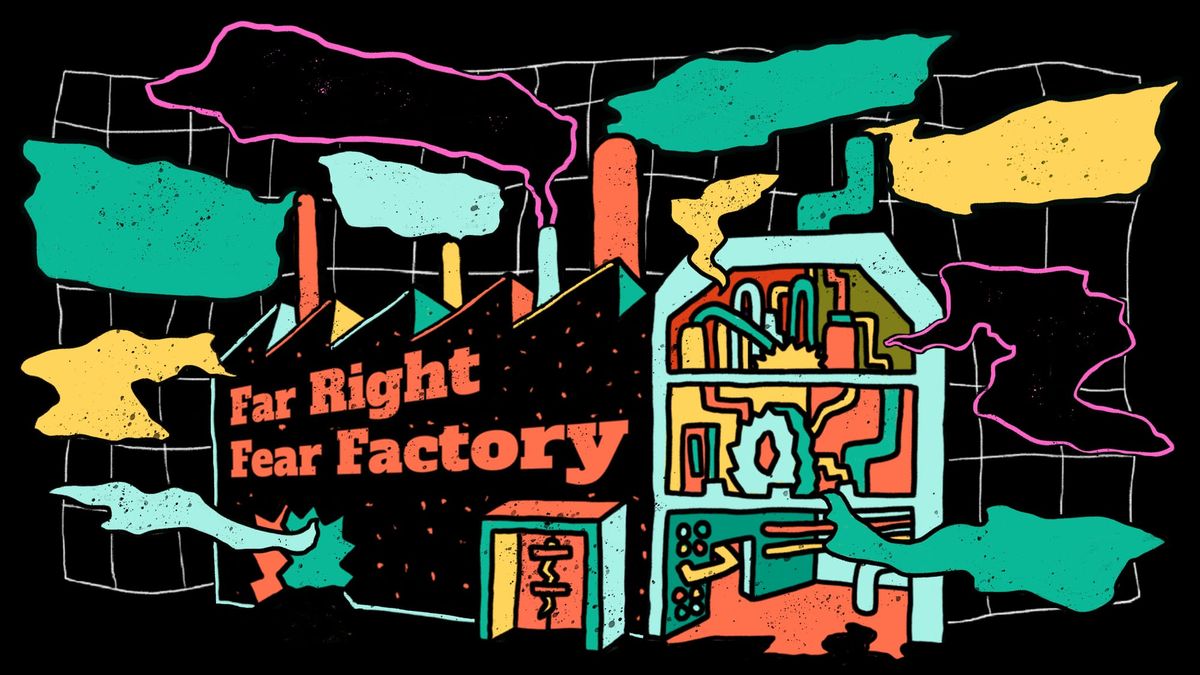
The edition’s cover artwork (created by DC-based Tunisian artist Jawhar Soudani, and commissioned by our visual editor Gabrielle Smith) depicts a factory emitting fumes into the environment. The goal was to highlight two central tenets that we explore in all the journalism we produce through the month of April: the investment in shaping narratives that further the far right’s cause and the reach of those ideas through global networks. As exceptional mapping work by the Global Project Against Hate and Extremism shows, far-right groups are no longer predominantly preoccupied with domestic affairs. Ideology, money and violence are crossing borders. Journalism must do too.
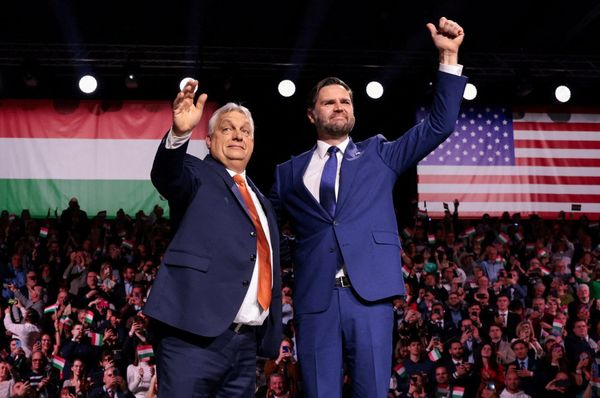
On Sunday, 12 April, Hungarians will head to the polls in the first presidential contest that could unseat Viktor Orban, the poster boy for the far right, who has spent the past several years passing into law policies that have eroded women's and LGBTQ+ rights. In a well-timed explainer, Hungarian journalist Flora Garamvolgyi asks what’s at stake for women in the election that everyone is watching.
Sometimes, journalism can seem abstract, its value hard to pin down. This isn’t one of those times. Information manipulation is rife, hate is once again a governing principle, and, as I discussed with Turkish author Ece Temelkuran earlier in the year, women and gender minorities are often the canaries in the coal mine.
We need journalism that shines a light where the powerful tell us there is nothing to see and gives equal weighting to the possibility of change. May you find just that in this edition.
Get in touch with Eliza about the edition at: eliza@fullerproject.org
Visuals by Jawhar Soudani. Edited by Charlie Brinkhurst-Cuff.
Visuals by Jawhar Soudani. Edited by Charlie Brinkhurst-Cuff.