Berlin, Germany – In December 2025, a medical doctor in the UK was suspended for five months for putting two in-person appointments in her schedule that never happened.
Before a tribunal convened to determine whether she was fit to continue to practise medicine, Dr Helen Eisenhauer admitted to falsifying the entries on 17 July 2024, and to adding made-up information about a medical examination to one of her patient’s records. She told the Medical Practitioners Tribunal Service (MPTS) panel that she had simply wanted to prevent new appointments from being scheduled, worried they would keep her from leaving work promptly at 4:45pm and picking up her children at 6pm. The false details of the patient examination had been added to keep the first lie from being found out.
Though, by her own admission, Eisenhauer had been duplicitous, for working parents her testimony and the tribunal record will make for painful and familiar reading. The document details “the strain she had been under from sleep deprivation resulting from her parenting responsibilities”.
When questioned by the lawyer for the General Medical Council (the public body in Britain that maintains the official record of medical practitioners and brings cases to the tribunal) Eisenhauer, who had been practicing medicine for almost seven years at this point, acknowledged “that it had been her responsibility to put in place a workable plan to enable her to juggle work and home life commitments … and that hers had been a predictable challenge that many professionals face”.
Eisenhauer was, ostensibly, judged and punished for being dishonest at work. But it’s hard to not feel that her skills and decision-making as a working mother were also under scrutiny. She is, afterall, a modern woman, expected to deftly manage her home and professional life and, in some way, she was being punished for failing to do so.
Mothers in the industrialized world are under incredible pressure. We work full-time jobs but with the rising cost of living, even two salaries are often not sufficient to provide for the children we are actively encouraged to have. And child welfare payments in too few countries enable a decent quality of life.
Despite the “always-on” nature of modern work, mothers are also expected to be ever-present with their children, attentive to their material and emotional needs, as well as to their screen time. Skinny – usually white – women, wearing aprons and perfect makeup, cooking fresh, healthy meals fill our social media timelines, and profit off the envy they cultivate of their seemingly idyllic domestic lives.
Against the backdrop of policy proposals that could disproportionately disenfranchise women voters in the US, and pronatalist rhetoric that is oftentimes inseparable from ethnonationalism, it feels dangerous to concede that “having it all” is an impossible fallacy. But for too long mothers have been expected to squeeze more and more into the same 24 hours at great cost to themselves and their children. It can’t go on like this. But there is good news: it doesn’t have to.
There are alternative ways we can organize our societies so that time doesn’t continue to feel like a bind that only gets tighter as mothers try to wrestle themselves free. Dr Einsenhauer’s story is a cautionary tale, warning mothers of the consequences if they drop one of the many plates they are spinning. But risking your job in order to keep your childcare shouldn't be a trade off any parent is expected to make.
There are examples that show us how we get there, but first, we first have to understand how we got here.
Minus time
The assumption here in Berlin where I am raising my children, and across the West, is that a child is the sole responsibility of their legal guardians. This puts the burden to provide squarely on the shoulders of parents – and with women around the world still doing the bulk of unpaid care work, it is often for mothers that independence bears the highest cost.
Take school. Across the world, school hours are typically significantly shorter than an eight or nine-hour work day. And even without shorter school days to contend with, all children get sick and mothers are often the default parent; the one earning less who can take time off or the one the teacher calls.
Schools close for the holidays but vacation days at work stay somewhat the same. In the United States, most schools have a summer break of 2.5 to 3 months. Yet, there’s still no federal requirement for paid vacation and no federal law mandating paid maternity, paternity, or parental leave. On average, people in the private sector in the US get just 11 days paid vacation days per year, and only after one year on the job. Public sector workers get 13 days.
That leaves a parent with precisely zero days (actually, minus days) in the year when they are not either doing care work or paid work. Without someone else taking on childcare, either freely or paid, it would simply be impossible to both work and have children.

Intensive mothering
Thirty years ago, sociologist Sharon Hays captured perfectly the tightrope that mothers in the West are expected to walk, between self-interest and self-sacrifice. In her 1996 book, The Cultural Contradictions of Motherhood, Hays writes about an ideology she has seen emerge across race and class groups, which she calls “intensive mothering”: “an ideology that holds the individual mother primarily responsible for child rearing and dictates that the process is to be child-centered, expert guided, emotionally absorbing, labor-intensive and financially expensive”.
The concept was later broadened to “intensive parenting”, reflecting the changing expectations of men and evolving family structures. But research has found the characteristics are still more evident in mothers – as are the mental health impacts.
In 2024, a study by Worcester State University showed that the belief that “good mothers must be constantly stimulating and overly involved in their children’s lives” produced in women “intense guilt, stress, and anxiety as a result, with elevated levels of depression”.
The work by Worcester State casts the spotlight on demographic groups often underrepresented in sociological research. It found “the burden of intensive parenting falls particularly heavily on mothers with limited resources, such as single parents, low-income families and immigrant mothers … Even when aware of the unrealistic nature of these ideals, many mothers still felt compelled to strive for them, further exacerbating their mental health challenges.”
Ironically, working mothers in the US in 2022 spent more time with their children than any mothers or grandmothers did in 1975: 12.5 a week compared to 8.6 hours nearly 50 years prior. The same trend has been observed across other Western countries.
There are several theories to explain this rise: parents feeling increasing pressure to help their children get accepted into competitive top universities; the rise of structured play requiring a parent to wait for their children; a drastic decrease in children’s freedom to roam alone or with their friends.
Glimpses of something transformative
The Covid-19 pandemic briefly offered us a way out of the hegemony and self-reliance of the nuclear family. Support and childcare bubbles, as they were called in the UK, allowed two households to form a cluster, sharing care responsibilities between members, whether or not they were related. Though it didn’t stick around beyond the pandemic, these bubbles gave us a glimpse of something transformative.
Feminist scholars and activists have long been calling for practices and policies that move beyond the nuclear family. In Sophie Lewis’ provocatively titled book ‘Abolish the Family’, she identifies the nuclear family as a structure that neoliberal states used to move responsibility for care from society to individuals.
Lewis proposes infrastructures of care that are more holistic, a call echoed by author and cartoonist Sophie Lucido Johnson, who advocates for ‘kinship’ as the family structure of the future. Johnson defines kinship as “a support structure that allows everyone within [it] to have their needs met”. Imagine that: a social structure that prioritizes not just how to get out of mothers what it needs – productive labor, free child- and eldercare… – but one that sets out to meet mothers’ actual needs!
Today, though Western individualism, the nuclear family and intensive mothering have spread far and wide, it’s inspiring to see experiments in collective living and shared caregiving emerge – especially in rich countries or large cities, where everything from advertising to architecture seems to turn us away from, rather than towards each other.
Bogotá’s care blocks are one such radical innovation. Started in 2020 in low-income neighbourhoods, care blocks are a way to address time poverty among full-time, unpaid caregivers, who are disproportionately poor women with little formal education. This urban planning solution places all essential services (laundry, childcare, job training and exercise facilities) 15-20 minutes away on foot. To date, just a fraction of Bogotá’s estimated 1.2 million full-time caregivers have been able to access care blocks, but they have successfully freed up more than 18,000 hours of caregiver time, and inspired similar projects in other parts of the world.
There are other approaches that can ease pressure on parental time. In parts of Europe, like Germany, where social protections alleviate some of the costs and pressures of motherhood, intergenerational housing projects can offer more than just an antidote to loneliness. For parents of young children, “multigenerational cohabitation” – or cohousing – reportedly helps to ease the burden of childcare.
The motherhood mandate
In January 2026, the Heritage Foundation, which has been credited with providing the blueprint for the policy positions of the second Trump administration, published a new “special report” on marriage and the family. Aside from being an incredible exercise in futures thinking, ‘Saving America by saving the family: A foundation for the next 250 years’ provides a clear indication of choices, bodies and family structures that are viewed as divergent.
For the Heritage Foundation and anti-rights forces around the world, the “family” has become a strategic area of focus. The report urges policymakers to “treat restoring the family home as a matter of justice.” By framing their policies around terms like “justice”, “protection” and “safeguarding”, their implicit attacks on the rights of women, LGBTQ+ people and immigrants can be better hidden from view. Under these policies, women’s time becomes something that the state controls and determines, and white women using that time to produce children is the unspoken priority. It is a vision that seeks to reinstate the nuclear family, composed of a heterosexual cisgender man and woman, as the most desirable way to organize domestic life.
But there is no going back rhetorically to the 1960s – no matter how many times the Heritage Foundation looks back wistfully at that time in its report.
As these political forces move from the margins into the mainstream, it is essential that we remember that there is nothing natural about the expectations placed on women. The “good mother”, ever-present and attentive, and finding delight in her husband’s shadow, is a story we are being told to push women back into their homes, out of public life and into the private work of childbearing and childrearing.
But here is where those who fear women’s agency have miscalculated: mothering isn’t only a site of control, it can also be a site of resistance. The connections I forged (and continue to forge) during my motherhood journey don’t only sustain me, they provide opportunities to build connections based on a transformative shared experience.
All the women I spoke to – and my own experience of mothering – confirmed that time becomes especially limited once you have children. Still, nothing has made me realize just how malleable and precious time is than becoming a mother, and nothing will make me defend mothers’ time more.
Time is a gift that we should all have access to – not a privilege that we, as a society, accept that mothers and other caregivers don’t deserve.
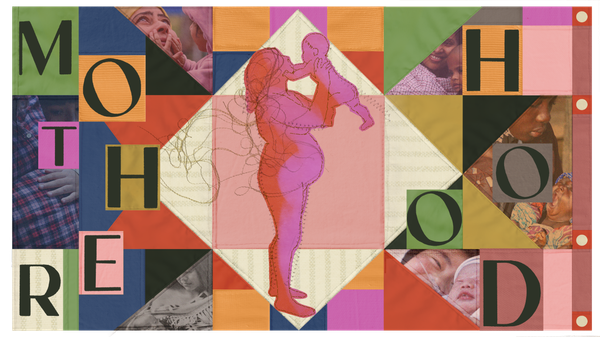
Edited by Eliza Anyangwe and Anastasia Moloney. Illustration by Lara Antal
Edited by Eliza Anyangwe and Anastasia Moloney. Illustration by Lara Antal