When her first pregnancy ended in miscarriage in 2022, Alex* felt sad and unsettled. What she didn’t expect was the way others responded.
The healthcare providers looking after her spoke to her as though she were a bereaved mother who had lost a baby. But that wasn’t how Alex, a 37-year-old woman whose pregnancy ended in miscarriage at seven weeks gestation, understood what had happened to her. She didn’t experience the miscarriage as baby loss, and she didn’t see herself as bereaved. Still, when the clinicians around her spoke and acted as though she must be grieving, she began to doubt herself. Maybe she was responding the wrong way. Maybe something was wrong with her.
“They made me feel,” she later said, “like an unemotional weirdo… a bit like a monster.”
Over the past decade, we have been researching miscarriage in the UK and abroad – speaking to over a hundred people, like Alex, about how they experience miscarriage and how the healthcare system and wider society responds to it. During that time, we have witnessed a significant shift. Not long ago, miscarriage, defined in the UK as the spontaneous ending of a pregnancy in the first 23 weeks, was usually treated as an unfortunate but relatively routine event – something women were expected to recover from quickly. You can always try again, they were told. At least you know you can get pregnant. Or simply: It’s just nature’s way.
Today the landscape looks very different. Thanks largely to campaigning by committed individuals and organizations like The Miscarriage Association, miscarriage is now far more likely to be met with sympathy, recognition and formal support. Many hospitals now employ bereavement midwives, and recent government initiatives reflect a broader recognition of the serious impact miscarriage can have. In early 2024, the UK government, following behind countries like New Zealand, introduced the baby loss certificate scheme so that people who experience miscarriage can receive official recognition. A year later, it announced that people whose pregnancies end before 24 weeks will have the legal right to bereavement leave (prior to this, you would only be entitled to bereavement leave for a stillbirth, which is defined as pregnancy loss after 24 weeks), though the leave will not be paid.
These changes reflect something important: a growing recognition that miscarriage can have a profound emotional impact. It’s estimated that around one in eight known pregnancies end in miscarriage, and for many people, the language of grief and the rituals of mourning can offer comfort, validation and space to process loss.
“Some people feel sadness, frustration or disappointment, but not a sense of grief. Some feel ambivalent. Some feel relief”
But stories like Alex’s complicate this picture. As miscarriage has increasingly been framed as the tragic loss of a baby, grief is becoming the expected response. For some people, this resonates deeply with their experience. But for others, like Alex, it does not. Some people feel sadness, frustration or disappointment, but not a sense of grief. Some feel ambivalent. Some feel relief. But the way miscarriage is now treated within the UK National Health Service often assumes a particular emotional script, a shift which is also evident in the US and elsewhere. Referring to a ‘baby’, offering counseling, and providing options such as burial, cremation or memorials can be profoundly meaningful for those who feel they have lost a child. But when one narrative becomes dominant, other experiences are marginalized or excluded altogether.
Whose stories are heard matters. Public and academic discussions of miscarriage in the UK tend to focus on the perspectives of white, middle-class, heterosexual women. The experiences of LGBTQ+ people, disabled people, those living in poverty and racialized communities are far less visible – despite the fact that some of these groups face higher rates of miscarriage. Black women in countries like the US, the UK, Sweden and Finland, for example, are estimated to be far more likely than white women to experience miscarriage. Yet research suggests that when Black women speak about grief or loss, their experiences are more likely to be minimised or dismissed. Longstanding stereotypes about Black women’s resilience – the idea that they can endure anything – continue to shape how their pain is recognized and responded to.
All this shows that miscarriage is not merely a biological event. It happens within political and cultural worlds that shape how pregnancy, motherhood and loss are understood. In England, miscarriage is commonly understood through the lens of individual choice and control. Pregnancy is often carefully planned, tracked and managed, so when a miscarriage occurs, it can feel like the collapse of a carefully imagined future. And in a society that places a strong emphasis on taking individual control over one’s life, that feeling of collapse can easily turn inward, becoming self-blame. Elsewhere, miscarriage may be understood very differently. Research with Qatari women, for example, shows how miscarriage may be seen as evidence of fertility rather than a catastrophe.
“When systems assume there is a ‘right’ or ‘normal’ way to feel after miscarriage, people whose reactions fall outside that expectation can feel alienated”
These contrasts remind us that miscarriage is not experienced in a single, universal way. Our responses to it are shaped by culture, religion, social expectations and political contexts. This is why structuring miscarriage care around the assumption of grief can be problematic. Grief is one possible response – an important and deeply valid one – but it is not the only one. When systems assume there is a “right” or “normal” way to feel after miscarriage, people whose reactions fall outside that expectation can feel alienated and self-doubt may creep in.
Alex felt this tension acutely. Several months after her miscarriage, she continued to reflect on her response, saying that hospital practices around disposal made her feel as though she wasn’t having a “normal” reaction. Even though she was saddened by her miscarriage, the clinical practices around her – the language of loss and bereavement – made her feel out of place.
For others, the gap between expectation and experience can be even wider. Ruth*, a 47-year-old woman with two children, for instance, miscarried an unplanned and unwanted pregnancy at seven weeks gestation and felt a great sense of relief.
“I would have done it. I would have had the medical termination. I’m really glad I didn’t have to, but I would have done it. I feel very relieved that it has happened this way,” she said.
In a cultural environment that has begun to frame miscarriage primarily as tragedy, that kind of response can be difficult to voice.
These stories reveal something important. When care systems assume a single emotional script, they risk excluding the very people they are meant to support. Miscarriage care, including communication, treatment and disposal practices, needs to be more flexible, more inclusive, and more responsive to the full range of experiences people have – not just the ones we expect them to.
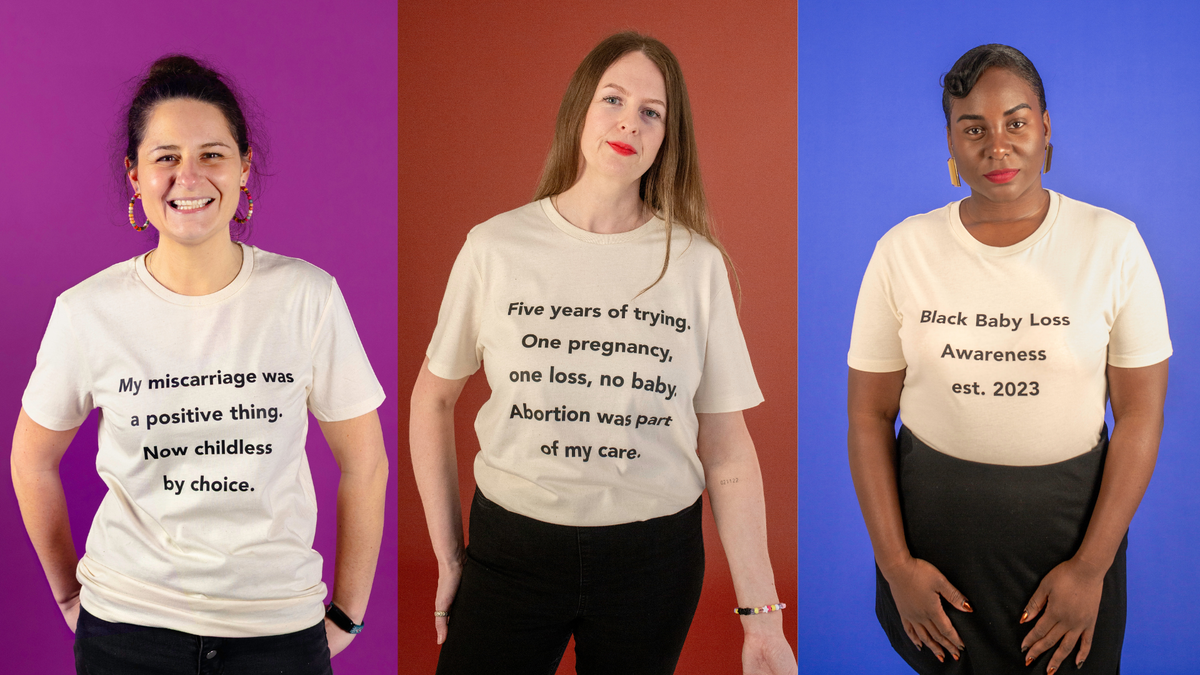
This also extends to other pregnancy endings, including abortion. Though public narratives often position miscarriage and abortion as opposite experiences – one framed as an involuntary loss of a wanted pregnancy, the other a voluntary ending of an unwanted pregnancy – lived experiences don’t always fit neatly into these categories. Some people who miscarry feel relief; some people who have abortions feel grief. The medical reality also blurs these lines. The same procedures and medications are used to manage both miscarriage and abortion, and patients frequently move between miscarriage and abortion services.
This is why we call for a “full-spectrum” approach to pregnancy endings. The principle is straightforward: all pregnancies, and all pregnancy endings, are valid and deserving of care. From this perspective, grief is recognized and supported when it is present, but it is not assumed, required or elevated above other kinds of experience.
Ultimately, what these conversations demand is not agreement about how miscarriage should feel, but openness to the fact that it feels different for different people. We are stronger when we extend solidarity across reproductive differences, building empathy and support for experiences that may be unlike our own, but with which we may have more in common than we realise.
*Names have been changed to protect identities.
The Feminist Miscarriage Project aims to ensure that every experience of pregnancy ending – whether marked by grief, relief, or something else entirely – is accounted for and respected. Their latest exhibition, Pregnancy Endings, opens at the Bomb Factory Art Foundation in London on 28 April 2026. Follow them on Instagram.
Three tips on how to respond to the news of a miscarriage
1. Lead with empathy, not interpretation
Avoid making assumptions about how the person feels. Let them share their experience if they want to. The most powerful form of support is often just being there – no advice, no silver linings, no trying to make it better. Remember there is no “correct” emotional response to miscarriage – numbness, disbelief, anger, grief, relief, ambivalence, confusion, silence – all are valid. The most helpful stance is presence without assumption.
2. Be guided by their language and their framing of the experience.
For some, this is the loss of a baby. For others, it’s not. And for many it will be complex. You might find it helpful to use the same words they do. For example, many people prefer to talk about their “baby”, but others choose not to. Some may prefer to use “fetus” or “embryo” or “pregnancy”. If their baby has a name, use it. Listen to the way they talk about their experience and try to reflect it.
3. Offer specific support without pressure
Having a miscarriage affects a person’s physical health. They may have had an operation. They may be in pain, or have lost a lot of blood. The miscarriage may have been drawn out over days, weeks or even months. They may feel exhausted. Offering practical support can help. You could offer childcare, or do the food shopping, or deliver a meal. Try to be specific, rather than, “Let me know if there is anything I can do.
Lead photography by Tara Todras-Whitehill. Edited by Charlie Brinkhurst-Cuff and Anastasia Moloney.
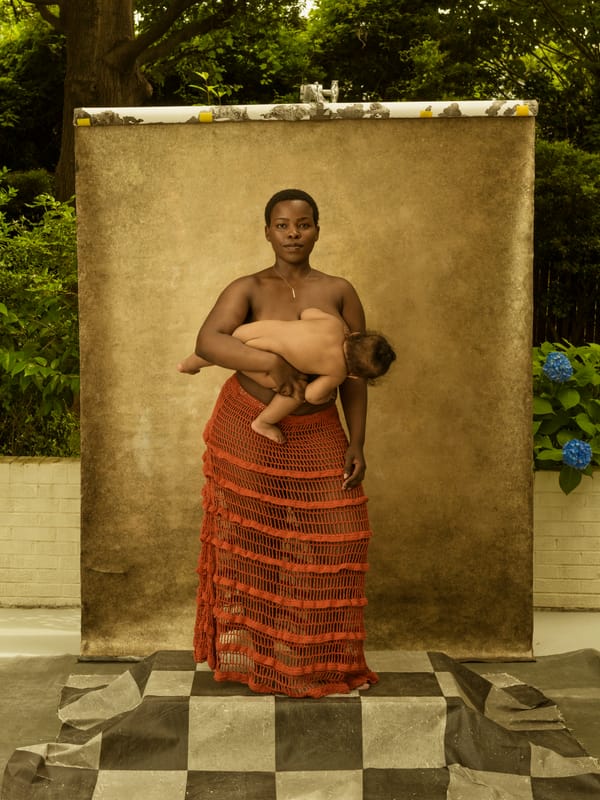
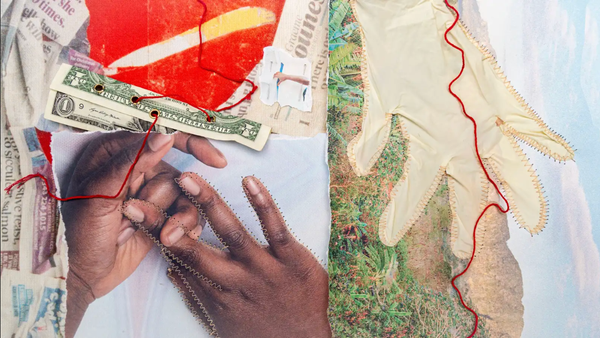
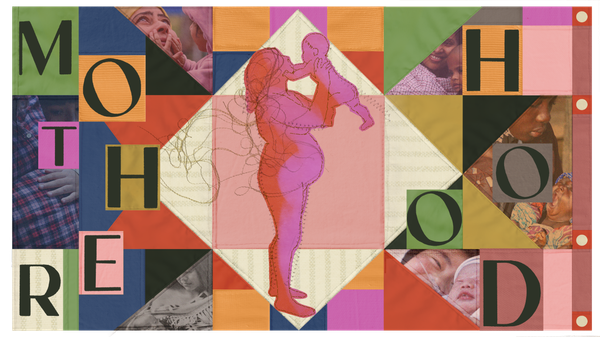
Lead photography by Tara Todras-Whitehill, from a new exhibition by The Feminist Miscarriage Project which situates miscarriage alongside other pregnancy endings. Edited by Charlie Brinkhurst-Cuff and Anastasia Moloney.